In the past, most companies did not practice salary transparency. Now, it’s more common to discuss pay openly…instead of hiding it under a rock.
This has helped narrow the pay gap, changing companies for the better. So, employees are trusting businesses more. And employers also get to enjoy a 30% increase in applications started. That’s a win-win situation if you ask me.
What is Salary Transparency?
Salary transparency is all about openly sharing pay information within a company or even with the public. So, in simple terms, it means providing clear details about how compensation decisions are made, including pay scales, benefits information, and the range of compensation for similar roles. This approach promotes fair pay and helps address pay disparities, including gender-based pay gaps and other inequities.
In recent years, wage transparency laws have pushed employers to adopt pay transparency policies. For instance, many US states, such as New Jersey and California, now require companies to disclose pay information, either in job postings or upon an applicant’s request. Therefore, these laws aim to ensure equitable pay and prevent unfair practices, such as relying on an applicant’s pay history to determine their salary offer.
How Companies Implement Salary Transparency
Many companies in the United States and globally are taking steps to make their compensation practices more open. For instance, California employers are required by state law to include a range of compensation for open positions in their job ads. So, this allows job candidates to understand the pay scales for similar work before even attending a first interview.
Another example is companies banning salary history inquiries as part of their hiring practices. These salary history bans ensure that compensation decisions are based on the responsibilities of the new hire’s current position rather than their past earnings. This also helps reduce pay inequities and fosters a company culture of fairness.
Additionally, in Texas, some employers are voluntarily sharing compensation data with their teams to build employee trust. They provide detailed compensation packages that include not just salaries but also stock options and retirement benefits. So, HR professionals in these organizations work closely with team members to develop pay transparency policies that align with best practices and comply with employment laws.
Make Salary Transparency a Common Practice
Now, discussing money is a touchy subject for many. Still, it’s important to do it.
Many people were raised to not talk about money, but times have changed. Making “salary” a common topic will not only help close the gender pay gap but also help you gain your employees’ trust. Plus, salary transparency, starting with the hiring process, also helps you boost your talent pool.
And, honest communication between employers and employees encourages them to work harder. Especially if they feel there is an open door for conversation about pay.
Salary transparency doesn’t only benefit your business. But it also benefits prospective and current employees. Currently, the cost of living is expensive and changes day to day. And job seekers have goals, dreams, and ambitions too. Think about it. Someone applying for a job may be hoping to make enough money to pay for their expenses and save up for a larger purchase, like buying a home. So, it is vital to openly and honestly discuss salary.
Thus, you must explain your salary offerings, bonus benefits, and compensation review policies to employees. Doing this helps ensure confidence when making decisions about affordable mortgages, or how much to contribute to a 401K.
So, with this knowledge, employees will be happier knowing they can set themselves up financially and feel more satisfied in their jobs.
Be “Salary Transparent” in Job Postings
There’s a place where discussing salary transparency is crucial… and that’s in your job postings.
The truth is, job seekers are more likely to apply for openings if the salary is listed. And that’s still true even if it is just a range. So don’t be shy. Being transparent about salary can get you more applicants in the door.
Think about it for a moment. Wouldn’t you feel more confident committing to something if you knew exactly what you were signing up for? I’m sure you said “yes”. And your prospects and employees feel the same way.
This has been proven time and time again:
In 2018, a LinkedIn study showed salary as the #1 part of a job ad that is “helpful,” “appealing,” and makes candidates “more likely to apply.” You see? Candidates will find you more attractive when you are transparent about salary.
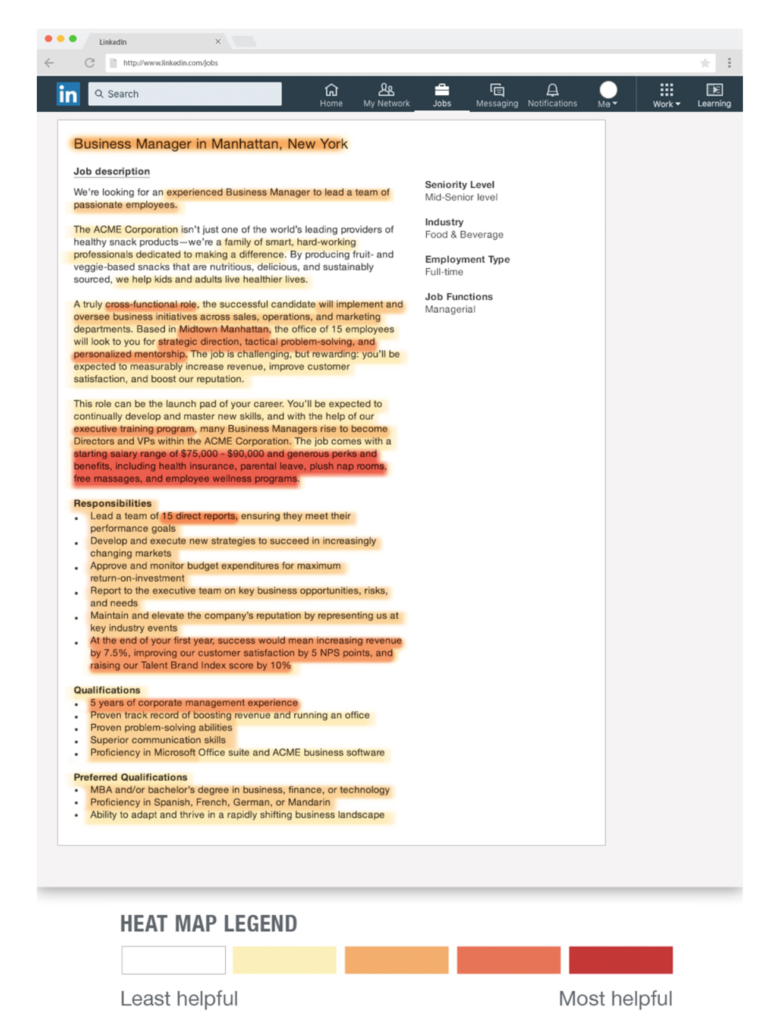
Adobe’s more recent New Future Workforce Study found “Gen Zers won’t even apply to a job if the salary isn’t listed.” This just goes to show how important this information is. So, you could be turning away top talent by choosing to hide salary data. It’s like shooting yourself in the foot.
And…a 2023 survey from ResumeLab found “80% of respondents said they likely wouldn’t apply for a job if salary range information was lacking.”
Outside of increasing your chances of getting more “applies,” adding pay to your postings also saves time for everyone involved in hiring. So, if the salary is not listed and candidates go through the entire interview process only to find out the pay isn’t enough for them, both parties waste time. And that’s a lose-lose.
In some places, it is also the law.
Follow Salary Transparency Laws for Job Postings
Listing salary information in job postings was not a legal requirement until recently (for some states and cities).
And, based on the trends, it seems more companies (states, counties, and cities) will follow suit.
“17% of companies already provide the information across US locations that don’t have legal requirements to do so.”
source: Bloomberg
So, here are 20+ current “pay transparency” laws for job postings (as of February 2023):
1. Colorado, CO Salary Transparency Law
Effective Date: January 1, 2024
Colorado changed its salary transparency law. Now, employers must share pay info in job ads and promotions. If there’s a pay issue, employees can claim it within six years instead of three. Also, new mandates will govern the investigation, mediation, and enforcement of wage discrimination claims. So, Colorado’s Department of Labor and Employment will be better supported to handle these claims. These new rules took effect on January 1, 2024.
2. Colorado, CO Equal Pay for Equal Work Act
Effective Date: January 1, 2021
The Equal Pay for Equal Work Act requires employers to disclose the hourly or salary compensation (or range), and a general description of all benefits, plus other compensation offered for each job opening. Source 6 Must-Know Pay Equity Laws for Hiring
3. New York City, NY Pay Transparency Law
Effective Date: November 1, 2022
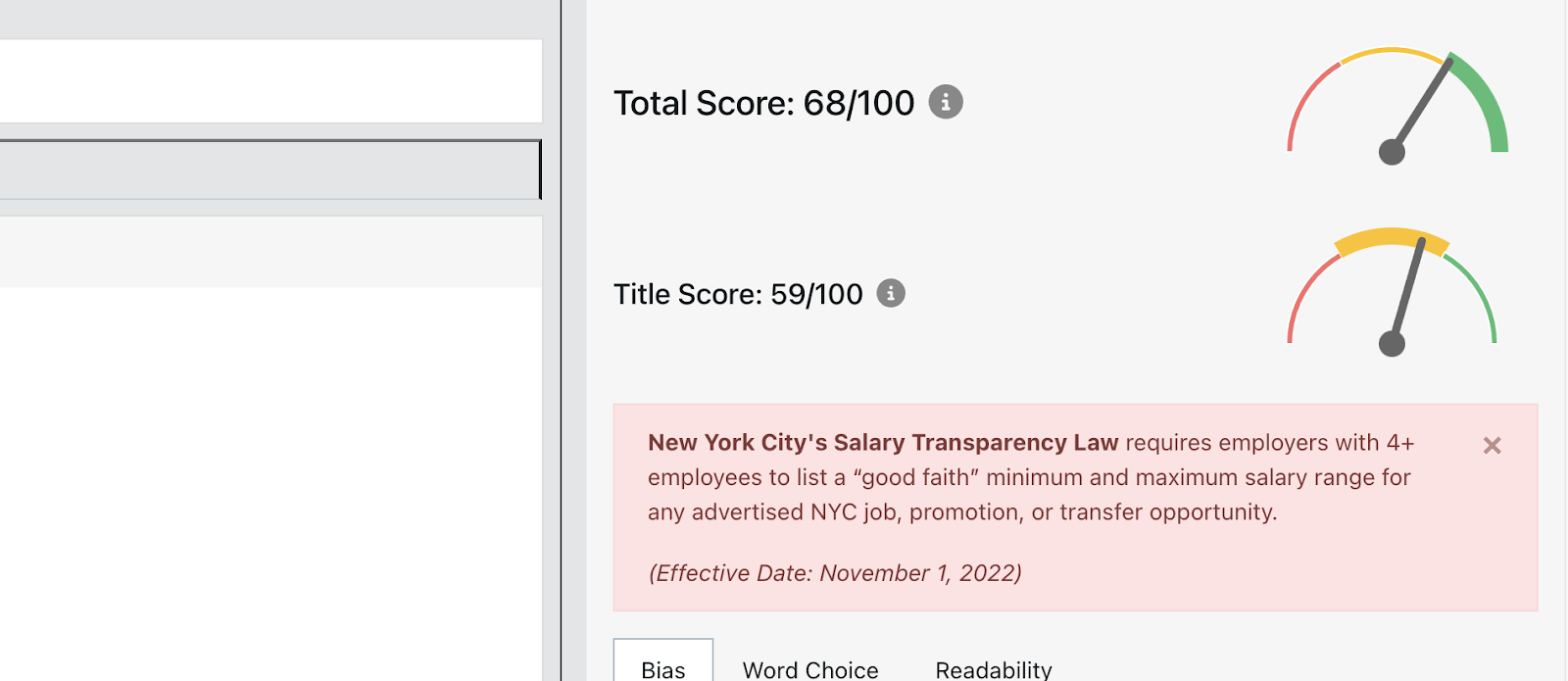
The main impact of the NY pay equity law on job descriptions is about par range. Currently, it requires employers with 4+ employees to list a “good faith” minimum and maximum salary range for all advertised NYC job, promotion, and transfer opportunities. And this applies to both inside and outside the company. another thing to note is this. The law only covers jobs in New York or those supervised from New York. And it doesn’t include temporary job ads. So, if employers don’t follow these rules, they could be fined. The fine is $1,000 for the first time, $2,000 for the second, and $3,000 for any more violations. Source 6 Must-Know Pay Equity Laws for Hiring
4. New York, NY Salary Transparency Law
Effective Date: September 17, 2023
The Salary Transparency Law mandates that employers disclose the compensation or a “good faith” minimum and maximum hourly/salary range for any advertised job, promotion, or transfer opportunity.
5. Ithaca, NY Salary Transparency Law
Effective Date: September 1, 2022
This law states that employers must mention the least and most that they will pay for a job or promotion. And if they don’t, they will be acting against the against the law.
6. Westchester County, NY Pay Transparency Law
Effective Date: November 6, 2022
This law says if a company has 4 or more workers and is advertising a job or promotion in Westchester County, they must tell the least and most that they will pay.
7. Washington, WA Salary Transparency Law
Effective Date: January 1, 2023
In Washington state, employers must mention the salary range, benefits, and other pay details in job ads.
8. Washington, WA Pay Equity Law
Effective Date: January 1, 2023
The Pay Equity Law requires employers to include a wage scale (or wage range), plus all offered benefits and other compensation, regardless of applicant request (in all job postings). Source 6 Must-Know Pay Equity Laws for Hiring
9. California, CA Pay Equity Law
Effective Date: January 1, 2023
The Pay Equity Law requires employers with 15 or more employees to include salary information in all job postings.
10. British Columbia, BC Pay Transparency Act
Effective Date: November 1, 2023
The Pay Transparency Act requires that salary or wage information is included in all publicly advertised job postings. Therefore, employers do not need to include bonus pay, overtime pay, commissions, tips, or benefits.
11. Newfoundland, NL Pay Equity and Pay Transparency Act
Effective Date: January 1, 2026
The Pay Equity and Pay Transparency Act was passed in 2022, but has yet to be fully implemented. However, in the future, at a date to be announced, the Act’s pay transparency provisions will apply to all public and private sector employers of a certain size. Source What We Heard
12. Prince Edward Island, PE Employment Standards Act
Effective Date: June 1, 2022
The Employment Standards Act requires that publicly advertised job postings include the expected pay or pay range for all positions. Source An Act to Amend the Employment Standards Act
13. Hawaii, HI Pay Transparency Law
Effective Date: January 1, 2024
The Pay Transparency Law requires employers to disclose the hourly rate or salary range that reasonably reflects the actual expected compensation for each job listing.
14. Illinois, IL Equal Pay Act
Effective Date: January 1, 2025
The Equal Pay Act requires employers with at least 15 employees to include pay scale and benefits in all job postings (defined as “the wage or salary, or the wage or salary range, and a general description of the benefits and other compensation the employer reasonably expects in good faith to offer for the position”).
15. Maryland, MD Wage Range Transparency Act
Effective Date: October 1, 2024
The Wage Range Transparency Act requires all employers to disclose (1) the wage range for all positions, and (2) a general description of benefits and any other compensation. So, the wage range is defined as “the minimum and maximum hourly rate or salary for a position.
16. Massachusetts, MA Pay Transparency Law
Effective Date: July 31, 2025
The Pay Transparency Law requires employers with at least 25 employees to disclose salary ranges in job postings (defined as “the salary range or hourly range that the covered employer reasonably and in good faith expects to pay” for the position at the time of posting).
17. Minnesota, MN Pay Transparency Law
Effective Date: January 1, 2025
The Pay Transparency Law requires employers with 30 or more employees to include a pay range or fixed pay rate in all job postings. So, the listed pay range must be a “good faith estimate” by the employer and cannot be open ended. Postings must also include a general description of benefits and “other compensation.”
18. Rhode Island, RI Equal Pay Law
Effective Date: January 1, 2023
The Equal Pay Law requires that employers provide the wage range for a position when (1) the applicant requests, and prior to discussing compensation, (2) at the time of hire or when the employee moves to a new position, and (3) during the course of employment, and at the employee’s request. Source Rhode Island law expands the state’s equal pay law effective January 1, 2023
19. Vermont, VT Act 155
Effective Date: July 1, 2025
Act 155 requires employers with 5 or more employees to disclose the compensation or compensation range for a particular position.
20. Washington, DC Wage Transparency Act
Effective Date: June 30, 2024
The Wage Transparency Act requires employers to include a pay range in all job postings and bars employers from asking job applicants about their prior salary history.
21. Remote Worker Pay Transparency
Effective Date: January 1, 2021
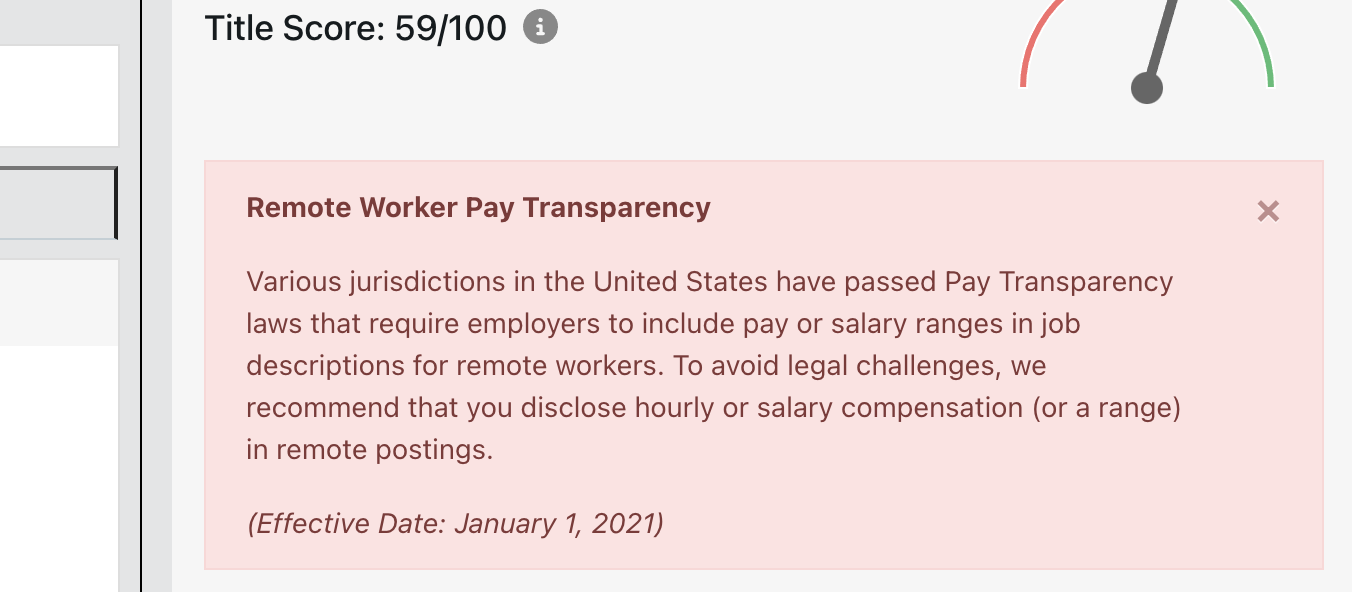
Various jurisdictions have passed Pay Transparency laws that require employers to include pay or salary ranges in job descriptions for remote workers. Therefore, to avoid legal challenges, we recommend that you disclose hourly or salary compensation (or a range) in remote postings.
22. New Jersey Pay Transparency Law
Effective Date: June 1, 2025
The New Jersey Pay Transparency Law requires employers with 10 or more employees to include a salary or pay range in job postings. Source Update: Governor Murphy Signs NJ Pay Transparency Legislation
And, even more, here are some other states, cities, or counties with pending legislation around pay transparency in job postings:
- Albany County, NY (effective September, 2023)
- Connecticut (in development)
- Jersey City, NJ (April 13, 2022)
- South Carolina (in development)
23. EU Pay Transparency Directive
“By implementing proactive measures to promote fairness and address potential gender pay gaps, organizations can not only prepare for the new EU regulations but also reap the numerous benefits that arise from fostering diversity and inclusion in the workplace, positioning themselves as employers of choice.” writes Radmilla Del Pozzo, Partner at EY.
The European Union (EU) regulations Radmilla writes about are no longer new. Known as the EU Pay Transparency Directive, the rules are set to take effect in 2026, leaving businesses hiring in the EU one year to stay ahead of compliance requirements.
Here’s what you should know about the EU Pay Transparency Directive:
- Salary disclosure is mandatory: Employers must provide salary ranges in job ads or before the first interview.
- Pay audits will be required: Companies with over 100 employees must report on gender pay disparities. If a gap of more than 5% that cannot be justified by a gender-neutral criteria is revealed, employers are obligated to take concrete actions and rectify it along with workers’ representatives.
- Employees gain legal leverage: Job seekers and employees can request salary details to ensure pay equity. Employers also can’t use a candidate’s pay history as a basis for negotiating current salary. And lastly, the burden of proof now falls on the employer to prove that they’ve not broken EU rules. It’s traditionally been up to employees to prove this.
- Non-compliance carries penalties: Organizations that fail to comply with the EU Pay Transparency Directive will face legal and financial risks.
Ongig Can Help You Flag Non-Compliant Job Postings
Ensuring compliance across different regions can be overwhelming, especially when you write and publish job descriptions at scale. But that’s where Ongig’s Text Analyzer comes in.

Ongig scans your job descriptions to detect missing salary information, and flagging posts that may violate EU pay transparency rules. Having a platform like Ongig can help you reduce your compliance risks.
Pay Equity or Salary Transparency Compliance
Pay transparency is a great way to attract more qualified candidates to your job ads. And some places also legally require it. But let’s say you’re editing hundreds of job descriptions with a big team. How do you ensure your JDs have salary transparency?
Firstly, you would need a tool that can check for things things at scale. If you are thinking of a salary compliance tacker, then you are on the right track.
Ongig’s Text Analyzer tool helps you track salary compliance in your JDs. This functionality is helpful, especially when you’re writing JDs at scale with a larger team. While you want to keep a human eye on the process, this tool can make the process easier and faster. Thus, saving you a lot of time and effort. Therefore, this level of accountability is how you can ensure you are compliant.
Watch Head of Content & Partnerships, Heather Barbour Fenty explain the function in the video below:
Here’s a quick summary of how it works:
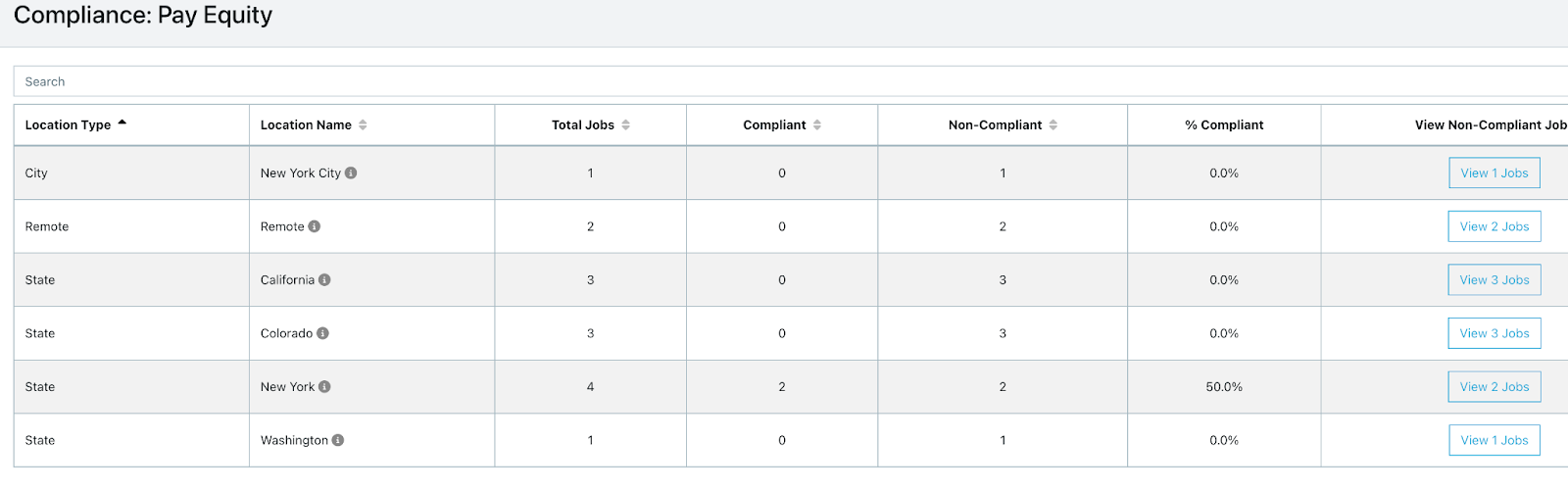
- Ongig scans for non-compliant jobs every hour. The compliance report functionality alerts you of non-compliant roles so you can make edits. So, it breaks your JDs down by “Location Type” and shows if roles are remote or onsite for easy organization.
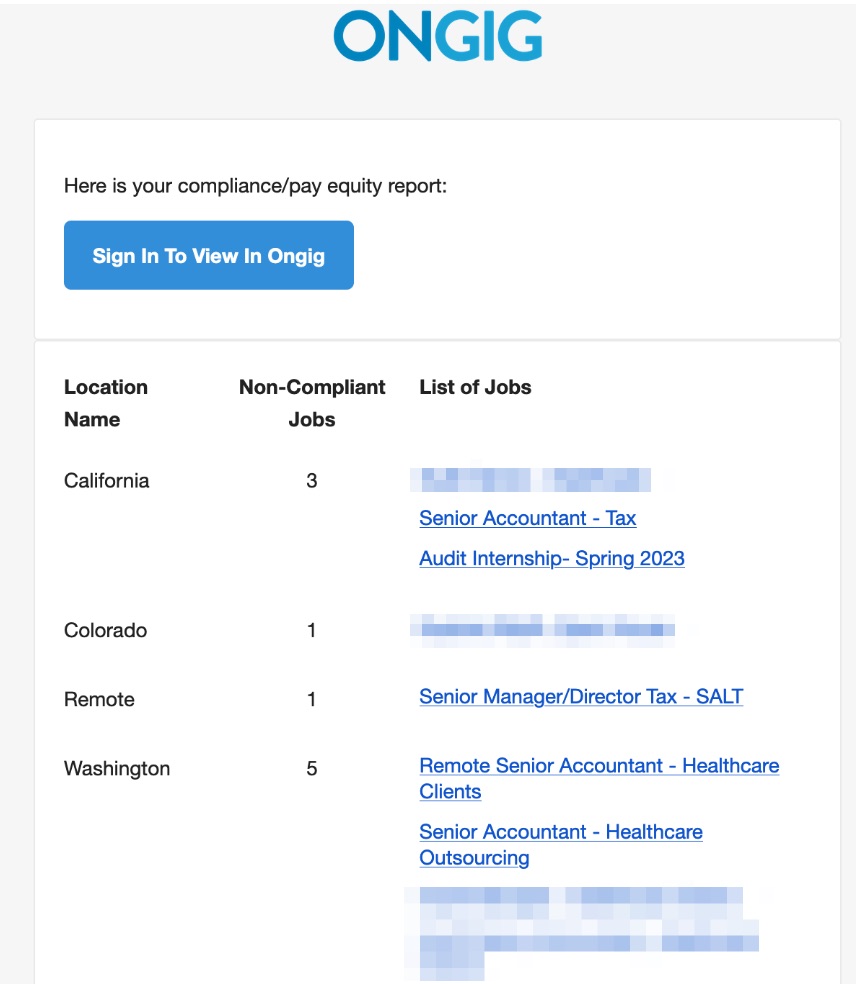
- Ongig emails you a compliance report. So, if you sign up for the “Compliance Report” functionality, you get an emailed compliance/pay equity report as an extra reminder. And so this is to help you keep track of “Non-Compliant” job listings.
- Ongig ensures your remote job JDs are compliant. Depending on the State, remote jobs have their own Pay Transparency laws. So, Ongig tracks remote roles for pay equity compliance and alerts you in the job editor so you can easily make edits.
- Ongig flags missing salary info for different cities, states, and municipalities. If your JDs are missing salary details, then you’ll get an alert based on location for pay transparency legislation. It even sends you multiple alerts if your JDs are posted in multiple areas (for example, remote jobs or jobs in different states).
Why Salary Transparency Matters
The benefits of pay transparency go beyond compliance with federal laws or state regulations. When companies are clear about their pay practices, they build a global team culture that values fair compensation and open communication. Prospective employees are also more likely to trust a company that discloses employee salary information upfront.
In the coming years, more organizations are expected to embrace wage transparency laws to stay competitive in the labor market. Whether it’s a small business or a large corporation, having a pay transparency policy can help attract job candidates, reduce pay inequities, and foster long-term employee satisfaction.
For companies navigating these changes, seeking legal advice on pay transparency policies is crucial. So, adopting fair pay practices and addressing issues like compensatory damages or punitive damages from the first offense can ensure compliance and promote a healthy company culture.
Why I Wrote This:
The more open you are about pay transparency, the more your business will grow. And we know you want to ensure your job postings are compliant with “pay equity” laws. And that’s where Ongig’s software comes in to help you quickly scan them for missing salary info. So, you can easily edit any JDs that are not compliant.
Shout-outs:
- Podcasts: What’s new at Indeed with EVP Maggie Hulce (by RecTech Media)
- New Data On Financial Transparency At Work [2023 Report] (by Dominique Goldschmitt)
- Adobe’s Future Workforce Study reveals what Gen Z is looking for in the workplace (by Vaishali Sabhahit)
- Quick Facts About the Gender Wage Gap (by Center for American Progress Action Fund)
- This Job Description Heatmap Shows You What Candidates Really Care About (and What They Ignore) (by Greg Lewis)
- Most US Companies Are Willing to List Salaries in Job Descriptions (by Jeff Green)
- Albany County, New York’s New Law Requiring Disclosure of Pay Ranges in Job Postings (by The National Law Review)
- NY State Will Now Require Companies to Post Salaries in Job Ads (by Bloomberg Law)
- More states roll out pay transparency laws (by Erin Bendig)
- Connecticut Proposes Legislation To Increase Salary Transparency In Job Postings (by Kelly M. Cardin and Nicole S. Mulé)
- Westchester County, NY Pay Transparency Law Takes Effect (Law and the Workplace Blog)
- Salary Transparency Comes to (Some) of New York State (by Ogletree Deakins)
- What We Heard (by Newfoundland and Labrador)
- An Act to Amend the Employment Standards Act (by Andrea MacRae)
- Rhode Island law expands the state’s equal pay law effective January 1, 2023 (by EY)
- Update: Governor Murphy Signs NJ Pay Transparency Legislation (by Seyfarth)
