Your career site job search page is a vital component of the candidate experience.
The most common job search page mistakes include using your ATS’s URL instead of your own domain, letting your ATS logo overshadow your brand, relying on dropdown filters instead of crawlable links, losing your favicon on the job portal, and publishing generic job descriptions. Each of these hurts both candidate experience and your search visibility.
However, many job search pages make some common mistakes. I ran across one employer recently, Ideal Industries, whose job search page had 5 things they could fix to improve candidate experience (and increase pipeline/traffic).
I don’t mean to pick on Ideal Industries. They look like a fantastic company that’s been around for 107 years and has a solid Glassdoor rating of 3.8! I could cite many other examples of solid employers making the same mistakes.
Adding to the complexity is that job search pages typically rely on applicant tracking systems so you have another party to work with.
Quick Summary: 5 Job Search Page Mistakes to Fix
- ATS URL in the address bar — your ATS’s domain is getting the SEO credit, not yours
- ATS logo too prominent — candidates should be focused on your brand, not your vendor’s
- Dropdowns instead of linked pages — Google can’t crawl a filter, but it can crawl a link
- Missing favicon — your branded favicon should follow candidates all the way to the job description
- Generic job descriptions — copy-pasted intros and vague responsibilities cost you the right applicants
Here are the 5 mistakes your job search page might make along with the fixes:
1) Your ATS URL Appears Instead of Your Company Name
The URL for your job search page should have your name in it (e.g. jobsearch.idealindustries.com) and not mention the name of your ATS. This is both a better candidate experience and also important for Google to send you more traffic as Google gives credit to whatever domain is in the URL and if it’s your ATS’s name then they get the Google SEO (Search Engine Optimization) credit.
You need to mask the URL so that it’s your domain name.
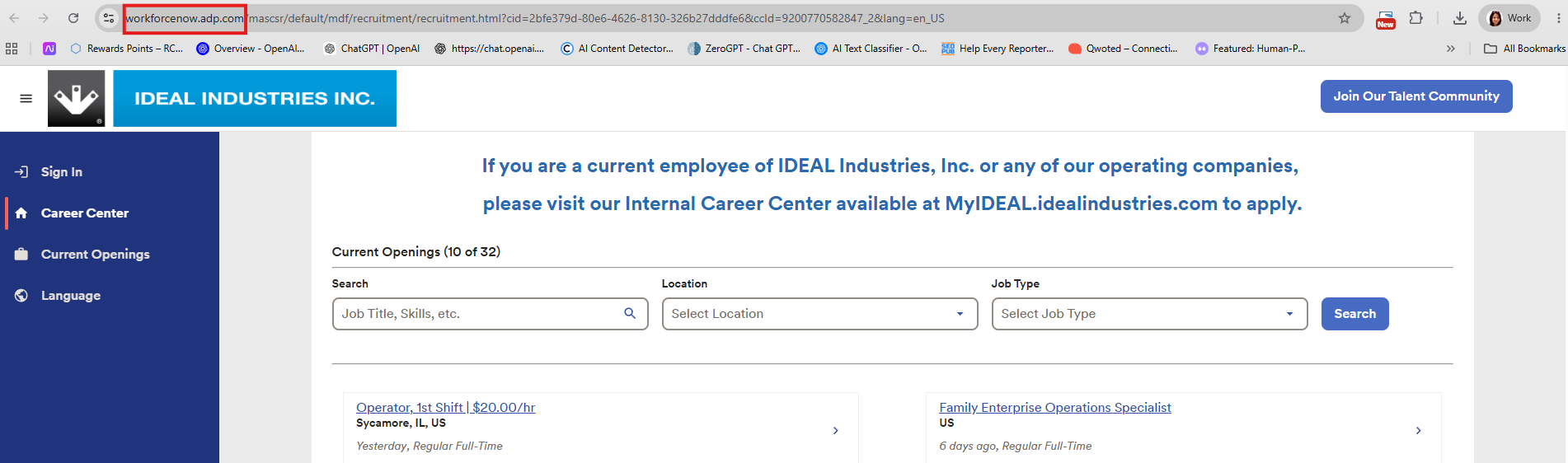
The fix: Ask your ATS provider or internal tech team to mask the job search URL with your own domain. Most ATS platforms support this — it’s often called URL masking or a custom domain setup. It’s a one-time technical change that protects your SEO and keeps your brand front and center from the first click.
2) Your ATS Logo Is More Prominent Than Your Brand
Do you see how Ideal Industries’ logo is barely more noticeable then the logo of the ATS provider ADP. You don’t want to confuse your candidates in any way about the page they are on. They shouldn’t care about ADP, they should care about you!
So make sure that your logo is prominent and ask your ATS to make their logo secondary (ideally theirs should be much smaller).
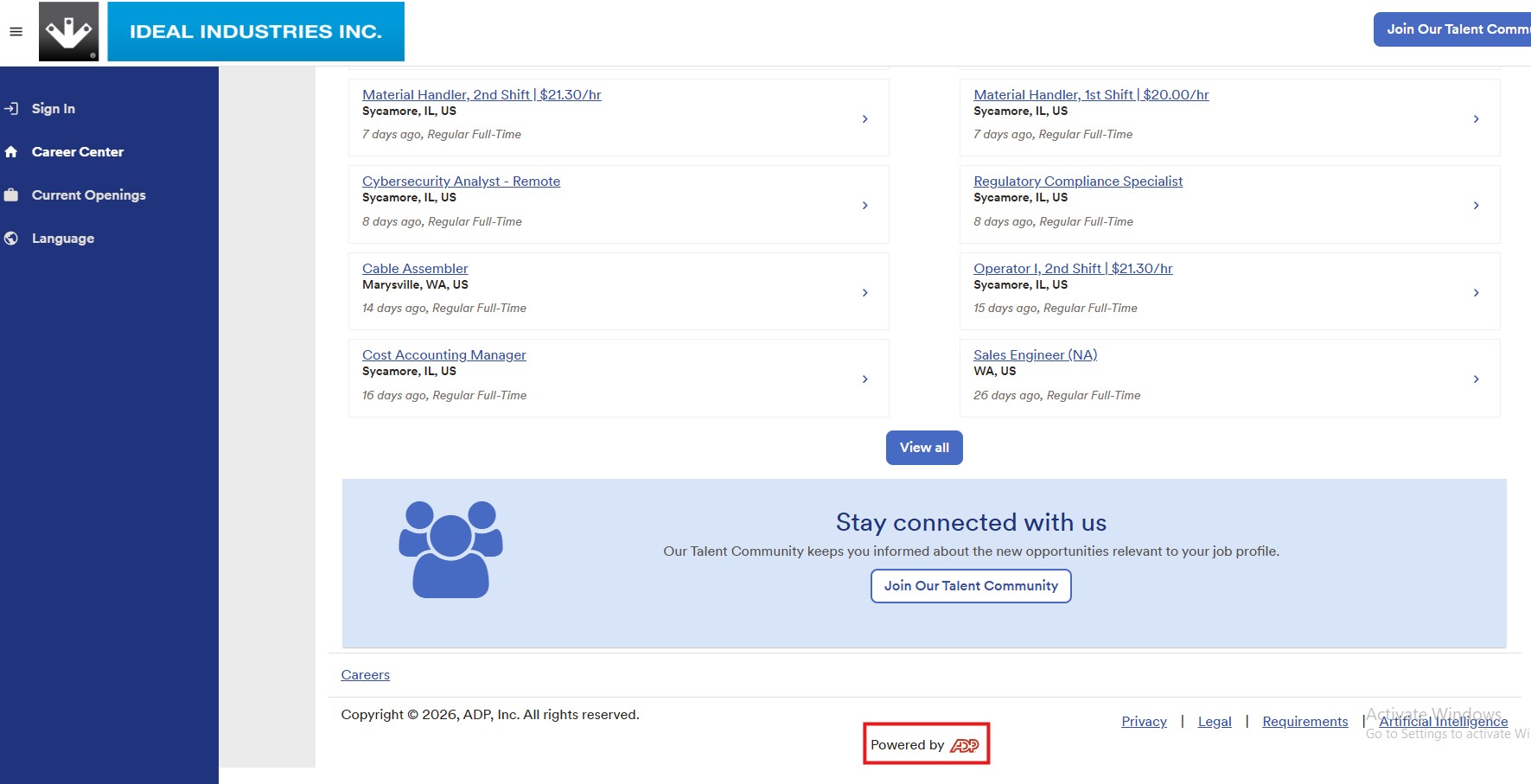
The fix: Ask your ATS provider to reduce the size and prominence of their logo on your job search pages. Most will accommodate this. Your logo should be the dominant visual. If a candidate has to look twice to confirm whose page they’re on, something’s off.
3) You Use Dropdowns Instead of Linkable URLs
Drop-down filters feel helpful to a candidate who’s already on your page. The problem is they’re invisible to Google.
When someone filters IDEAL’s job search portal by “Sycamore – IL” or “Regular Full-Time,” the results show up. But the URL doesn’t change. There’s no unique page Google can crawl, index, or serve to a job seeker searching “IDEAL Industries jobs in Illinois.” That traffic disappears because, technically, the page doesn’t exist.
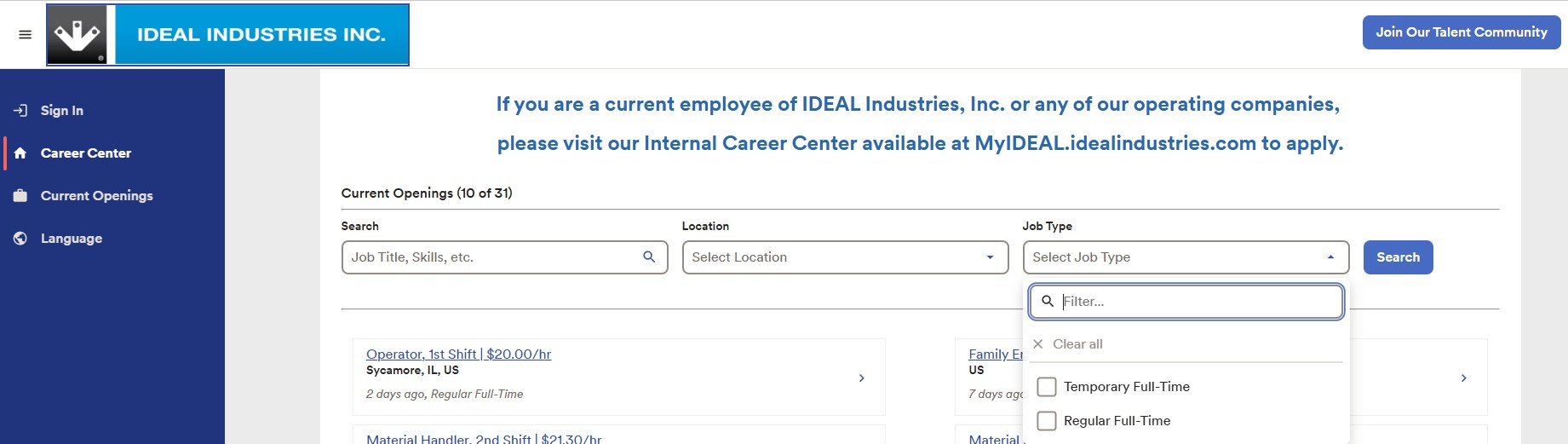
What you want instead are actual hyperlinks (one for each location and job category) that each point to a dedicated, indexable page. Google treats those links as a breadcrumb trail and uses them to surface your openings to the right candidates at the right time.
Take Culture Amp’s careers page as an example of what this looks like in practice. Each of their office hubs (Melbourne, Sydney, New York, London, Berlin) has its own linked URL. A candidate interested in Chicago roles doesn’t have to open a dropdown. They click “See open roles →” and land directly on a filtered page. Google can find that page too.
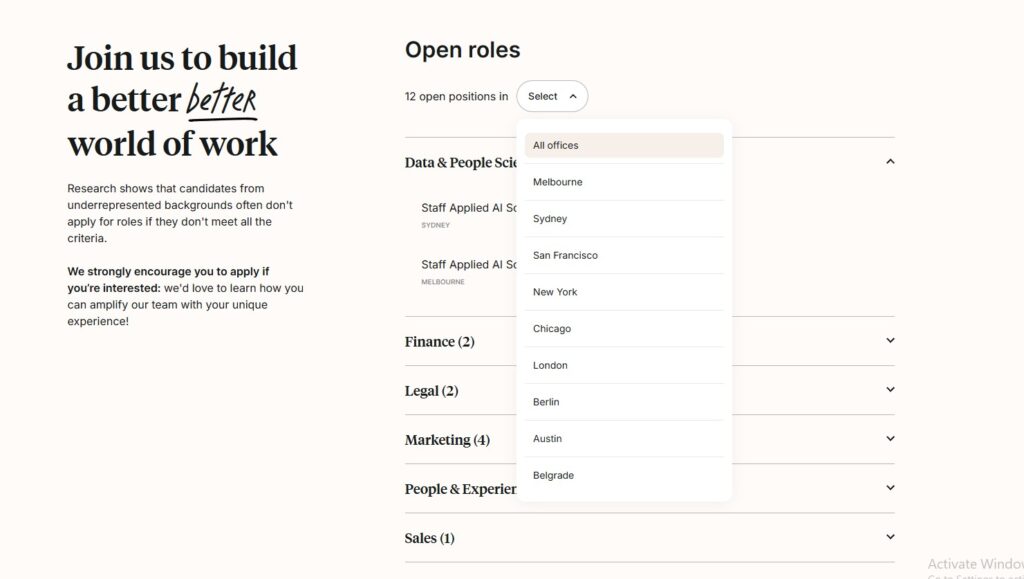
IDEAL’s ADP portal doesn’t work that way. The location and job type filters exist only as interactive elements. There’s no page behind them. This means no SEO value, no Google indexing, and no organic traffic from candidates who were never going to find the job board directly in the first place.
The fix: Work with your ATS or internal tech team to generate static, linked pages for each location and department where you have open roles. Ask your ATS provider directly whether this is supported. Some platforms make it easier than others, but it’s almost always possible.
For inspiration on what a strong job search page looks like, check out our roundup of the best career site job search examples.
4) You Lose Your Favicon (and Your Branding With It)
Do you know what a favicon is? Your favicon is a small but powerful branding signal and most ATS portals strip it out entirely.
For example, Ideal Industries’ favicon is the the white arrow pointing down in a gray box:

Your candidate should see that favicon on every page related to your company career site that they’re on.
However, you’ll notice that in Ideal Industries’ case, the favicon for the job search page is that of ADP and not of Ideal. This is confusing to the candidate who is looking for a relationship with you the employer (not your ATS).

Your favicon should follow the candidate on every job search page they experience with you all the way down to the job description.
If your job search page does not include your branded favicon, just talk to your ATS or your internal tech team.
The fix: talk to your ATS provider or internal tech team about replacing the default favicon with your own branded one. It’s a small request that most platforms can accommodate, and it keeps your branding consistent from the job search page to the individual job description.
5) Your Job Descriptions Are Too Generic to Convert
A job description is often the first real conversation you have with a candidate. If it’s confusing, vague, or copy-pasted from another role, you’re already starting on the wrong foot.
Take IDEAL Industries’ Cybersecurity Analyst posting as an example:
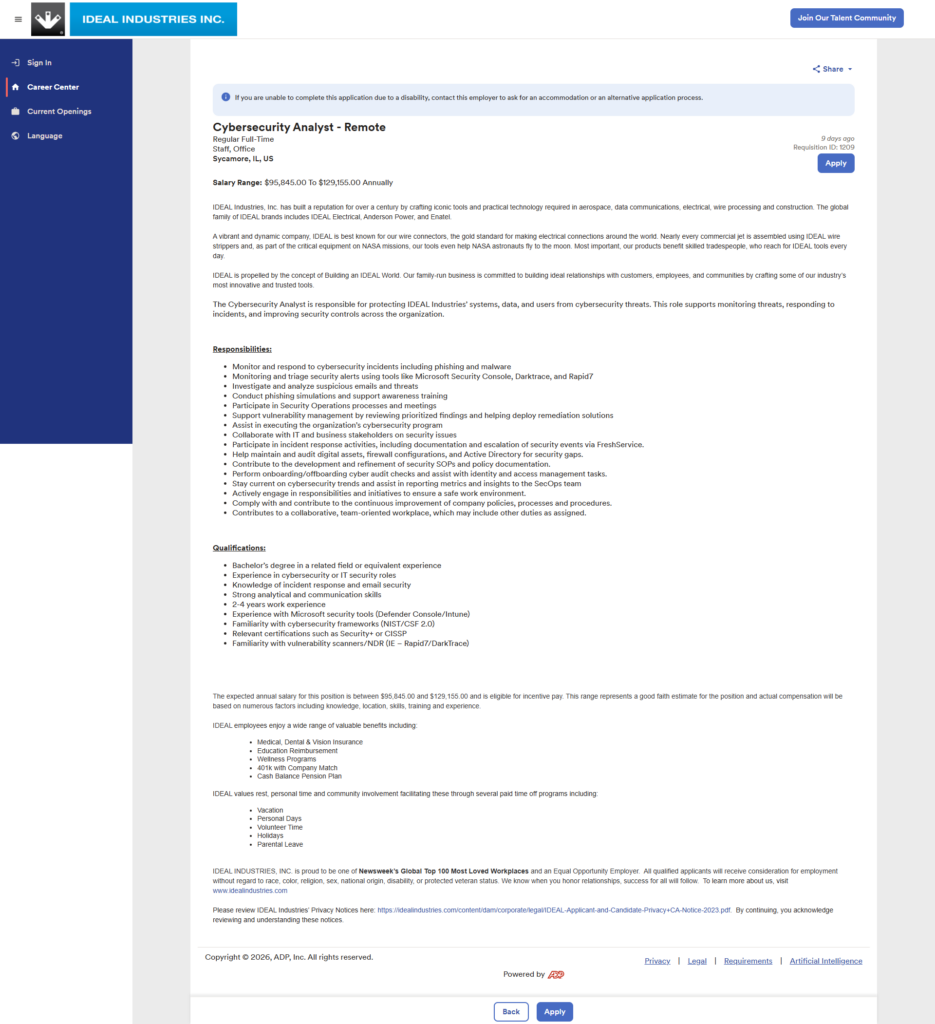
The good news first: this JD has gotten better in some meaningful ways. The salary range ($95,845–$129,155) is right at the top. The responsibilities call out specific tools — Darktrace, Rapid7, Microsoft Defender, FreshService — which signals to candidates that IDEAL actually knows what this role involves. And the EEO statement appears once, cleanly, at the end. That’s an improvement over older IDEAL postings where it showed up twice.
But here’s where it still falls short.
- The company intro is doing nothing for this role. The first three paragraphs — about wire connectors, NASA missions, and skilled tradespeople — are copy-pasted boilerplate that appears verbatim across IDEAL’s job postings, regardless of the role. A cybersecurity analyst doesn’t need to read about wire strippers to decide if they want to apply. That intro was written for an electrician, not a security professional. Candidates notice when a JD doesn’t speak to them, and they move on.
- The responsibilities list lacks priority. Right now, “Monitor and respond to cybersecurity incidents” sits next to “Participate in Security Operations meetings” and “Contribute to a collaborative, team-oriented workplace.” These are not the same level of task. Mixing high-stakes responsibilities with filler bullets dilutes both. Lead with what matters most to the role, and cut anything that could apply to any job at any company.
- The qualifications need a clearer structure. “2-4 years work experience” is buried in the middle of the list. That’s one of the first things a candidate uses to self-qualify — it should be near the top. You could also split the list into “Required” and “Preferred” to help candidates who are 80% there feel confident enough to apply.
- The remote work setup is missing. This posting is listed as Remote, but there’s nothing in the JD about what that means in practice — time zone requirements, equipment provided, any on-site expectations. For a cybersecurity role that likely handles sensitive systems, candidates will have questions. Answer them in the JD.
The fix: Create a role-specific intro that speaks directly to the kind of candidate you’re trying to attract, prioritize your responsibilities list, and add a line or two about what remote actually looks like at IDEAL. Small changes, but they make a real difference in who applies and who doesn’t.
For more on what to avoid in your job postings, see our list of job description red flags to avoid.
FAQs about Job Search Page Mistakes
1. What should a job search page include?
A job search page should include your company’s branded header and footer, a prominent logo and favicon, a keyword search bar, and filterable options for location and job type. Ideally, each location and department should link to its own dedicated page so Google can index your openings and serve them to the right candidates.
2. How do I optimize my career site for Google?
To optimize your career site for Google, make sure your job search page uses your own domain, not your ATS provider’s URL. Create dedicated, crawlable pages for each job category and location instead of relying on dropdown filters. Consistent branding, fast load times, and working links also signal credibility to both Google and candidates.
3. Why is my ATS URL hurting my SEO?
When your job search page URL contains your ATS provider’s domain instead of your own, Google credits that domain for the traffic, not yours. This means your career site misses out on organic search rankings even when candidates are actively looking for jobs at your company. Masking the URL with your own domain fixes this.
Why I wrote this
The problems mentioned above are typically fixed through a combination of talking to your ATS partner and someone technical inside your own business. Some recruiting software, like Ongig (shameless plug) solve all of this for you.
Your branding and the candidate experience are paramount.
