There are quite a few offensive exclusionary words and phrases that can crush your job descriptions.These words are considered “exclusionary” by some and just plain offensive words by others.
Exclusionary words in job descriptions are so rampant, that Ongig’s Text Analyzer now flags them for our clients (with recommendations for inclusive synonyms to replace them with and explains why they might be offensive to certain groups).
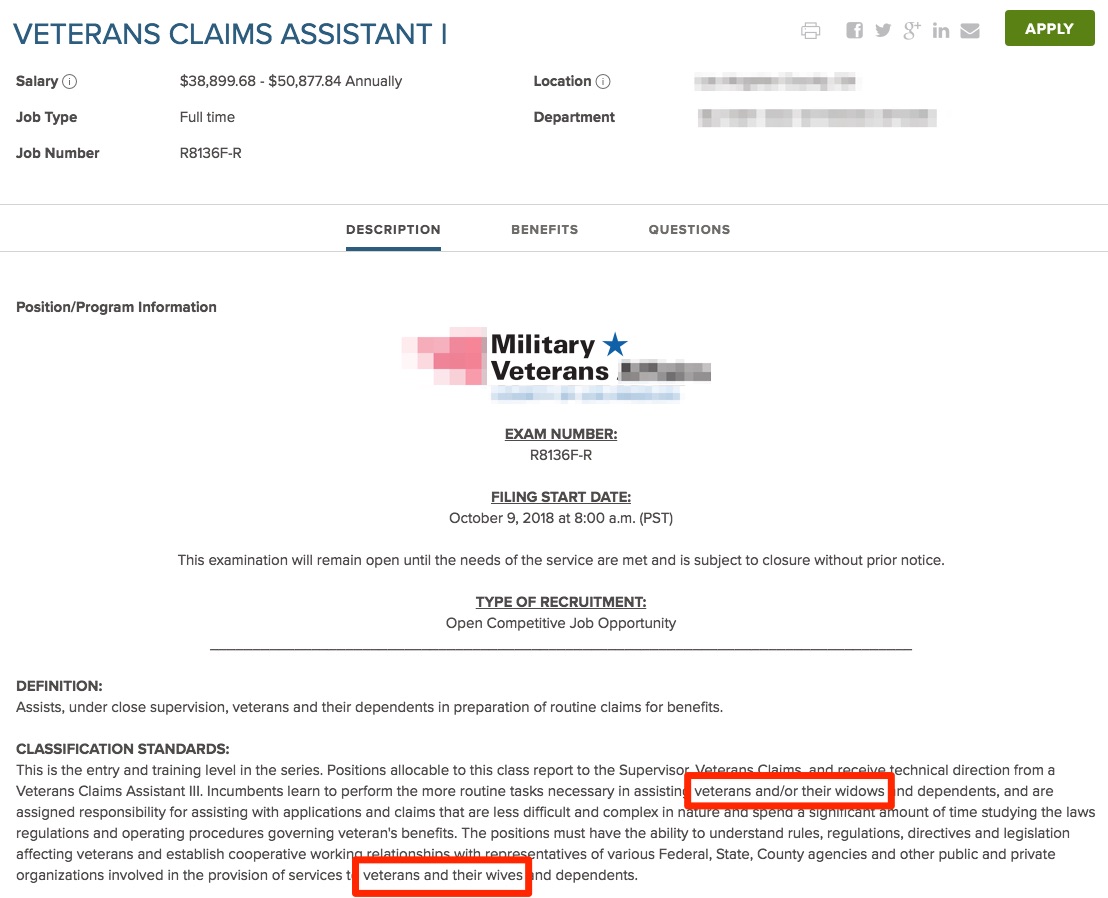
Below are a couple of examples of offensive exclusionary words we’ve found in job descriptions. I grayed out the names of the employers cuz we don’t like to throw companies under the bus.
Problem
Check out the phrases highlighted above: There are 2 problems with this:
- It assumes that veterans are only men
- It ignores same-sex relationships that veterans might be in
Solution
They’d be better off writing something like:
“veterans and/or their spouses” or “veterans and their partners”.
Let’s look at another example of a job description with language offensive to some.
One topic to beware of is racially insensitive words and phrases.
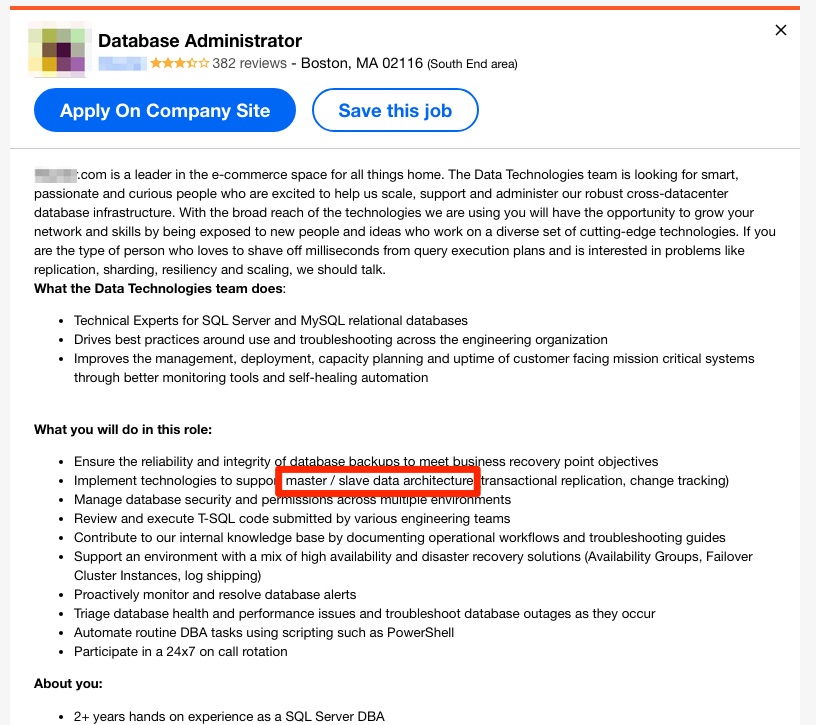
Check out the below job description’s use of the phrase “master / slave”. “Master/Slave” is a term used in technology to describe the control of one device over another.
Problem
Many will consider “master/slave” racially insensitive because it evokes the practice of slavery. Yet, master/slave continues to be used in many database-related job descriptions
Solution
Consider different language, for instance, tech leaders such as IBM, Microsoft, Amazon Web Services and others have replaced the use of “master/slave” with “primary/replica”.
List of Exclusionary Words, Terms, and Phrases (2026)
Offensive Exclusionary Words List for Race
Systemic racism still affects diverse groups of people. And racial bias in job descriptions is still high. For instance, candidates with black-sounding names receive fewer callbacks after job applications.
We should not forget that the color black is associated with negative stereotypes such as evil. While white is used to represent purity.
So here are racially biased words to remove from your job descriptions. And inclusive replacements for them:
| Offensive Words | Inclusive Synonyms |
| tribe | team, network |
| servant leadership | supportive leadership, growth leadership |
| spirit animal | kindred, muse |
| cakewalk | easy task |
| colored person | people of color, POC, BIPOC |
| blacklist | blocklist |
| culture fit | culture add |
| brown bag session | lunch and learn |
| American Indians | Indigenous Americans/Native Americans |
| English native speaker | fluent in English |
| minorities | underrepresented groups |
| peanut gallery | group, crowd |
| segregate | segment, divide |
| grandfather clause | legacy |
| grandfathered | exempt |
| Latino (when used as catch-all) | Latino/a, Hispanic, or Latine. Note: “Latinx” is preferred by only 4% of U.S. Hispanic adults (Pew Research, 2023). Prefer “Latino/a,” “Hispanic,” or “Latine” depending on context and audience. |
| non-white | members of the underrepresented groups |
| nip in the bud | stop, end |
Tech-Specific Exclusionary Terms
Technology uses its own set of exclusionary terms that carry racial or discriminatory weight. Major firms like GitHub, Microsoft, and Amazon have already swapped functional terms like “master/slave” and “blacklist/whitelist” for neutral alternatives to create more welcoming environments. If your job descriptions cover infrastructure or developer workflows, you should audit them for these outdated terms to stay aligned with current industry standards.
| Offensive Words | Inclusive Synonyms |
| master/slave | primary/replica |
| master branch | main branch |
| whitelist | allowlist |
| blacklist | blocklist |
| sanity check | validation check, smoke test |
| dummy value | placeholder value, sample value |
| man-in-the-middle | on-path attack, interceptor |
Offensive Exclusionary Words List for Gender
Even in the modern world, job descriptions still aren’t gender inclusive. For instance, job titles use the term “man” (Fireman, Doorman, Congressman, Chairman,), etc. And yet there are many gender-neutral titles to use.
Here are examples of biased gender words to avoid and the replacements:
| Offensive Words | Inclusive Synonyms |
| a champion | an advocate, a supporter |
| chairman | chairperson |
| foreman | supervisor |
| waitress | server |
| ladylike | professional |
| a ninja | a pro |
| overachiever | dreamer, doer |
| poster boy | influencer, role model |
| servicemen | veterans |
| policeman | police officer |
| mastermind | strategist |
| emotional | expressive |
| brother | sibling |
| businessman | businessperson |
| dad | parent |
| females | women |
| forefathers | ancestors |
| founding fathers | ancestors, founders |
| freshman | first-year student |
| gals | folks, people |
| girl | woman |
| guys | folks, people, teammates |
| handyman | maintenance person |
| ladies | folks, people |
| layman | layperson |
| man | person, individual |
| man-hours | work hours, workers, workforce, personnel |
| man-made | artificial, synthetic |
| mankind | people, human beings, humanity |
| manpower | workers, workforce, personnel |
| middleman | intermediary, go-between |
| mom | parent |
| sister | sibling |
| spokesman, spokeswoman | spokesperson |
| workmanship | work |
| maternity/paternity leave | parental leave |
Masculine-Coded Descriptors in Job Requirements
Research shows that masculine-coded adjectives cause women to feel they “belong less,” which stops them from applying even when they are fully qualified. For example, a LinkedIn report found that 44% of women avoid job ads that use the word “aggressive.“
Replacing these biased terms with neutral, skills-based alternatives is a free and effective way to widen your applicant pool. Instead of describing a workplace culture with personality-driven labels, focus on the specific skills needed to succeed in the role.
| Masculine-coded word | Neutral Alternative |
| aggressive | driven, results-oriented |
| competitive | motivated, high-performing |
| dominant | effective, influential |
| independent | self-directed |
| strong (as a personality trait) | expert, specialist, skilled |
| demanding | fast-paced |
| assertive | confident, direct |
| strong (as personality trait) | capable, proven |
| quarterbacked | guided, managed |
Offensive Exclusionary Words List for Disability
Unemployment rates were higher for persons with a disability than for those with no disability according to 2023 statistics from the Bureau of Labor Statistics in the United States. Therefore, using non-ableist language throughout your job description creates an inclusive environment where any individual with a disability is welcome.
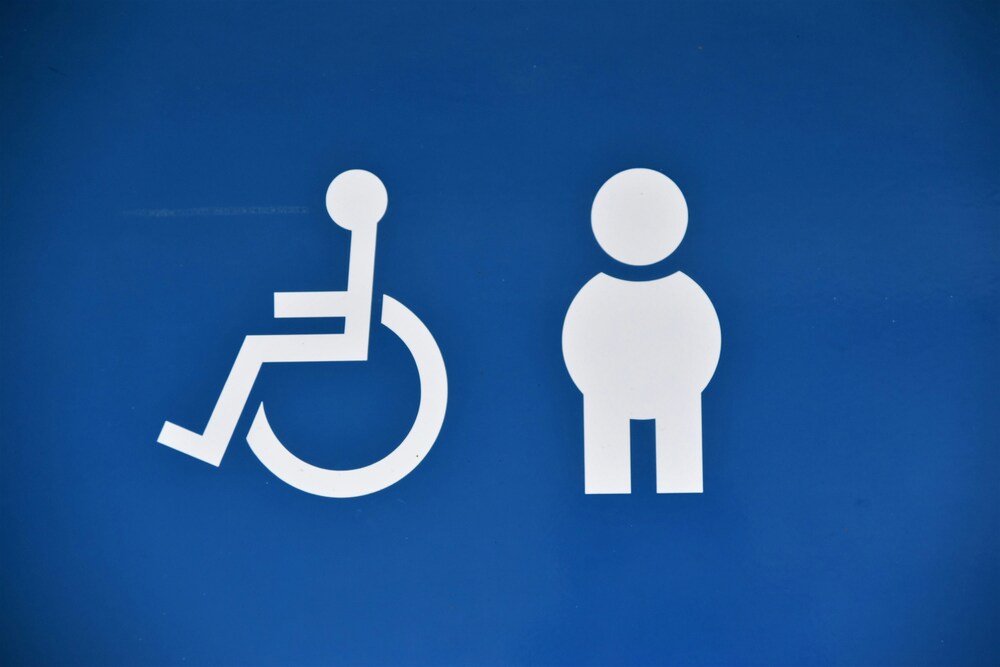
Image Source: Waldemar on Unsplash
So here are examples of disability-exclusionary phrases to avoid and person-first language replacements:
| Offensive Words | Inclusive Synonyms |
| able-bodied | a person without a disability |
| special needs | individualized education program |
| walk | move, traverse |
| vision-impaired | a person with limited vision |
| disabled parking | Accessible parking |
| mute | a person who cannot speak |
| stand | be upright, stationary |
| Suffering from | experiencing an illness |
| restricted to a wheelchair | a person who uses a wheelchair |
| vertically-challenged | a little person |
| afflicted, crippled, handicapped, invalid | person with disability |
| retarded | person with a developmental disability |
| dwarf | little person, person of short stature |
| the disabled | people with disabilities |
Offensive Exclusionary Words List for LGBTQIA
Job applicants from the LGBTG+ community get left out of the work environment based on their gender identity, sex change, personal pronouns they use, the individuals they choose to love, and the way they describe their families.
Here are examples of LGBTQ exclusionary phrases to avoid and inclusive terms to boost your JD word choice:
| Offensive Words | Inclusive Synonyms |
| gay lifestyle | LGBTQ+ community |
| same-sex-marriage | marriage |
| he/she | they/you |
| lifestyle choice | sexual orientation |
| men and women | people, everyone, the team |
| gay agenda | LGBTQ+ rights |
| non-straight | queer |
| sexual preference | sexual orientation |
| transgendered | a transgender person |
| husbands | spouses, partners |
| widows/widowers | deceased spouses, deceased partners |
Offensive Exclusionary Words List for Age
The labor market currently has different types of generations, from Baby Boomers to Gen Z, and more. Because of this, your job descriptions should include age-inclusive language that applies to all ages, from older adults to younger people.

Image Source: Jason Goodman on Unsplash
Here are non-inclusive age-biased words to avoid and replacements to use:
| Offensive Words | Inclusive Synonyms |
| digital natives | people passionate about technology |
| new graduate, recent graduate | graduate |
| geezer | older person |
| an individual to hit the ground running | adaptable to challenges |
| the elderly | older people |
| fast-paced | challenging |
| just graduated | has graduated |
| no experience needed | demonstrate a willingness to learn |
| experienced worker | demonstrated skills |
| energetic and young | eager to learn |
| millennials only. Note: “Millennials only” is problematic specifically when it’s used to exclude older candidates, which may violate age discrimination laws such as the Age Discrimination in Employment Act (ADEA). If your role targets early-career talent, use skills-based language instead | early-career candidates are welcome |
Offensive Exclusionary Words List for Socioeconomic Bias (Elitism)
Socioeconomic bias is a common but often overlooked form of exclusionary language in job ads. Requirements like “Ivy League background” or “top-tier university” screen out capable candidates who gained skills through community college, bootcamps, or direct work experience. Similarly, the phrase “culture fit” often acts as a proxy for social similarity, favoring people who mirror the existing team instead of adding new perspectives.
Replacing these elite labels with skills-based criteria opens your pipeline to a broader and stronger pool of talent. Focusing on what a candidate can actually do, rather than where they went to school, ensures your hiring process remains fair and merit-based.
| Offensive Words | Inclusive Synonyms |
| Ivy League background | relevant education or training |
| top-tier university | accredited degree or equivalent experience |
| prestigious school | accredited institution |
| culture fit | culture add |
| unpaid internship experience required | relevant experience |
| overqualified | experienced |
| entry-level (when salary is below living wage) | junior role with growth path |
| nip in the bud | stop, end |
| illegal immigrants | undocumented immigrants |
Offensive Exclusionary Words List for Neurodiversity and Mental Health
The non-inclusive language for mental health in job descriptions sometimes goes unnoticed because we use those phrases in our everyday talk.
For instance, you might have come across job descriptions with the phrase, “This open position might require you to work ‘crazy hours’.”
The term “crazy hours” is a derogatory term discriminative to people who have a mental condition. So here are mental health biased problematic terms to avoid and the replacements:
| Offensive Words | Inclusive Synonyms |
| basket case | nervous |
| unstable | inconsistent |
| hysterical | frustrated |
| high-pressure | fast-paced |
| crazy | a person who has an emotional disability |
| struggling with depression | have depression |
| mental illness | have a mental health condition |
| mad | a person with a mental condition |
More Tips for Creating Inclusive Job Descriptions
Eliminating exclusionary language isn’t the only step in ensuring you write inclusive job descriptions.

Image Source: Christin Hume on Unsplash
Here are more tips for creating inclusive job descriptions:
State your Inclusive Benefits
There are minority groups of employees who are still discriminated against in the employment world. Employees such as people living with disabilities, and working parents. So try and include benefits such as paid parental leave for new parents and caregivers. And including flexible working environments for new parents and people living with disabilities. Plus also check that all the employees earn a fair wage regardless of gender, race, and age.
Reduce Must-Have Requirements
The must-have job requirements in job descriptions prevent various groups of candidates from applying.
For instance, men and women apply for open positions differently. From research, women don’t apply to job openings that they aren’t 100% qualified. On the other hand, men apply even without all the qualifications.
Focus on Responsibilities and Skills
Results-based job JDs boost your inclusive recruitment efforts. So instead of insisting on a specific educational background that may limit the chances of some groups of candidates, emphasize the qualifications and skills needed for the job opening. This strategy allows group of people from various backgrounds to show their capabilities, regardless of their area of study.
Clarify your Commitment to DEI
Applicants love seeing a diversity and inclusion statement when they’re applying for jobs. For instance, according to a study from Linkedin, people from BIPOC communities would still love to see a generic diversity statement. According to them, it’s a good sign to have a generic inclusion statement than not have any at all.
For more tips and ideas on creating job descriptions, check out How to Write a Job Description — Best Practices & Examples.
Use Job Description Management Tool To Analyze Your Job Description Language
We know how hard it is to analyze all the offensive exclusionary words in your job descriptions. It’s also harder if you’re creating job descriptions at scale.
Now this is where the job description management tool comes in. You need software that can help you flag any offensive terms and words based on gender, race, former felons, LGBTQ, and more. And give you alternative preferred terms.
So this is where software like Ongig’s Text Analyzer comes in. Ongig carefully reviews your job description’s offensive exclusionary words based on:
- Gender
- Race
- Disability
- LGBTQ (sexual preference)
- Ethnicity
- Immigration status
- Neurodiversity
- Age
And more.
For instance, our software flags 10,000+ exclusionary words automatically. In the below screenshot, Ongig automatically points out the exclusionary term related to ethnic diversity “native English speaker”.
After all, you aim to recruit an applicant who speaks English well and not an individual born in a native English-speaking country.
Impact of Exclusionary Language on Diverse Talent Pools
When writing job descriptions, the words we choose can have a big impact on who feels welcome to apply. So, the use of these terms can either include or exclude certain groups. It’s also important to think about the impact of mental health language, gender expression, and words related to racial group identities to create an inclusive and welcoming environment.
Why Language Matters
Language matters because it shapes how people see themselves and others. For example, using terms with negative connotations, like “man hours” instead of person hours, can make women of color or transgender people feel like the job isn’t meant for them. However, the flip side is that when we choose inclusive alternatives, we show that everyone is welcome, regardless of gender, race, or other parts of a person’s identity.
Harmful Stereotypes in Common Words
Words carry history, and sometimes they bring harmful stereotypes with them. So, a phrase like “black hat,” which originated in the late 19th century, can be linked to a negative association with skin color, specifically targeting black people. The use of the words “black” or “white” in certain contexts can create unintended messages, especially for black americans and white people. Therefore, using general terms without considering historical context might unintentionally reinforce racial slurs or biased thinking.
Specific Ways Words Exclude
Terms like “master list” or “black hat” can subtly reinforce ideas tied to white supremacists or biased beliefs from the past. Similarly, outdated language like “Chinese pidgin English” has been used as a racial slur against Asian American communities. So, if job ads don’t reflect inclusive words, minority groups may feel like the company doesn’t respect their cultural significance or experience. Instead, opting for inclusive job ads with plain, neutral language is always a good idea.
Impact on Candidates with Disabilities
In addition, when it comes to the deaf community, the use of terms like “hearing impaired” is often seen as offensive. The preferred term for many deaf people is simply “Deaf,” which puts their person’s identity front and center. The same also goes for individuals with visual impairments or a mental disability; using identity-first language acknowledges the person before the medical condition. So, next time you write a job ad, think about how inclusive alternatives can make a difference for applicants.
Moving Forward
Companies need to recognize the importance of inclusive language and how it affects campus members or potential employees. Some industries, like the tech industry, have made strides, but there’s still work to do. Therefore, spending time understanding the primary issue with exclusionary language shows mutual respect for every candidate, including black americans, brown people, and others from underrepresented backgrounds. So, by embracing inclusive words and making thoughtful changes, like using person hours instead of “man hours,” businesses can build a more welcoming workplace for everyone.
For more tips on writing job descriptions, check out How to Write a Job Description — Best Practices & Examples.
Good Resources for Lists of Exclusionary and Offensive Words
Here are a couple of good resources to help you further:
- The APA Inclusive Language Guidelines – explain why certain terms are harmful to marginalized communities. It also lists terms and concepts that may be offensive and painful to different groups.
- Conscious Style Guide – learn how you can use language that is inclusive, respectful, and empowering
- The Disability Language Style Guide from the National Center on Disability and Journalism – covers dozens of words and terms commonly used when referring to disability
FAQs
- What are exclusionary words?
Exclusionary words are “coded” terms that unintentionally signal to certain groups—based on gender, age, or background—that they do not belong in a role. For example, words like “rockstar” or “ninja” often discourage female applicants, while “digital native” can push away older, experienced workers.
- Why does inclusive language matter in job descriptions?
Inclusive language expands your talent pool by removing barriers that cause high-performing candidates to self-select out of the process. Using neutral terms is a “quiet” but effective way to maintain fair hiring and meet legal compliance even as federal rules for diversity programs change.
- How do I check my job description for bias?
First, audit your text for “masculine-coded” words like competitive or leader and replace them with neutral alternatives. Second, switch to skills-based criteria rather than vague terms like “cultural fit” to ensure your hiring decisions are merit-based. Finally, use a tool like Ongig to scan for blind spots and suggest replacements that keep your hiring effective and legally defensible.
Why I wrote this?
My team and I at Ongig focus on creating the world’s best-looking and most effective job descriptions. One feature of our Text Analyzer software is that it identifies offensive/exclusionary words in your job descriptions, fixes them…and explains why they might be offensive to certain groups.
[starbox]
