Let’s be honest … “garden leave” sounds way more relaxing than it feels.
At least for the HR director signing off on it.
If you’re responsible for managing exits or protecting company assets, understanding the real cost of garden leave helps you make better policy decisions and avoid unnecessary financial and operational strain.
In today’s competitive job market, HR leaders are under pressure to balance compliance, culture, and cost efficiency, all while protecting confidential information and client relationships. Garden leave, also known as gardening leave, seems like a neat solution: It keeps sensitive information safe and prevents immediate competition.
But financial, cultural, and operational implications may outweigh its benefits. Many leaders are discovering what that looks like for their specific organizations and how to move forward.
This guide should help.
In this article, we’re taking a closer look at how garden leave works, why it exists, and what hidden costs companies tend to overlook — plus smarter ways to manage it.
What is garden leave?
Garden leave is when an employee (typically someone senior) is required to stay away from work during their notice period while still receiving full pay and benefits.
During this time, they’re technically still employed but prohibited from doing any work for the company or a competitor. It’s usually enforced through an employment contract that clearly outlines the terms and restrictions. Preventing a former executive from immediately leveraging these insider relationships to secure a major B2B opportunity for a rival firm is the primary goal here.
In other words, they’re paid to stay home and “tend to their garden,” metaphorically speaking.
Most commonly, it happens after an employee resigns. The company then decides to place them on garden leave during their notice period to protect confidential information, client relationships, or ongoing strategy.
But it can also happen when the organization initiates the separation with notice.
For example:
- The company terminates the employee but requires them to serve their contractual notice period.
- There’s a breakdown in trust, but no immediate cause for summary dismissal.
- A senior leader is asked to step aside during a restructuring.
In these cases, the employer also directs the employee not to work while continuing to pay salary and benefits through the notice period.
What’s the purpose of garden leave?
The main purpose of garden leave is protection. (For both the company and its clients.) When someone resigns, especially from a senior or strategic role, they often hold access to proprietary information, trade secrets, and active projects.
Garden leave ensures that a person can’t immediately walk into a competitor with the company’s confidential data, client contacts, or strategy fresh in their mind.
It also:
- Gives the company time to transition clients and projects smoothly.
- Prevents breaches of confidentiality or non-compete clauses.
- Reduces the risk of internal disruption or poaching.
Essentially, it buys time, limits exposure, and streamlines the offboarding process.
How long does garden leave usually last?
Garden leave time varies. But the typical garden leave period runs between one and three months. In executive or leadership contracts, it can stretch to six months or more.
The specific duration usually depends on seniority, how central the employee is to key operations, and what’s outlined in their employment contract.
Who receives garden leave?
Not everyone qualifies for garden leave.
It’s usually reserved for:
- Employees with access to proprietary or confidential information.
- Technical experts or project owners handling sensitive IP.
- Client-facing leaders who manage major accounts.
- Senior management or executives.
For junior roles, it’s rarely used. It’s simply too expensive and (usually) operationally unnecessary.
Restrictions during garden leave
While on garden leave, employees typically:
- Must comply with existing non-compete clauses or confidentiality agreements.
- Must return all company property (like laptops or company cars).
- Must remain available to advise on handovers if needed.
- Can’t take on consulting or outside employment.
- Can’t work for a direct competitor.
Even though they’re not working, they’re still contractually bound by employment law, meaning a breach could lead to legal action.
6 hidden costs of garden leave
Here’s where things get interesting (and expensive). On the surface, paying someone to stay home looks like a manageable HR cost. But when you dig deeper, the indirect expenses start piling up.
So … Is it worth it?
We’ll answer that question in a bit.
For now, here are the hidden costs you need to pay attention to:
1. Payroll strain from paying senior staff and replacements simultaneously
Companies often underestimate the financial strain of paying senior employees not to work while also hiring or contracting replacements.
For smaller firms in particular, extended garden leave periods can disrupt cash flow, sometimes forcing them to rely on small business loans to maintain operations, payroll stability, or ongoing projects during the transition.
If you’re paying two people (one inactive and one active), that’s a double hit to your budget with zero productivity gain.
If you’re looking to hire new team members quickly, look into Ongig’s AI to simplify and speed up how you create and edit job postings. Request a demo for more info.
2. Low productivity and delayed projects
Projects depend on timing and project leads. When a project owner is abruptly placed on garden leave, key milestones stall.
Delays can affect:
- Internal resource allocation.
- Delivery timelines.
- Client satisfaction.
Even with a replacement, there’s always a ramp-up period. So while garden leave protects intellectual property, it can simultaneously slow execution … especially in industries like finance, tech, healthcare, or law, where timing is critical.
3. Decreased team trust
Workplace culture is the second top organizational priority for HR leaders, according to a Gartner Survey. (See the image below.)
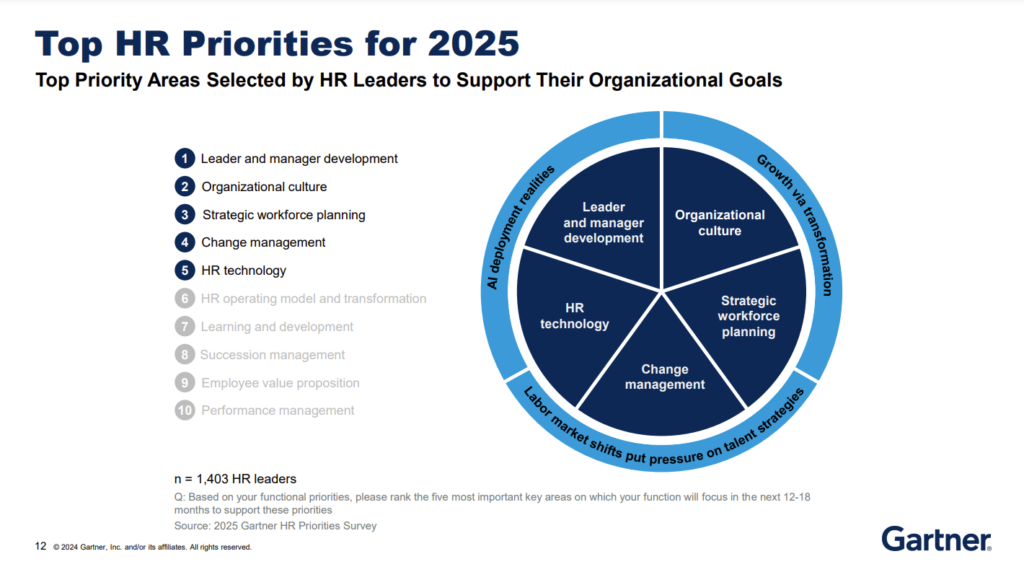
Chart shows the top organizational priorities for HR leaders.
But corporate culture thrives on relationships and collaboration. When a respected leader is suddenly put on garden leave, it can send mixed messages. Team members may wonder why their manager has suddenly disappeared.
From the team’s perspective, the company may feel unstable. One day, their manager is leading strategy meetings. The next day, they’re gone without explanation?
Even if the departure is neutral or contractual, if teams don’t know, gossip can spread. This can lower morale and damage the employer brand.
4. Potential for reputational damage
Stakeholders also notice when senior employees leave.
Clients may suddenly lose their primary contact. Partners may receive vague handover emails. And, worse, competitors may frame the exit as instability. Even if none of that’s true, perception moves quickly.
Externally, that can mean:
- Rumors that spread faster than internal clarifications.
- Increased scrutiny from boards or investors.
- Delayed renewals or contract negotiations.
- Clients questioning continuity.
Again, in leadership-heavy industries, relationships are vital. When you remove the relationship abruptly, confidence can drop.
Take a clinical director at a residential treatment center for youth. After getting placed on garden leave, they leave a gap in the relationships and knowledge that keep programs running smoothly. A strict leave can disrupt patient care, increase staff burnout, raise parental anxiety, and even affect outcomes for the children.
In these organizations, rigid exit policies can diminish trust and reputation faster than any competitor ever could.
5. Knowledge gaps
A sudden exit often leaves behind unwritten insights. (The “tribal knowledge” that powers streamlined operations.) Garden leave cuts off easy access to that information.
Even if the leaver is available for questions, they might have legal restrictions that prevent them from active contribution or mentorship.
This can lead to skill gaps, missed opportunities, and repeated mistakes.
6. Legal risks
Poorly drafted agreements can expose companies to legal challenges. If the terms around garden leave, non‑compete clauses, or proprietary information aren’t airtight, disputes can follow.
Some common pitfalls include:
- Breach of contract claims if pay or benefits aren’t consistent.
- Ignoring jurisdiction‑specific employment law obligations.
- Overly long or restrictive non‑compete agreements.
- Ambiguous definitions of “competitor.”
These legal considerations carry real costs. Legal fees, HR time, and potential reputational fallout add up.
Is garden leave worth the costs?
The answer to this question isn’t straightforward. It honestly depends on your goals and industry.
For some companies (especially those protecting trade secrets or high‑value client relationships), garden leave remains a necessary safeguard. For others, it creates more chaos and negative consequences than it’s worth.
Some of the pros of garden leave include:
- Ensures contractual compliance and controlled messaging.
- Protects confidential and proprietary information.
- Prevents immediate competition or poaching.
- Allows for structured succession planning.
In the end, it boils down to how good your change management procedures are.
Some organizations are successful at managing organizational change if they have what WTW calls “change accelerators.” Change accelerators are companies in WTW’s database with high employee-rated “change effectiveness” and strong year-over-year financial performance.
According to WTW research, change accelerators see264% more revenue growth than companies with below-average change effectiveness.
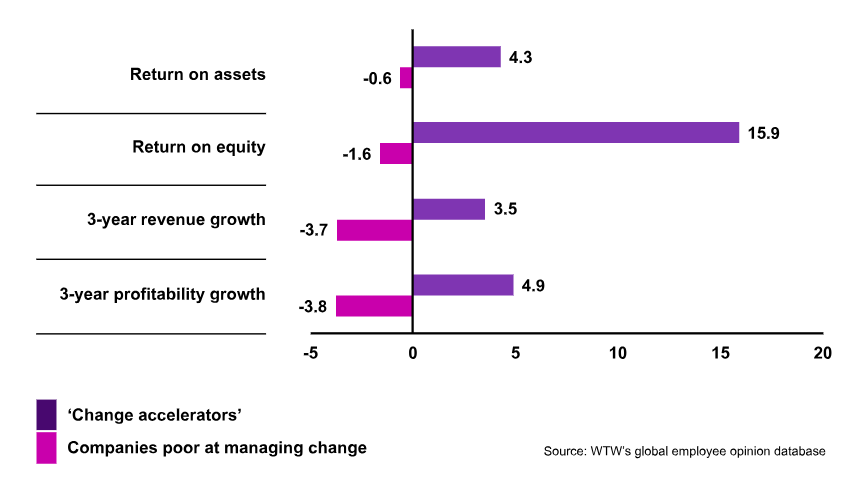
The chart shows WTW research on change accelerators versus companies that are poor at managing change.
But not every company is effective at managing change. They may lack appropriate governance and sponsorship, or fail to clarify roles and responsibilities, among other factors.
That said, some of the cons of garden leave include:
- Introduces potential legal and cultural issues.
- Risks stagnation or missed opportunities.
- Decreases morale if miscommunicated.
- Strains payroll budgets.
HR leaders will need to work closely with legal counsel and board members to manage culture, maintain continuity, and control costs and risks.
We also have some more tips for you below.
Strategic approaches to managing garden leave costs
Let’s look at proactive ways HR directors can reduce the hidden expenses without sacrificing protection.
1. Eliminate limbo work
Don’t default to the longest notice period just because the contract allows it.
Instead, match the garden leave length to the actual risk. If the employee has limited access to sensitive intellectual property or isn’t moving to a direct competitor, a shorter leave may fully protect the business without draining the budget.
Longer periods make sense when:
- Major client relationships are mid-negotiation.
- The executive holds active trade secrets.
- Strategic projects are still confidential.
If those risks are low or already mitigated, extending leave only increases payroll cost, cultural disruption, and reputational exposure.
2. Protect assets
Prioritize tightening your systems.
The moment notice is given, audit permissions. Remove access to strategic folders, pricing models, client databases, and product roadmaps that are no longer essential. Don’t wait until the first day of leave.
Next, formalize knowledge capture. Require departing leaders to confirm where key data resides, who owns each relationship, and which passwords or vendor contacts need to be transferred.
➜ Make this part of your offboarding checklist.
Then review your restrictive covenants with discipline. Non-compete and non-solicitation clauses should reflect real business risk. Overreaching language can weaken enforceability and signals distrust internally. (Courts increasingly challenge blanket restrictions that go beyond legitimate business interests.)
Align your agreements with current employment law in every jurisdiction where you operate. If you expand into new markets, update templates immediately. What works in one region may fail in another.
Finally, separate emotion from enforcement. Don’t use garden leave in response to frustration or surprise resignations. Only use it when defined risk thresholds are met.
3. Ensure continuity
Build succession planning into leadership development. Identify deputies early, document decision rights, and map critical workflows before anyone resigns.
As soon as you give notice, shift into structured transition mode:
- Have the outgoing leader document active projects.
- Schedule joint client calls with successors.
- Record system walkthroughs and document vendor relationships.
A phased transition reduces shock for teams and clients. It also shortens the period where garden leave feels abrupt or destabilizing.
4. Monitor impact
Quantify the downstream impact and refine your policies based on the data.
Track metrics, such as:
- Project delivery variance during leave periods.
- Revenue impact tied to account transitions.
- Engagement scores in affected teams.
- Replacement ramp-up time.
Over time, learn from the patterns. You may find that certain roles rarely require full garden leave. Or that extended leave periods correlate with client churn.
5. Seek legal advice early
Garden leave sits at the intersection of contract law, employment law, and competition regulation. Even as an HR specialist, you may need legal advice.
Legal specialists can:
- Align notice terms with statutory obligations.
- Validate jurisdiction-specific requirements.
- Stress-test non-compete enforceability.
- Reduce breach-of-contract exposure.
In some cases, a non-compete isn’t enforceable, so the offboarded employee can still go and work for a competitor. Engage employment counsel before enforcing or drafting leave clauses. Not after a dispute begins.
Wrap-up
When used strategically, garden leave can help protect assets and reputation. But when overused or mismanaged, it can decrease trust, profit, and performance.
Before defaulting to it, weigh its true costs and consider flexible, compliant alternatives.
And if you need help with hiring, look into Ongig to help speed up the job posting process.
Request a demo now to learn more.
Author Bio:

Kelly Moser is the co-founder and editor at Home & Jet, a digital magazine for the modern era. She’s also the content manager at Login Lockdown, covering the latest trends in tech, business, and security. Kelly is an expert in freelance writing and content marketing for SaaS, Fintech, and e-commerce startups.
