Some roles just don’t fill. You post, you refresh the ATS, you widen the salary band, and the pipeline stays thin.
Meanwhile, another team down the street, or across the internet, closes the same role in six weeks with someone better than anyone you’ve seen.
What are they doing differently?
Teams that consistently land scarce talent run a different operating system: they source before they need to, let their reputation do half the outreach, and treat the candidate’s time like it costs something.
Here’s what that actually looks like in practice.
Know What Hard to Find Actually Means
Before fixing the pipeline, it’s worth being honest about why it’s empty.
The scarcity is in the combination
Hard to find means the intersection is narrow.
A security engineer is findable. A security engineer with cloud and compliance experience who’ll take a clearance and relocate to a mid-size metro, that’s a Venn diagram with a sliver in the middle.
Same story with senior product marketers in categories that didn’t exist three years ago, or nurses in rural regions, or anyone whose role requires shift work plus hands-on lab time.
Bryan Henry, President of PeterMD, has built clinical teams in a market where licensing rules shrink the candidate pool before the search even begins.
He says, “The clinicians we need exist. The problem is that state licensing, telehealth comfort, and hormone therapy experience rarely show up in the same person. We stopped waiting for applications years ago.
We stay in touch with providers long before we have an opening, because by the time a role is posted, the best people in this niche are already having conversations somewhere else.”
The scarcity usually comes from one of three places:
- Niche skill stacks that few people have had the chance to build
- Demand spikes in hot industries that outpace the talent supply
- Geography or logistics like clearances, shifts, on-site requirements
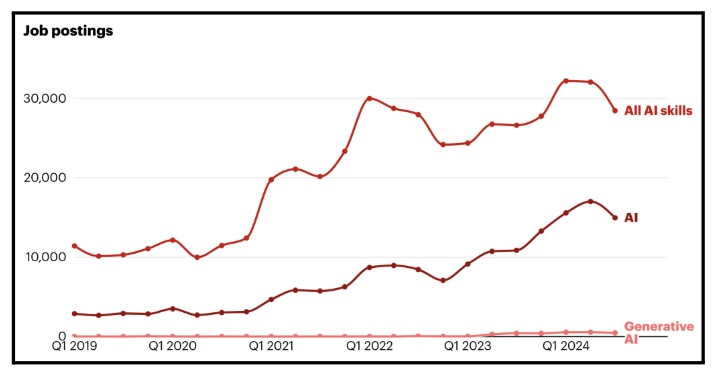
The AI talent industry reflects this too.
Most of them aren’t looking
This is the part teams underweight. LinkedIn’s research has long shown the majority of the global workforce is passive, not applying, not refreshing job boards, not on your careers site. The best-fit person for your open req is probably employed, reasonably content, and completely unaware you exist.
The market math makes it worse. Unemployment has sat at historically low levels in many markets, which shrinks the active applicant pool for exactly the roles that were already tight.
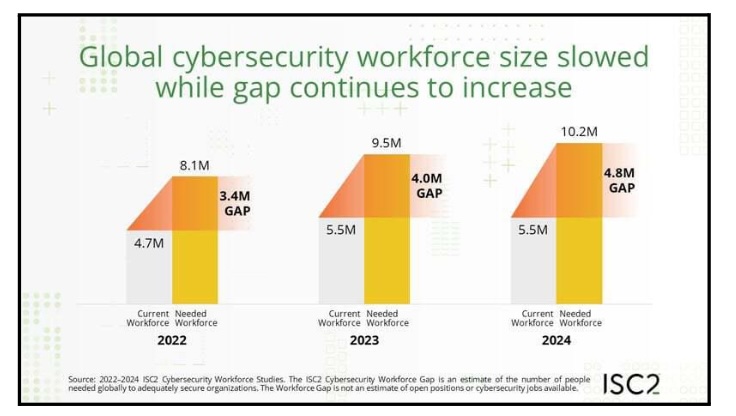
In cybersecurity, the ISC2 workforce study points to a multi-million-person gap between supply and demand globally, and it keeps widening as more organizations digitize.
Developers tell the same story from the other side. The Stack Overflow Developer Survey shows most engineers aren’t actively hunting but are open to the right message at the right moment.
Open to. Not searching for. That distinction shapes everything downstream.
Source Before You Have a Req
The teams that fill hard roles fast usually started working on them a year earlier. Not literally on the role, on the relationships.
Go where the work happens
Posting and praying doesn’t reach passive talent. Waiting for applications means competing for the small fraction of the market that’s actively unhappy, and everyone else is competing for them too.
The alternative takes longer but compounds. Map the market before the req opens. Figure out where your target candidates actually spend time:
- GitHub, watch activity, follow the Octoverse to see where innovation clusters
- Technical subreddits, Discord servers, niche Slack communities
- Kaggle for data folks, Dribbble and Behance for design
- Conference speaker lists and meetup organizers
Then show up as a person, not a pipeline. Comment on someone’s open-source work because you actually read it. Attend the meetup without a req in hand.
The first conversation shouldn’t mention a job at all.
Daniel Apke, Founder of Land Portal, has made most of his key hires without ever posting the role.
He says, “Almost everyone worth hiring in our niche was already in our orbit. They were active in land investing communities, asking sharp questions, or building things with our data. When you operate in a small industry, sourcing is really just paying attention to who keeps showing up and doing good work. The job posting comes last, if it comes at all.”
Let Your Reputation Recruit
By the time a hard-to-find candidate reads your outreach, they’ve already formed an opinion of you. The only question is whether you had any hand in shaping it.
Candidates research you first
That means your employer brand is working right now, whether you’ve invested in it or not. Silence is a brand. A three-star review page with no employer responses is a brand. The question is whether the story out there matches the one you’d tell.
What good looks like
The companies that do this well aren’t running ad campaigns. They’re publishing the truth about how they work and letting it filter:
- HubSpot’s Culture Code made its values public, attracting people who already operate that way.
- GitLab’s open handbook shows how decisions get made, what benefits look like, how async collaboration actually functions. Radical transparency, and it self-selects for people who want exactly that.
- Cisco’s #WeAreCisco hands the mic to employees, everyday work life, shared consistently, no gloss.
None of these are complicated. They’re just honest, sustained, and specific. That’s rarer than it should be.
Some companies reinforce the story physically too. Onboarding kits stocked with custom t-shirts, handwritten notes, and gear people actually want to wear turn new hires into visible, voluntary advocates. Nobody wears a shirt from a company they resent.
Measure the Funnel or Keep Guessing
Most recruiting problems hide in the middle of the funnel, where nobody’s looking. Teams that fill tough roles look.
Start with five numbers
You don’t need a people analytics function to get started. You need:
- Source-of-hire quality, not just volume, quality
- Outreach-to-response ratios
- Pass-through rates by stage
- Interview load per role
- Offer acceptance rate
Track those for a quarter, and patterns emerge that intuition misses.
Maybe your best hires all came from one channel you’ve been underfunding. Maybe candidates vanish between the second and third interview because there’s a two-week scheduling gap nobody noticed.
The funnel tells you where you’re leaking talent.
Benchmarks from Lever and Greenhouse tell you whether your conversion rates are in a normal range or signaling a real problem.
Over time, layer in market pay data, location heat maps, and content performance. But start with the five.
Respect the Candidate’s Time
This is where more searches die than anywhere else, and it’s the most fixable problem on this list.
The application itself
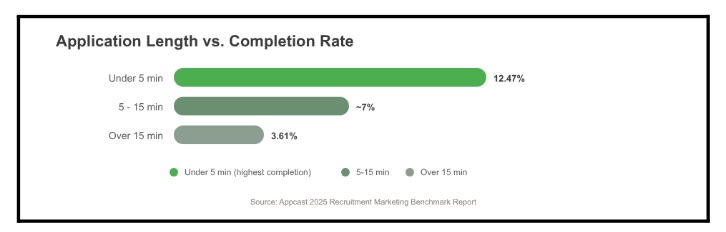
If your apply flow feels like tax season, strong candidates bail. They have options. They’re passive, remember, they were mildly curious, and your 40-field form cured them.
Appcast’s Recruitment Marketing Benchmark Reports have shown shorter, mobile-friendly applications convert dramatically better.
The fixes are unglamorous:
- Cut every field you don’t use in early screening
- Enable resume parsing and LinkedIn Apply
- Keep the whole thing under 5-10 minutes on a phone
- Confirm receipt instantly and say what happens next
That’s it. One afternoon of work, and it’s often the single highest-ROI change a team can make without spending anything.
The outreach
Hard-to-find candidates get carpet-bombed with copy-paste messages. Weekly. Sometimes daily. Generic outreach actively burns your brand with the exact people you most need to impress.
What earns a reply is evidence you did the work. Reference their open-source contribution, their conference talk, their patent, the thing they wrote. Offer a small, specific reason to talk instead of a catch-all pitch. Then keep momentum with clear timelines and actual follow-through.
Twenty personalized messages beat two hundred templates, every time.
Omer Reiner, Founder of Texas Home Buyers, applies the same speed-and-respect principle to hiring that his business runs on.
He says, “Our whole model is built on not wasting people’s time, and we hire the same way. When we find an acquisitions candidate we like, they hear back within a day and know exactly what happens next. Slow, vague processes lose good people in this market.
The candidates we most want to hire always have somewhere else to be.”
The feedback loop
Strong teams ask candidates how the process felt, including the ones they rejected, and then act on it. Short pulse surveys after key stages surface friction you can’t see from inside.
The Talent Board’s Candidate Experience research links positive experiences to higher willingness to reapply.
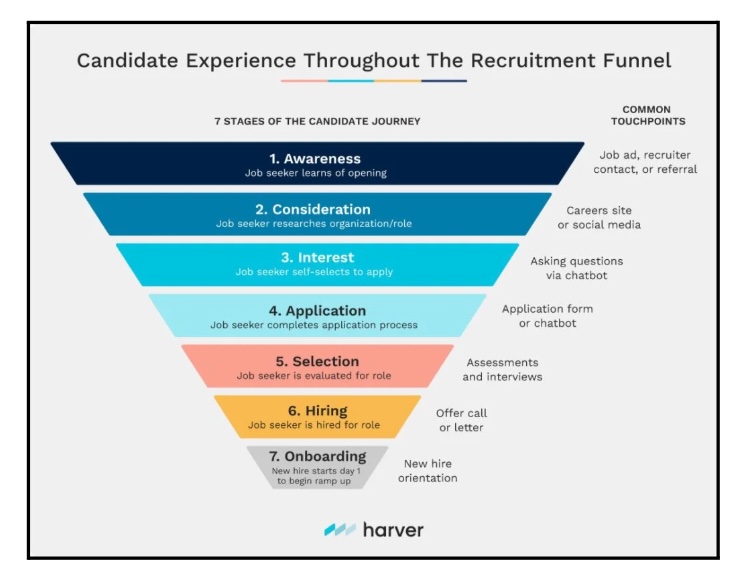
Rejected candidates talk. So do the ones you ghosted. Those impressions travel through exactly the communities you’re trying to source from.
Build the Team That Can Do All This
None of the above happens if the recruiting team itself is running on stale skills and a duct-taped stack.
Skills go stale fast
Techniques that worked two years ago fall flat now. The sourcing tools changed, candidate expectations changed, the market changed.
Teams that keep winning invest in their own development: advanced sourcing, inclusive job writing, compensation conversations, and structured interviewing, which research suggests produces better, fairer decisions that candidates can feel.
Recruiting is one of the few functions where the practitioners’ skill level directly shapes who the company can hire. Underinvest in recruiters, and you’ve capped your talent ceiling.
Work the hard roles as a team
Silos kill creativity on tough searches. The tactics that crack a stubborn role usually come from someone else’s playbook, a channel another recruiter tested, an outreach angle that landed on a different req.
Small mechanics help: shared sourcing sprints, 15-minute standups during critical searches, and a real debrief after every win or loss that turns into a playbook update instead of evaporating.
Tools should remove busywork, not create it
An integrated ATS and CRM keep candidates from slipping through cracks and give the team one view of every interaction. Beyond those:
- Scheduling tools that kill the email back-and-forth
- Analytics dashboards for funnel health
- Content systems that standardize readable, inclusive job descriptions
- Writing aids that flag biased or overly complex language
That last one matters more than it sounds. Research has shown gender-coded and exclusionary wording deters qualified candidates before they ever apply.
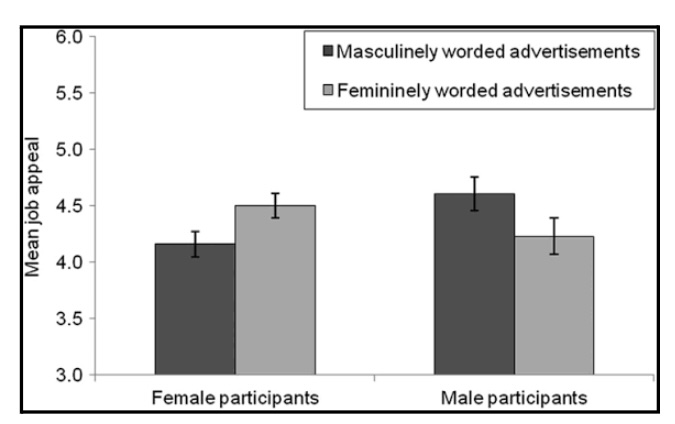
Fixing the language of a job post is one of the cheapest pipeline expansions available.
Start With One Change
Hard-to-find candidates aren’t hiding. They’re busy. They’re in communities, building things, deciding where their time and talent go, and they’ll notice the teams that meet them there with a real story, a personal message, and a process that doesn’t waste their evening.
If you’re staring at a few stubborn roles, don’t overhaul everything. Pick one thing. Shorten the application. Personalize your next 20 outreach messages. Rewrite one job description so it’s clear and inclusive. Measure what changes. Then pick the next thing.
Ongig’s Text Analyzer can help with the language part, with tools that make job descriptions clearer and more inclusive, plus resources for employer brand and candidate engagement.
