The need for content marketers is growing. And so is the pressure to hire the right ones.
How do I know?
SEMRush analyzed 8,000 content marketing job listings across the US. Their findings:
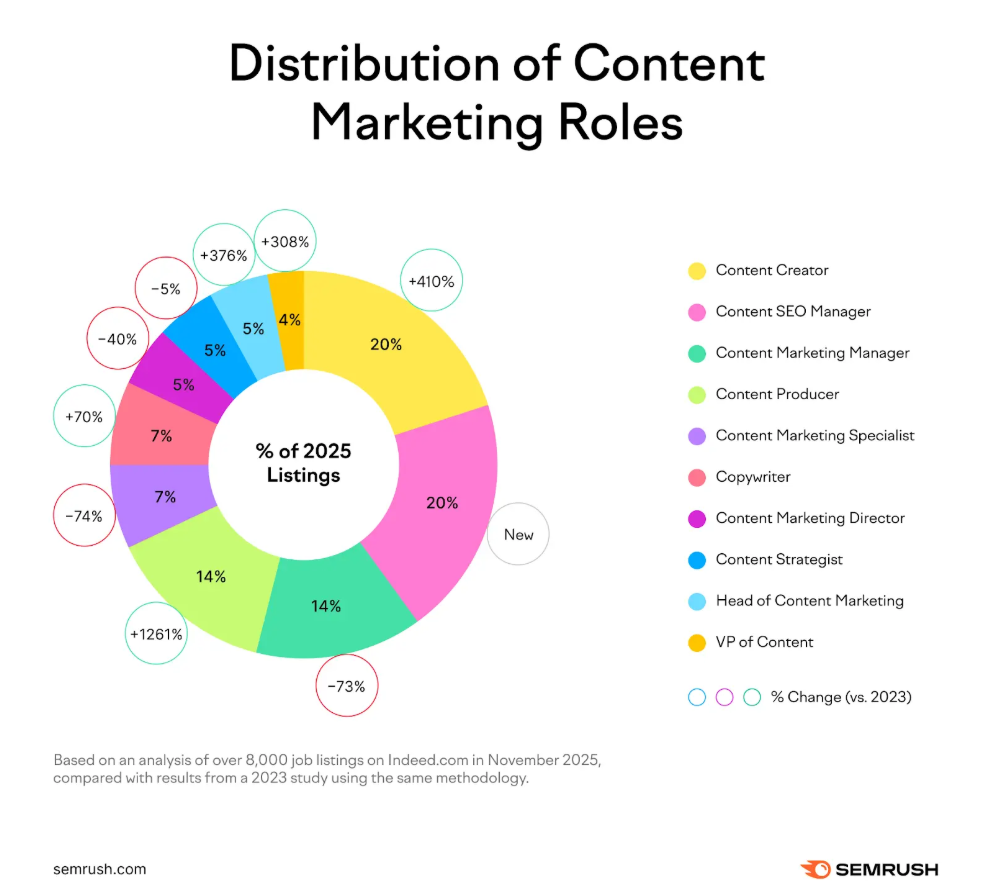
- ‘Content Producer’ listings grew by 1,261%
- ‘Content Creator’ listings by 410%
- ‘Head of Content Marketing’ increased by 376%
- ‘VP of Content’ went up by 308%
- The ‘Content Creator’ position has the highest volume
So, if you’re searching for different types of a “content marketing” job description (from entry-level to Chief Content Creator), I’m here to help. In this post, you’ll find:
- 10 examples of content marketing job descriptions
- best practices for writing them
Let’s dive in!
10 Examples of Content Marketing Job Descriptions
Here are job descriptions for different content marketing roles for inspiration:
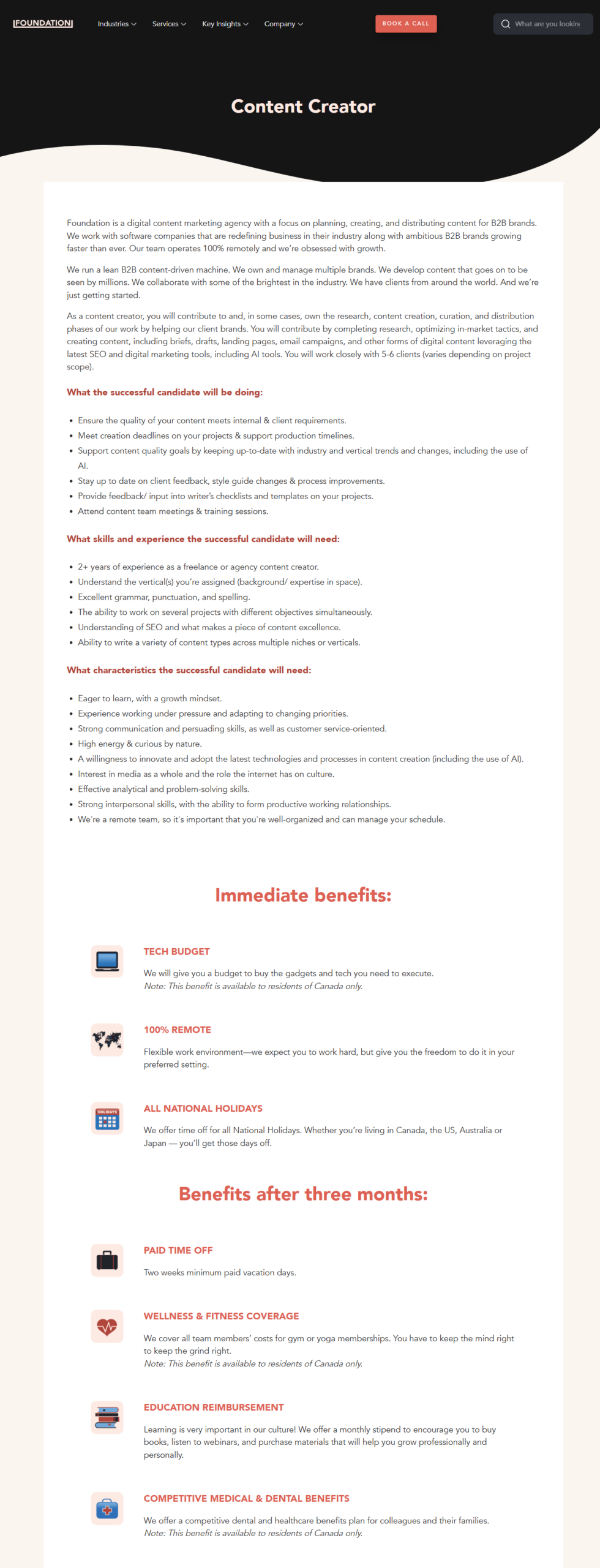
Content Creator Job Description — Foundation
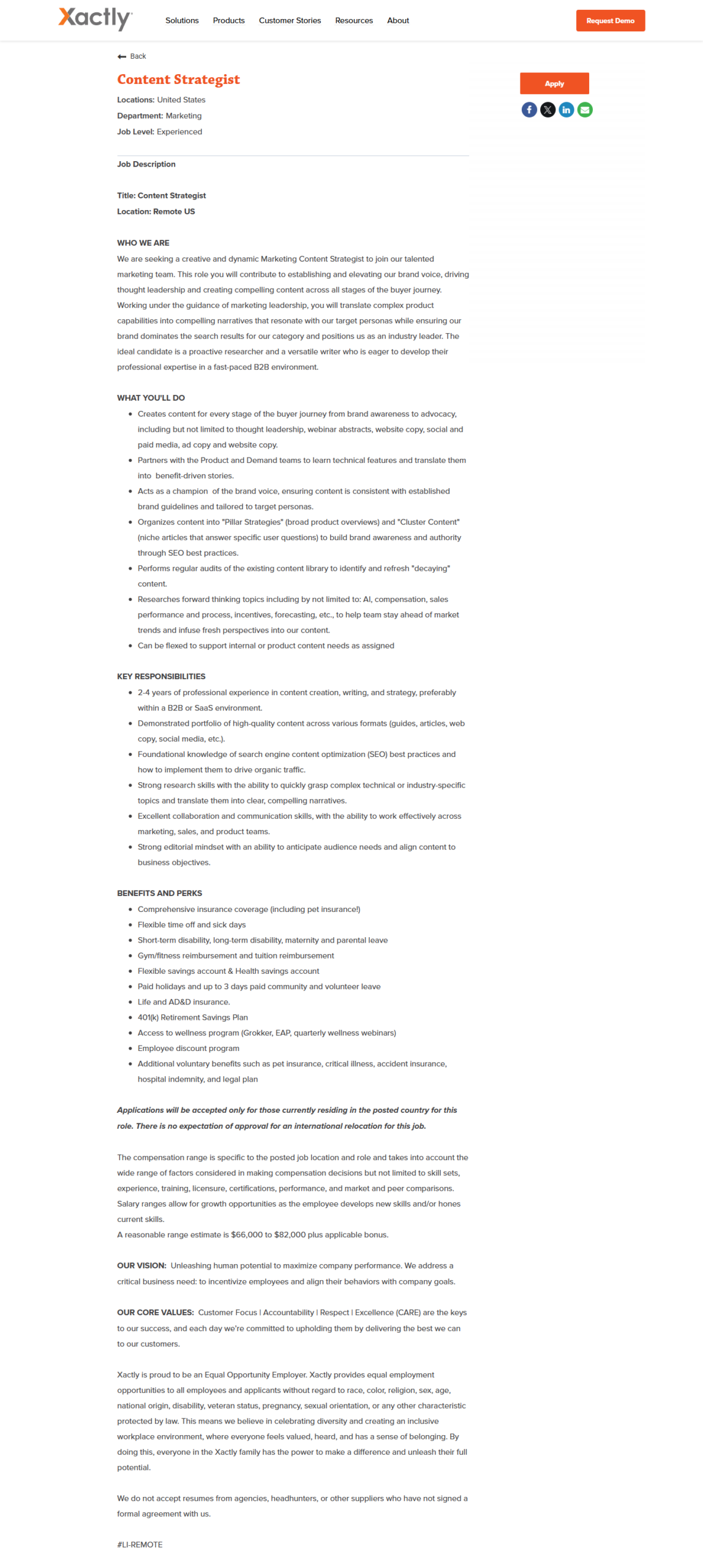
Content Strategist Job Description – Xactly
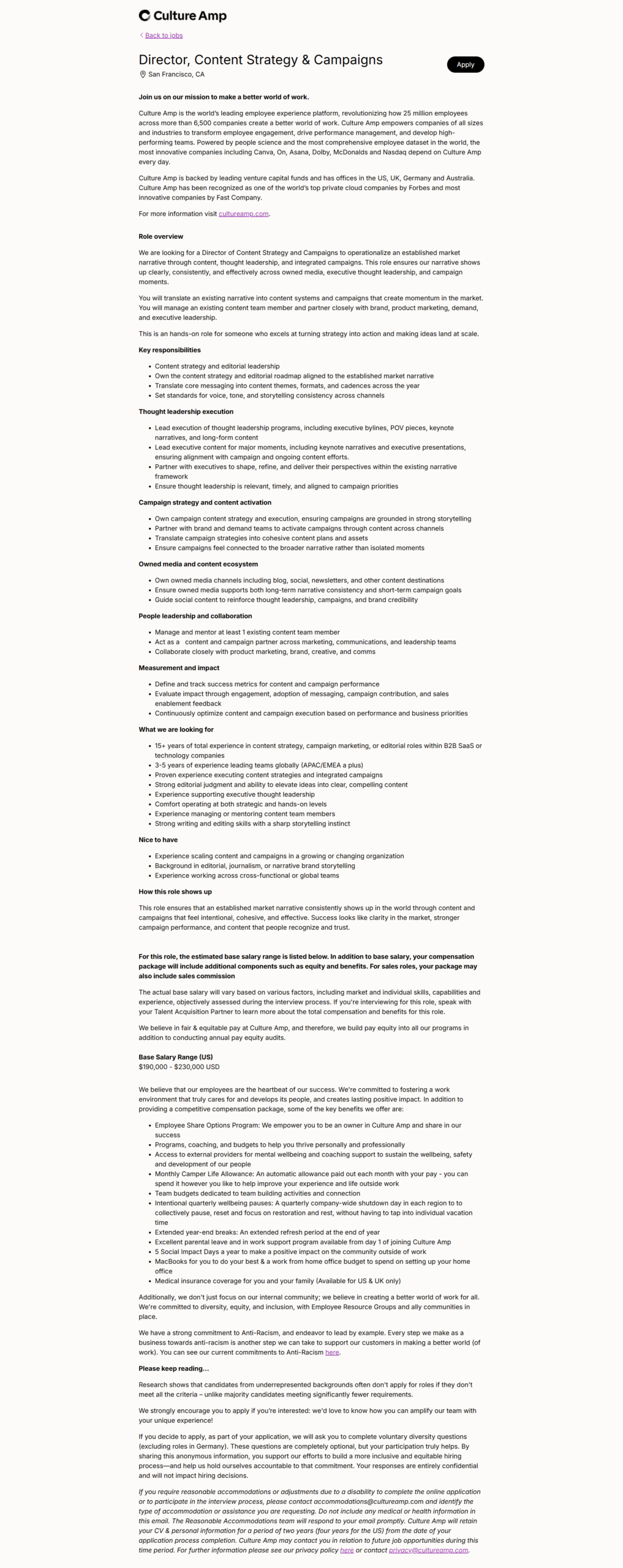
Content Director Job Description — Culture Amp
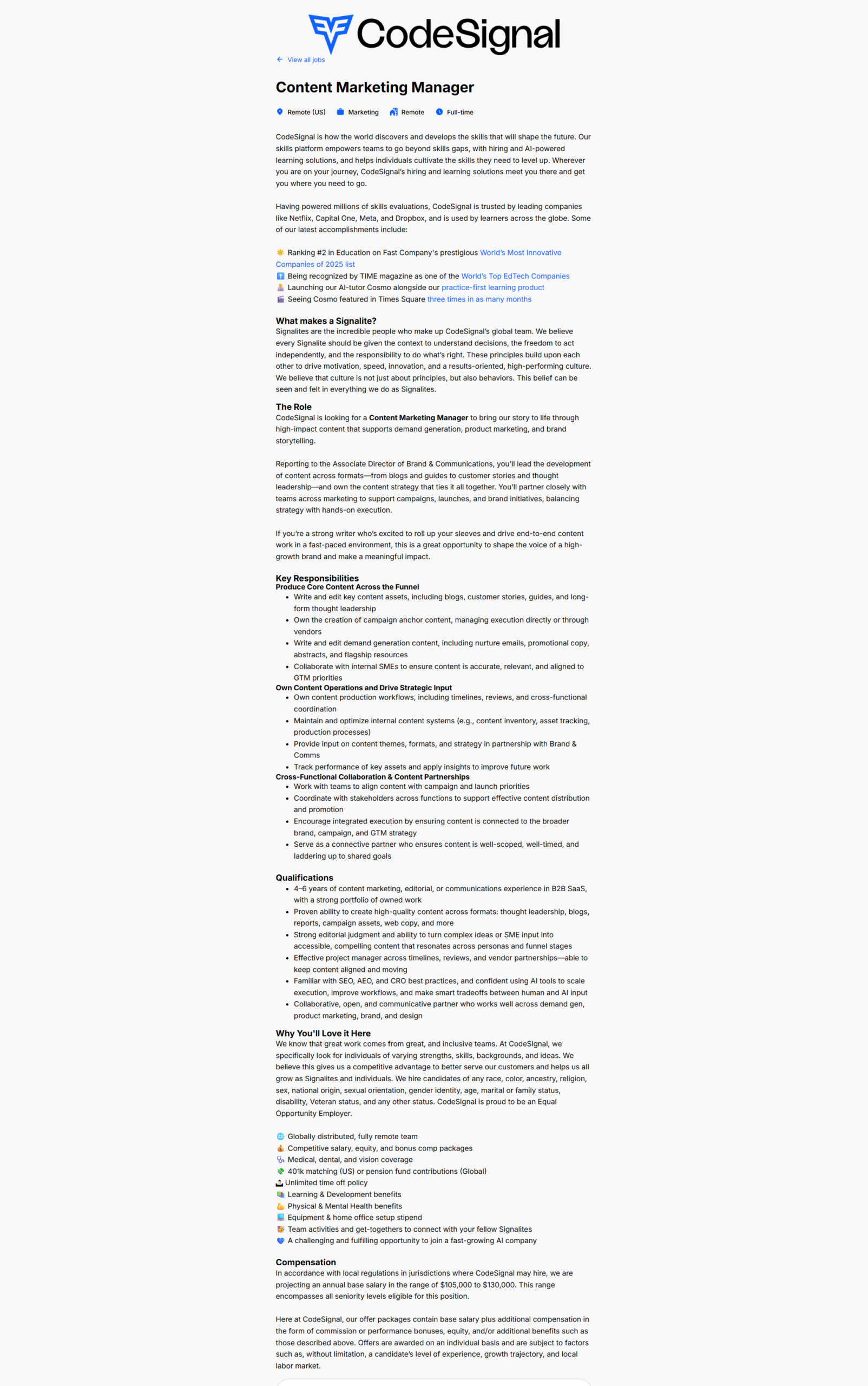
Content Marketing Manager Job Description — CodeSignal
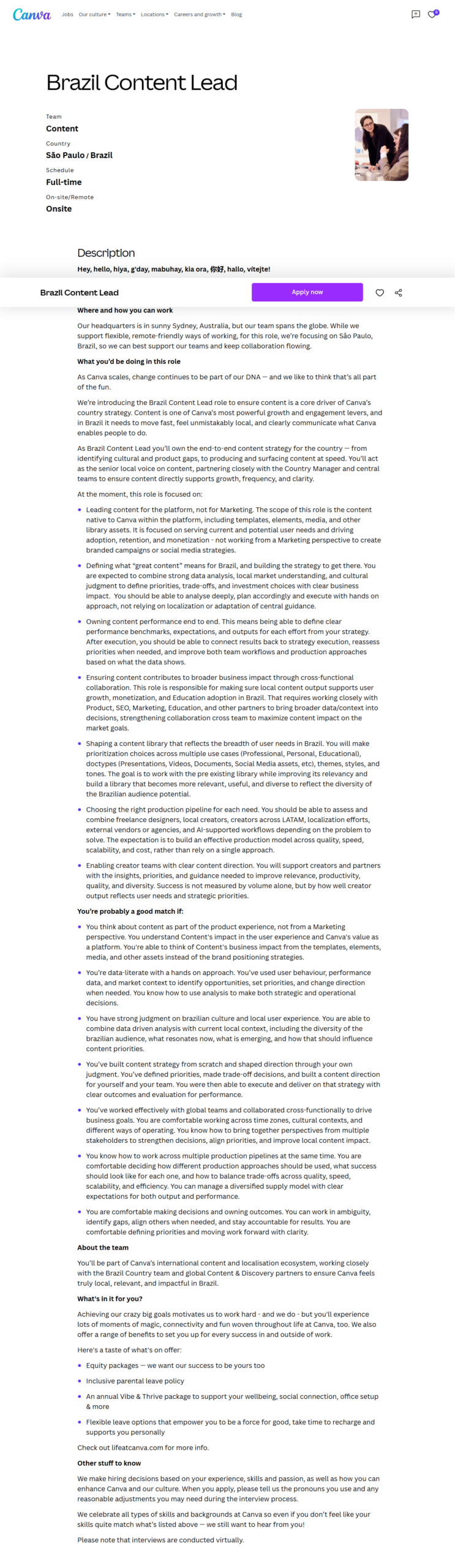
Content Lead Job Description — Canva
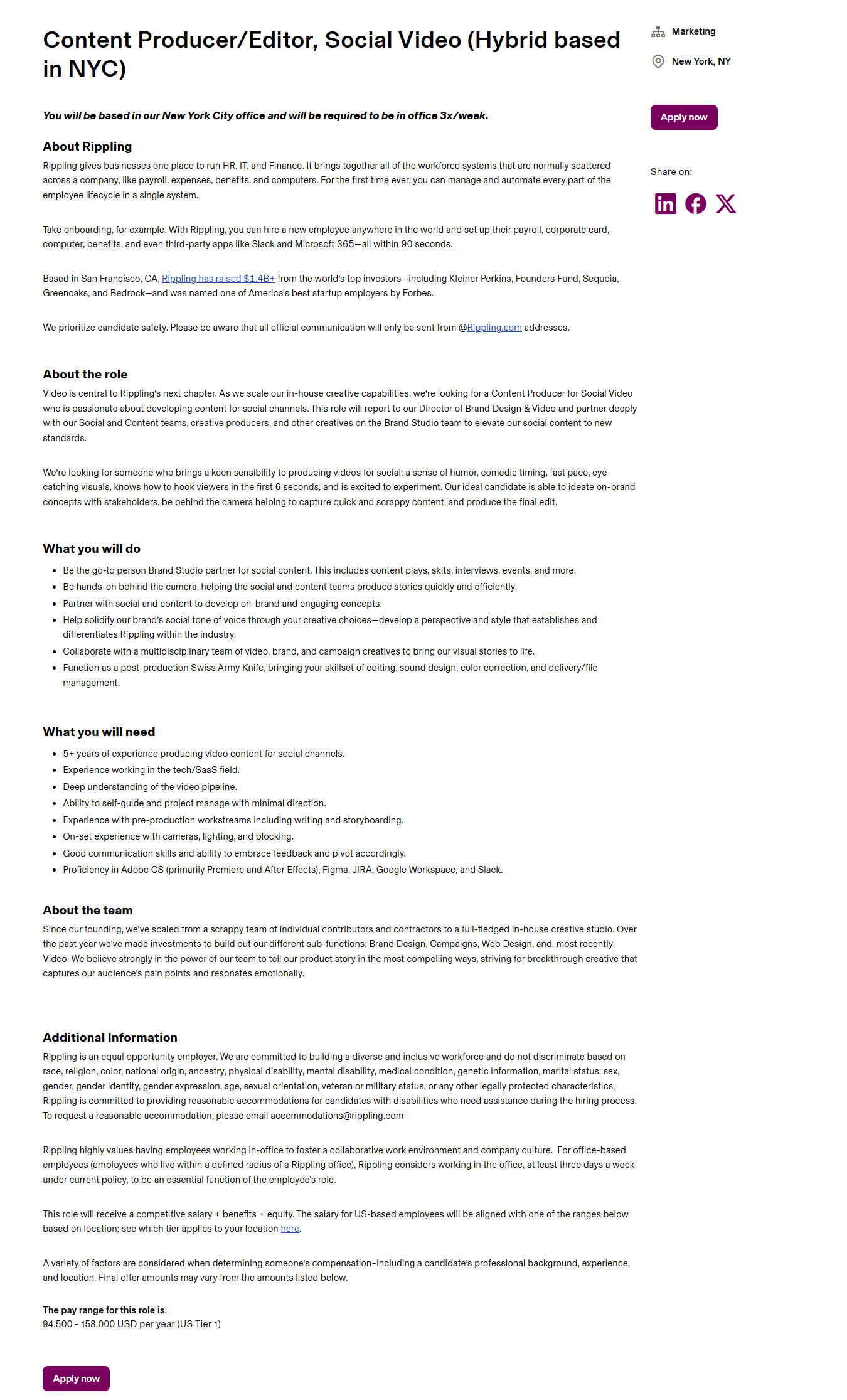
Content Producer Job Description — Rippling
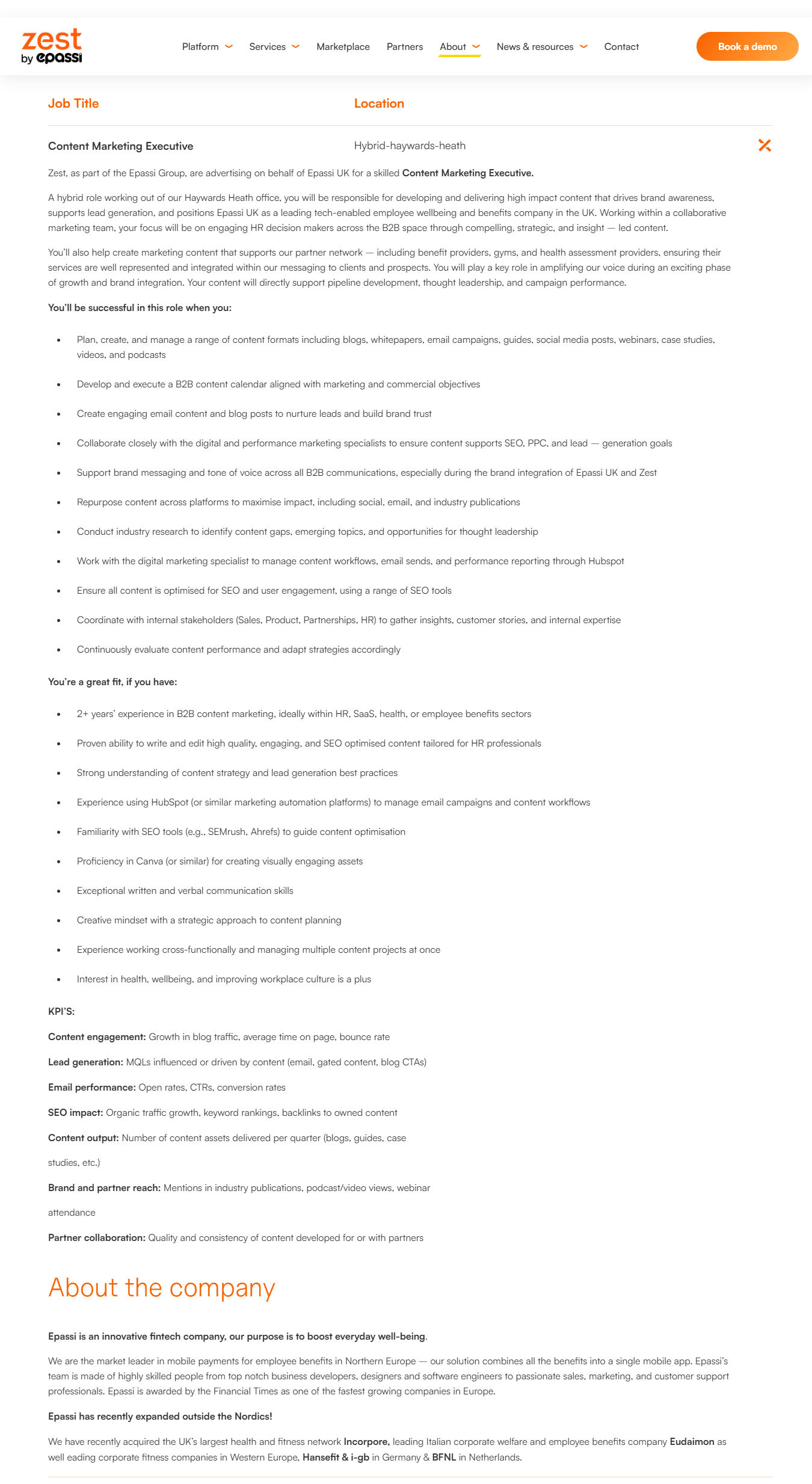
Content Marketing Executive Job Description — ZestBenefits
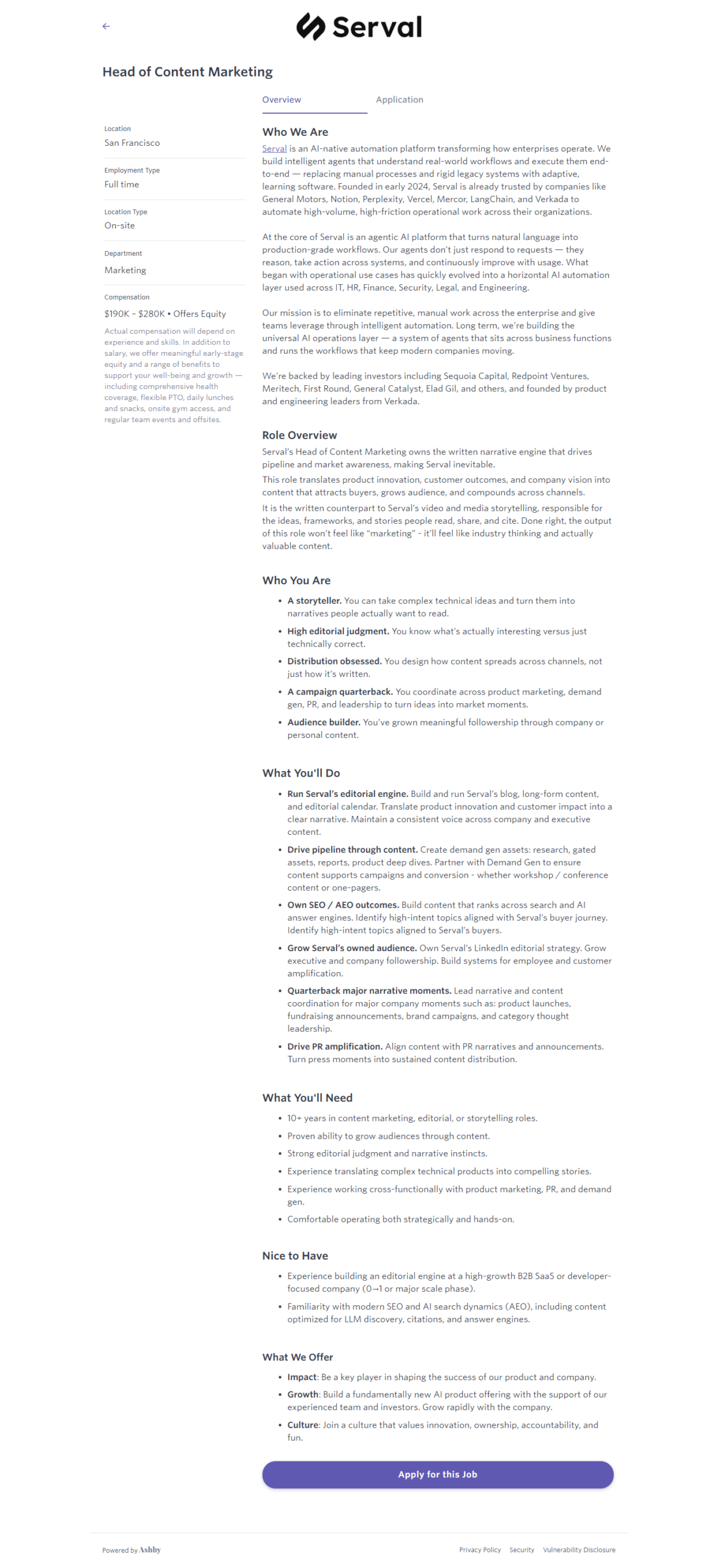
Head of Content Marketing Job Description — Serval
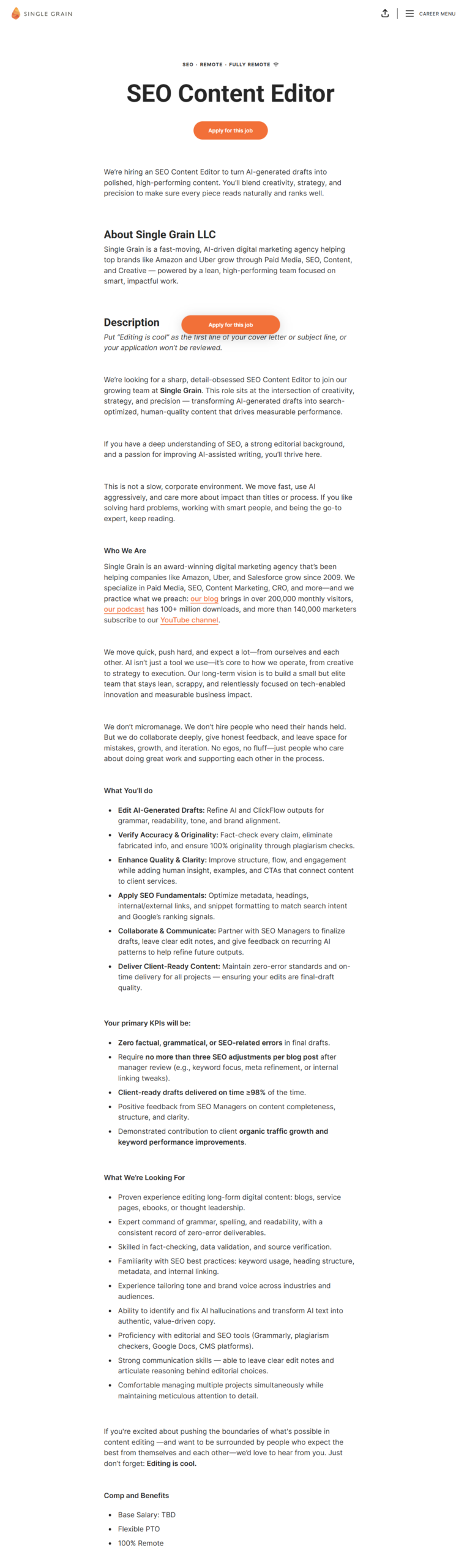
SEO Content Editor Job Description — Single Grain
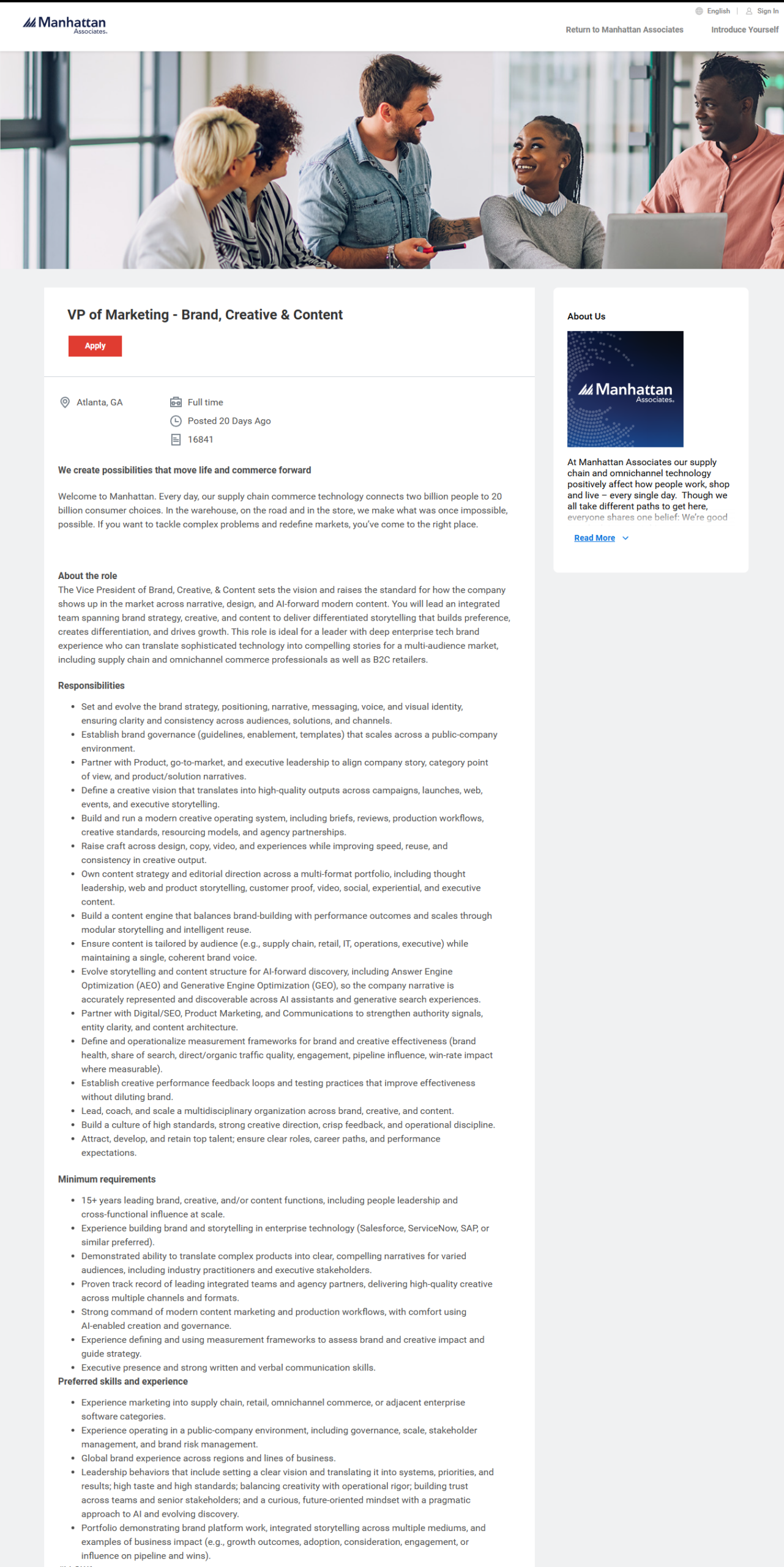
VP of Marketing – Brand, Creative & Content Job Description — Manhattan Associates
Top Skills for Content Marketers
SEMRush found that data literacy and narrative skills are the most sought-after requirements of companies employing content marketing professionals:
Tier 1: Core Skills (Must-Have for Most Roles)
These are the non-negotiables across levels:
- Analytics – Ability to track performance, interpret data, and optimize content
- Content Creation (Multi-format) – Creating blogs, social posts, video, or multimedia content
- SEO – Understanding search intent, keyword optimization, and content visibility
Tier 2: Strategic & Differentiating Skills
More important as candidates grow into mid–senior roles:
- Storytelling – Crafting compelling narratives that engage audiences
- Content Strategy- Planning, aligning content with business goals, and managing content calendars
Tier 3: Foundational Skills
Still essential, but expected baseline:
- Writing – Clear, concise, and audience-focused communication
- Brand Voice and Tone- Maintaining consistency across content channels
AI Skills in a Content Creator Job Description
Artificial intelligence is no longer a “nice to have” in content roles. According to Semrush, 34% of senior content roles and nearly 20% of execution-level roles now mention AI as a requirement.
But here’s what the data actually shows: AI fluency isn’t being asked for as a specialization. It’s becoming a baseline expectation — like knowing how to use Google Analytics or a CMS. Most listings reference general AI familiarity rather than specific tools or skills like prompt engineering (which still appears in less than 0.5% of postings).
So what should you actually include in a content creator job description? Keep it practical:
- Comfortable using AI writing or editing tools (ChatGPT, Jasper, Claude, etc.) to support content production
- Understands how AI-driven search surfaces content and can optimize for it
- Uses AI tools to research, repurpose, or scale content without sacrificing quality or brand voice
You don’t need to list every tool. Candidates who’ve been working in content already know the landscape. What hiring managers want to signal is that AI-assisted workflows are part of the job — not something the role will eventually “have to deal with.”
Best Practices for Writing a Content Creator Job Description
Here are the best practices for writing a compelling content creator job description:
1. Start with a Clear Job Title
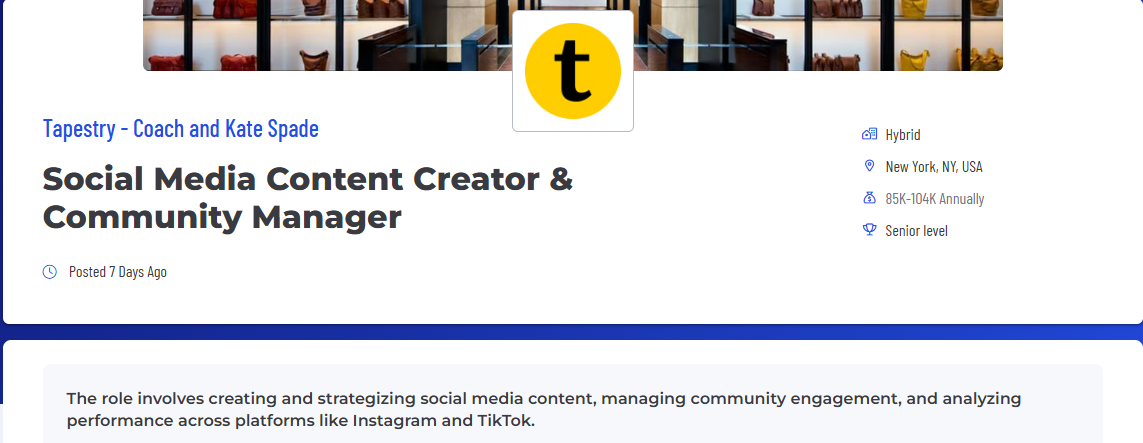
The job title should clearly reflect the role. Common titles include Content Creator, Content Marketing Specialist, or Digital Content Producer. Consider specifying the focus of the content (e.g., Video Content Creator, Social Media Content Creator) to attract the right candidates.
Tapestry did exactly that with their job description for a social media content creator.
2. Write an Engaging Job Summary
Your job summary should immediately grab the attention of potential candidates. Clearly outline the purpose of the role, what makes the position exciting, and how it fits into the company’s overall content strategy. So, highlight the impact the role has on the brand—such as building brand awareness, driving audience engagement, or increasing organic traffic.
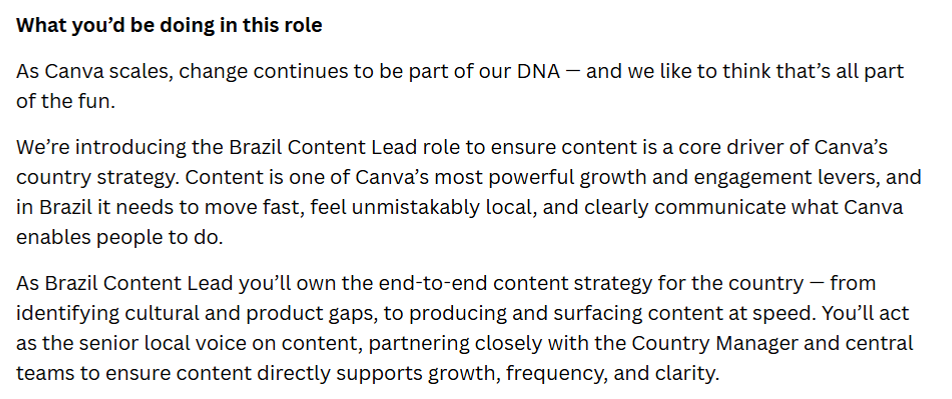
Canva did a good job articulating the impact of their Content Lead role in Brazil because the role demonstrates strategy ownership, business impact, localization and growth focus.
3. Define Key Responsibilities
Clearly outlining the responsibilities helps candidates understand the day-to-day expectations of the role. Be specific about the types of content they’ll be creating (e.g., blog posts, social media updates, videos, infographics), the platforms they’ll be using. Also, highlight any cross-functional collaboration with marketing or design teams.
4. Emphasize Cultural Fit and Core Values
A content creator plays a pivotal role in shaping a brand’s voice and tone, so ensuring cultural alignment is essential. Include a section that highlights your company culture and values, emphasizing aspects like collaboration, innovation, and a commitment to diversity and inclusion. This helps attract candidates who are not only qualified but also resonate with your company’s mission.
An example is found in BAD Marketing’s Copywriter job description.

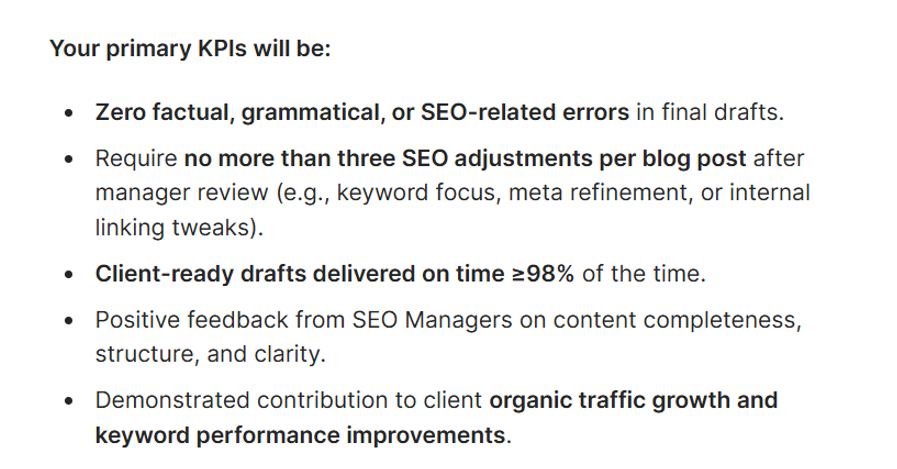
5. Include Measurable Success Metrics
Define what success looks like in the role by providing measurable goals. So, this could include metrics related to engagement, reach, or content performance. Clarifying these expectations upfront also allows candidates to understand how their work will be evaluated and the potential impact they can have on the company’s success.
6. Use Clear, Inclusive Language
Avoid jargon, unnecessary requirements, or biased language. If in doubt, run your JDs with Ongig Text Analyzer to ensure your words are simple and accessible to a wider talent pool.
7. List Any Tools or Software Needed
Mentioning the tools or software candidates will need to be familiar with can help filter applicants who are well-equipped for the job. So, for content creators, this might include programs like Adobe Creative Suite, Canva, Google Analytics, and SEO tools like SEMrush or Ahrefs.
Common KPIs for Content Marketing Roles
Here’s a breakdown of the KPIs most commonly tied to content marketing roles:
- Content Engagement – Growth in content traffic, average time on page, and bounce rate. These tell you whether the content is actually reaching and holding an audience — not just getting published.
- Lead Generation – Marketing qualified leads (MQLs) influenced or driven by content, including email sign-ups, gated content downloads, and blog CTAs. This is where content ties directly to the pipeline.
- Email Performance – Open rates, click-through rates, and conversion rates on email campaigns and newsletters. Especially relevant for content creators who own or contribute to email as a channel.
- SEO Impact – Organic traffic growth, keyword rankings, and backlinks to owned content. Even non-SEO-focused creators are often expected to understand how their work performs in search.
- Content Output – Number of content assets delivered per quarter — blogs, guides, case studies, and similar. Useful for setting realistic production expectations upfront, especially at the execution level.
- Brand and Partner Reach – Mentions in industry publications, podcast or video views, and webinar attendance. Tracks visibility beyond owned channels and is particularly relevant for thought leadership-focused roles.
- Partner Collaboration – Quality and consistency of content developed for or with external partners. This KPI matters more in partner-heavy or co-marketing contexts, but is worth including if the role involves any co-creation
(Note: KPIs sourced from ZestBenefits’ Content Marketing Executive job post)
Why I wrote this?
Content marketing roles are evolving fast — titles are shifting, skills expectations are rising, and AI is changing what “qualified” looks like. Writing a job description that reflects that reality is the first step to hiring someone who can actually move the needle.
Ongig is on a mission to transform job descriptions. So, if you’d like to see how Ongig can help you optimize your job titles and the rest of your JD, please request a demo of Ongig’s Text Analyzer.
Shout-outs
We Analyzed 8,000 Content Marketing Job Listings: The Shift from Writing to Ownership (by SEMRush)
