What are the best communications job titles for employers and job seekers alike?
My team and I analyzed which Communications and Public Relations job titles get the most traction, both from candidates searching on Google and from employers requesting job descriptions. It’s a field worth paying attention to. In fact, the Bureau of Labor Statistics estimates roughly 27,600 openings are expected annually through 2034.
I asked my team to help me analyze which Communications/Public Relations job titles work best. So, in this mini-report (the latest chapter in Ongig’s Job Titles: The Definitive Guide, you’ll find guidance on:
- Communications Job Titles Hierarchy: The standard org chart for a Communications/PR department, from entry-level roles up to the C-suite
- The Top 20 Most Searched Communications Titles: The PR and communications titles candidates search for most on Google
- Communications Job Titles and Descriptions: The top titles employers request job descriptions for, plus a summary of what each role actually does
Quick Summary
- The most searched-for titles by candidates include Communications Manager, Communications Coordinator, and Public Relations Specialist.
- Top employer-requested titles include PR Manager, Director of Communications, and Media Director.
- Titles range from entry-level (PR Assistant, Communications Intern) to C-suite (Chief Communications Officer).
- PR specialist employment is projected to grow 5% from 2024 to 2034, faster than average, with roughly 27,600 openings expected each year. U.S. Bureau of Labor Statistics
- A large share of PR work now lives under titles like “Earned Media Strategist” and “Corporate Affairs Associate”. Candidates searching only for “Public Relations Specialist” miss a significant portion of relevant openings
Communications Job Titles Versus Public Relations Job Titles
We entitled this article “The Top 20 Communications Job Titles”, but we could have easily called it “The Top 20 Public Relations Job Titles”. Communications and PR are interwoven. Some argue that public relations deals only with the “public” (external) while “communications”is broader (both public and internally). That’s certainly true.
Large enterprises might, for example, have both a “PR Director” (sometimes called an “External Communications Director) and an Internal Communications Director”.
Some small to medium-sized businesses will use only PR (and not “Communications) in their job titles because the internal communications role is more easily done by the CEO and other leadership.
Titles for Communications professionals are especially tricky given that their positions may or may not be part of the Marketing team.
Although roles such as Public Relations Manager fall under Multimedia Job Titles, many other Multimedia roles do not fall within the scope of this chapter of the guide.
Marketing Job Titles Versus Communications Job Titles
Many employers have Communications/PR combined with Marketing. We chose to separate Communications/PR titles from Marketing because many large public-facing companies have a C-Level job title for both departments (e.g. a Chief Communications Officer heading Communications/PR and a Chief Marketing Officer heading up Marketing.
Clipbook reports that in 2026, there’s a clear shift toward broader titles and mandates for communications leaders, including Chief Corporate Affairs Officer roles. As a result, communications leaders are increasingly overseeing analytics, operations, and even AI transformation efforts within their organizations.
If you’d like to see our analysis of Marketing titles, we did a similar analysis here: The Top 25 Marketing Job Titles [Ranked by Search Volume].
PR and Communications Job Titles Hierarchy
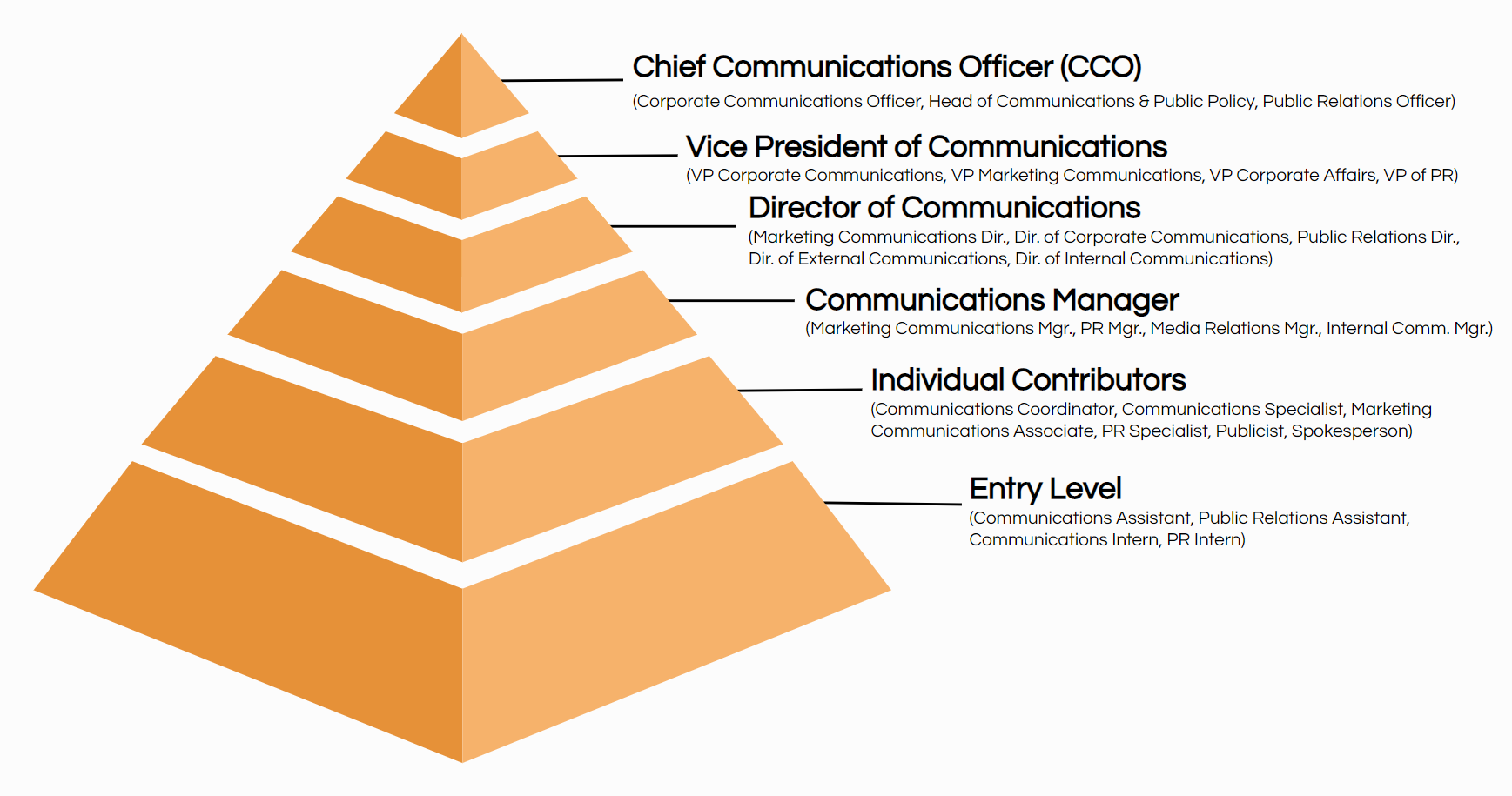
Here’s a typical org chart for a Communications team. Below that are longer lists of examples of job titles for the 6 major levels of Communications positions:
Communications Job Titles for Leaders
The head of Communications usually reports to the CEO except when Communications is part of marketing. Clipbook noted that in 2026, the most effective CCOs operate as strategic leaders who align multiple functions. For that reason, CEOs are increasingly looking for a business leader, not just a functional one.
Examples of the job titles for communications job titles for leaders include:
- Chief Communications Officer (CCO)
- Chief Communication Officer (CCO)
- Public Relations Officer (PRO)
- Corporate Communications Officer (CCO)
- Head of Communications & Public Policy
- Head of PR
- Head of Public Affairs
- Chief Experience Officer (Comerica’s James H. Weber serves this position which runs Marketing and Communications)
- Chief Public Relations Officer (CPRO)
VP of Communications Job Titles
Examples of Vice President level Communications titles include:
- VP of Communications
- Vice President Corporate Communications
- VP of Marketing Communications
- Vice President External Affairs
- VP of Corporate Affairs
- Vice President of Public Relations
- VP Media Relations
Director of Communications Job Titles
Here are some ideas to use for director-level Communications titles:
- Director of Communications
- Public Relations Director
- Director of External Communications
- Director of Internal Communications
- Marketing Communications Director
- Director of Corporate Communications
- Media Director
- Director of Public Affairs
- Corporate Affairs Director
- Director of External Affairs
- Director of Media Relations
Managers of Communications Job Titles
Examples of manager-level Communications titles include:
- Communications Manager
- Marketing Communications Manager
- PR Manager
- Media Relations Manager
- Public Affairs Manager
- Online Communications Manager
- PR & Events Manager
- PR & Communications Manager
- External Affairs Manager
- Communication and Marketing Manager
- Corporate Affairs Manager
- Internal Communications Manager
- PR and Events Manager
- Manager of Public Relations
- Technology Communications Manager
Individual Contributor PR or Communications Job Titles
Examples of individual contributor Communications titles include:
- Communications Coordinator
- Communications Specialist
- Marketing Communications Associate
- Corporate Communications Specialist
- PR Specialist
- Publicist
- Public Relations Coordinator
- Spokesperson
- Marketing Communications Specialist
- Public Affairs Specialist
- Public Affairs Officer
- Communications Officer
- Public Information Officer
- Public Information Specialist
- Media Relations Coordinator
Entry-Level Communications Job Titles
Examples of entry-level Communications titles and entry-level communications jobs include:
- Communications Assistant
- Public Relations Trainee
- Communications Intern
- PR Intern
- PR Assistant
- Public Information Assistant
- Public Relations Administrative Assistant
Top 20 PR and Communications Job Titles (Candidates)
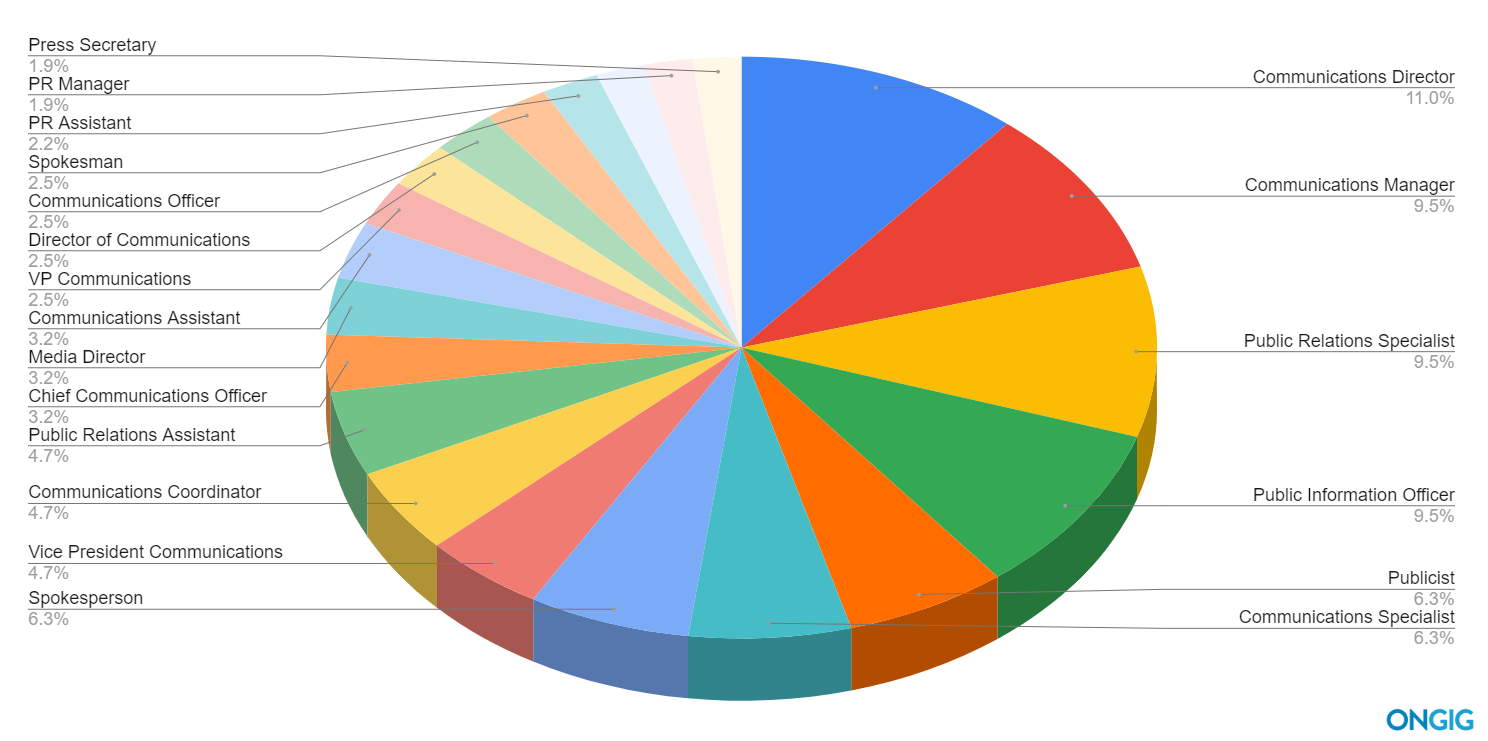
Source: Ongig internal research. The chart reflects the relative share of candidate search interest across the top 20 PR and communications job titles.
Top 20 PR Job Titles and Descriptions/Communications Jobs Descriptions
(Employers)
Below are the top 20 PR and communications job titles that employers request job descriptions for on Google. I’ve included a brief communication job description for each:
Communications Coordinator
A Communications Coordinator promotes an organization or a product. A Communications Coordinator writes press releases and coordinates with journalists for the posting of news stories. Other tasks of a Communications Coordinator include researching and writing reports or other informational pieces about an organization and distributing them accordingly.
Communications Manager
The Communications Manager uses internal and external communication strategies to promote the brand’s image. They supervise the development of content for press releases, speeches, newsletters, social media posts, and blog posts. With the help of PR and marketing executives, they execute initiatives to engage employees, customers, media personalities, important stakeholders, and the general public. They manage communication channels like employee platforms, social media, and company websites. During crises, they coordinate communication tactics to ensure the company’s timely and accurate responses, helping maintain its positive reputation.
Public Information Officer
The Public Information Officer shares information between organizations, government agencies, and the public. They craft press releases and answer media inquiries. In addition, they roll out awareness campaigns to inform the public about specific issues, government initiatives, or public services. They hold town hall meetings and press conferences to announce important news to the public, address their questions, and listen to their concerns. During natural disasters, public health crises, or other emergencies, they provide real-time updates to ensure the public is well-informed.
Chief Communications Officer
The Chief Communications Officer (CCO) directs the organization’s internal and external communications. They directly report to the CEO and lead the communications team. Also, they shape the company’s brand, reputation, and communications strategies, ensuring all messaging aligns with its goals. They may develop campaigns and distribute press releases to the media. In addition, the CCO may schedule media interviews for the CEO to discuss the latest company offers or services. They also make internal announcements such as emails, newsletters, product-related announcements, video presentations, or special projects.
Media Director
A Media Director leads the flow of communication between a company and the media. So, they build key relationships with external partners and direct the implementation of strategic communications plans. A Media Director also:
- Directs the monitoring of media coverage
- Organizes press conferences
- Serves as a company spokesperson
- Manages crisis communications plans
Public Relations Specialist
A Public Relations Specialist creates media releases and develops social media plans for an organization. A Public Relations Specialist is also responsible for creating and maintaining the public image of an organization. The daily tasks of a Public Relations Specialist include responding to media requests, helping clients effectively communicate with the public, draft speeches, arrange media interviews, and maintain a company’s positive image and identity.
Publicist
A Publicist manages publicity for companies, public figures, celebrities, and films. A Publicist effectively communicates a brand’s message to its target audience by doing the following tasks:
- Writing press releases
- Creating media kits
- Creating social media content
- Setting up publicity events
- Tracking media coverage
Marketing Communications Manager
A Marketing Communications Manager, also known as a MarCom Manager, leads market research initiatives and develops pricing and budget strategies for an organization. A Marketing Communications Manager creates and implements plans to increase a company’s market share. Other tasks of a Market Communications Manager include coordinating an organization’s message to its partners and providing approval for marketing and communications collateral.
PR Manager
A PR Manager, commonly known as a Public Relations Manager, leads the public relations department or a PR firm. PR managers coordinate the public relations team and oversee the planning of external communications pieces. A PR Manager is a liaison between the public relations team and the media or external marketing firms that promote a product or organization.
Public Relations Director
A Public Relations Director is responsible for leading and directing the creation of strategic public relations initiatives for a client or organization. A Public Relations Director oversees the coordination of interviews with media and may also serve as a lead spokesperson. Another responsibility of a Public Relations Director is to manage team members tasked with creating press releases, media kits, and talking points for speeches.
Communications Officer
A Communications Officer, common in government organizations, is responsible for event planning, media relations, and public affairs issues for organizations. They also create and distribute internal communications for an organization. In addition, a Communications Officer tracks the effectiveness of communication and makes recommendations for improvement for senior management.
Communications Specialist
A Communications Specialist supports the public relations department within and organization and is responsible for writing both internal and external communications. So, they write newsletters, respond to media requests, and write press releases under the direction of a PR leader. A Communications Specialist may also be tasked with scheduling and coordinating press-related events.
Spokesperson
A spokesperson speaks on behalf of the organization, public figure, or government entity. They manage and announce critical messages to the public, media, and stakeholders. Also, they liaise with the press, craft PR campaigns, conduct interviews, and create slideshow presentations. They may schedule public appearances to disclose important company information. The spokesperson aims to communicate company values and messages to help shape a favorable public perception.
Vice President of Communications
A Vice President of Communications manages all brand reputation messages for the organization. They may give public speeches and presentations and answer questions from the media. In addition, they organize events and initiatives to help promote the company’s image to the public. They also determine messaging for newsletters and company websites and develop PR and marketing strategies. They recruit and manage a communications team to implement these strategies.
Public Affairs Specialist
A Public Affairs Specialist serves as an advisor to senior management for communications-related information. This role is tasked with communicating an organization’s identity and goals in a positive light in the media. A Public Affairs specialist often works with a public relations team to manage the development and distribution of external communication pieces to the media, potential partners, or government agencies.
Public Relations Assistant
A public relations assistant performs clerical and administrative duties for the PR team or a PR manager. They help create marketing materials and manage social media accounts. They also manage PR calendars and schedules and maintain contact information. The PR assistant arranges media kits and press releases. They conduct customer surveys and research on media trends and competitor activities to help brainstorm PR ideas and campaigns. Also, they assist in organizing press conferences, product launches, and public appearances.
Press Secretary
A Press Secretary communicates with the public on behalf of their employer, usually a government official or organization. They aim to maintain a positive image for their employer or improve public perception of the official. Their goal is to ensure the messages are clear and aligned with their employer’s goals. They provide strategic communication advice to management and assist in communication during crises. They write press releases and speeches, answer reporters’ questions, and also coordinate media events.
Director of Communications
A Communications Director manages all aspects of an organization’s communications, publicity, and marketing. They are responsible for developing and implementing a communications strategy that serves as a guideline for building relationships with partners and managing public relations. In addition, they aim to ensure that messaging aligns with the organization’s goals, brand identity, and long-term strategy. They direct PR and marketing events. A communications director manages the creation and distribution of communication materials to the public, digital campaigns, and social media. They also review and approve press releases and prepare public relations statements to address organizational changes.
Job Market Outlook For Communications and PR Jobs
The demand for communications and PR professionals is strong and growing.
BLS reported that PR (Public Relations) specialist employment is projected to grow 5% from 2024 to 2034, faster than the average for all occupations. Much of that demand comes from organizations that need professionals who can manage reputation across digital, social, and traditional media channels.
PR hiring isn’t shrinking; it’s fragmenting. For example, more communications roles now live inside healthcare systems, fintech companies, government agencies, and nonprofits that weren’t traditionally associated with dedicated communications functions, as per Mediabistro.
What does that mean for employers? The talent pool is broader than it looks. The right candidate for your open communications role may currently hold a title like Earned Media Strategist or Corporate Affairs Associate. They may not be calling themselves a “Public Relations Specialist” at all.
Remote and Hybrid Communications Roles
Remote and hybrid work has reshaped how communications teams are structured and how employers recruit for them.
Marketing and communications remote roles expanded by 30% or more in Q1 2026, according to the FlexJobs Remote Work Index, even as return-to-office pressure increased across other functions. Still, communications is one of the fields retaining flexibility, and candidates know it.
For employers, this means a few practical things:
- Talent pools are wider. A Communications Manager role no longer has to pull from your local market. Remote-friendly postings attract candidates across geographies, which matters when you’re hiring for a niche title like Crisis Communications Specialist or Public Affairs Officer.
- Job titles are evolving. Remote and hybrid setups have accelerated demand for titles like Digital Communications Manager, Internal Communications Specialist, and Employee Engagement Manager. These roles focus on keeping distributed teams informed and connected.
- AI fluency is becoming a baseline expectation. Employers hiring for communications roles in 2026 are increasingly looking for candidates who can use AI tools effectively while still bringing their own voice, judgment, and media relationships to the work.
When writing job titles and descriptions for remote or hybrid roles, be specific about scope. A vague title like “Communications Specialist” means different things to different people. It reads differently when the role involves managing executive communications across a distributed team versus supporting a local PR agency.
FAQs about Communications Job Titles
1. What is the highest communications job title?
The Chief Communications Officer (CCO) sits at the top of most communications org charts. In 2026, the most effective CCOs operate as strategic leaders who align multiple functions, and CEOs are increasingly looking for a business leader, not just a functional one, according to Clipbook.
2. What is the difference between a Communications Manager and a PR Manager?
A Communications Manager typically handles both internal and external messaging, while a PR Manager focuses more narrowly on media relations and public image. In practice, the lines have blurred as more organizations expect communications professionals to handle earned media, social channels, and crisis response all at once.
3. What are the best entry-level communications job titles?
Good entry-level titles include Communications Assistant, PR Assistant, Public Relations Trainee, and Public Information Assistant. Most entry-level roles require a bachelor’s degree in public relations, communications, journalism, or a related field.
4. Are communications and PR jobs growing?
Yes. In fact, BLS projects PR specialist employment to grow 5% from 2024 to 2034, outpacing the 3% average for all occupations. As a result, demand is spreading across industries like healthcare, fintech, and nonprofits that weren’t traditionally associated with dedicated communications functions.
Why I wrote this?
My Ongig team and I share this research on Communications job titles to help you optimize your own titles. This supports our mission to transform job descriptions. Check out Ongig.com to learn more.
Shout-outs
- Public Relations Specialist Job Outlook (Bureau of Labor Statistics)
- The 2026 Enterprise Playbook for Chief Communications Officers (Clipbook)
- The PR Job You Want Exists (It’s Just Not Called “Public Relations”) (Mediabistro)
