In volatile markets, demand for specialized skills can go up and down fast. For sectors like utilities, trades, and global mobility, that volatility is the norm — not the exception. That’s why organizations must master sourcing and retaining specialized talent. This article helps HR and Talent Acquisition leaders build resilient strategies.
We’ll walk you through the current market, the challenges, and proven practices. Expect concrete facts and real examples.
Why “volatility hiring” matters for utilities, trades & mobility
Volatility in the business world and global shifts impact demand in talent acquisition.
- Infrastructure projects
- Energy transition
- International expansion
- Retirement waves in key trades
These produce spikes in demand for niche skills.
However, at the same time, the supply of niche talent lags behind.
If companies fail to adapt quickly to skill-based hiring, they face:
- Delays
- Escalating costs
- Loss of institutional knowledge
The structure of a company matters more than most people realize. This is especially true when it comes to relocating niche talent across borders. Consider the difference between an asset group operating through separate legal entities in each country versus a traditional multinational with branch offices everywhere.
The distinction might sound technical. However, it creates completely different realities for workforce deployment (remote work).
When each country’s operation is its own legal entity, every cross-border move becomes an inter-company transfer. This is standard in financial services and is becoming more common in infrastructure
That means several things. Some of these include separate tax implications and new work authorization processes. Besides, there’s also the constant risk of triggering permanent establishment rules.
Now, let’s zoom in on each area — and see the evidence.
The talent Gap in utilities & trades
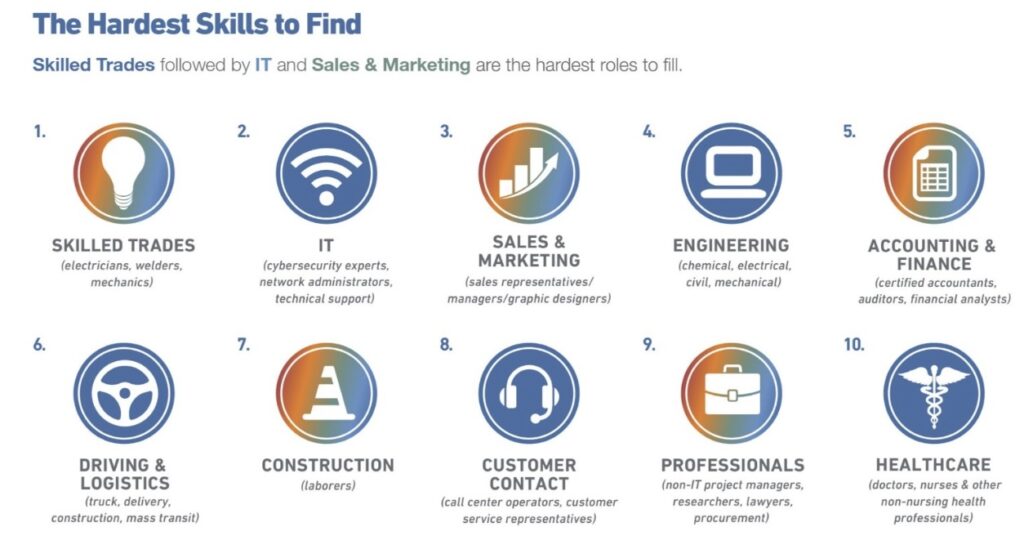
The shortage of niche talent in trades, including utilities, is a real issue. It is widespread. Persistent.
- According to the latest report by the European Labour Authority (ELA), many trade occupations remain in short supply across Europe. Key shortage jobs include welders, electricians, and construction-related trades.
- In 2024, the Federal Employment Agency of Germany reported that roughly one in three trade professions is classified as “shortage occupation.” Vacant apprenticeship posts were at 38%, the highest among all sectors.
- In the U.S., the demand–supply imbalance is stark. A recent Forbes article estimated that over a million trade jobs remain unfilled. This includes 500,000 in manufacturing alone.
The reasons are many:
- An aging workforce: In many trades, more people retire than are entering.
- Cultural bias. Many young people still aspire to attend university instead of pursuing vocational training.
- The growth of “green trades.” There’s a boom in renewable energy, electrification, and smart infrastructure. All these require new technical skills (e.g., wind-turbine tech, grid modernization).
The global mobility talent crunch
It is not just trades. Companies that rely on global mobility — including cross-border assignments, expatriate talent, and international transfers — are also finding it challenging to source and retain specialized talent.
- High numbers: A recent 2025 survey by EY found that 48% of employers struggle to find global talent. And 74% say filling senior roles can take more than a year.
- Yet, mobility matters: According to the same EY survey, companies with mature mobility programs are more than twice as likely to achieve revenue growth of 10% or more, compared with companies that don’t.
- Another sign: the 2024 global mobility survey by Aon revealed that nearly half of respondents (49%) reported that talent shortages impact their mobility strategy.
Why is this happening? Key factors include:
- Tight labor markets in many countries
- Legal, immigration, and compliance barriers
- Increased demand: companies expanding internationally or shifting operations
- Changing candidate expectations (flexibility, mobility, diversity)
Possible solution
As workforce volatility increases across utilities, trades, and globally mobile field teams, companies are turning to field operation software to better manage specialized talent and reduce turnover.
These platforms provide hiring managers with real-time visibility into technician workloads, certifications, route assignments, and job performance. It helps ensure the deployment of the correct talent for specific tasks.
By removing administrative friction, standardizing workflows, and improving communication between office and field teams, the software supports a more predictable work environment.
This stability not only improves day-to-day efficiency but also enhances retention. Why? Always provide employees with clear processes and reliable support in the field. Skilled workers are far more likely to stay with such employers.
Global mobility is no longer a fringe capability. It is central for firms that compete globally.
Challenges to sourcing specialized talent
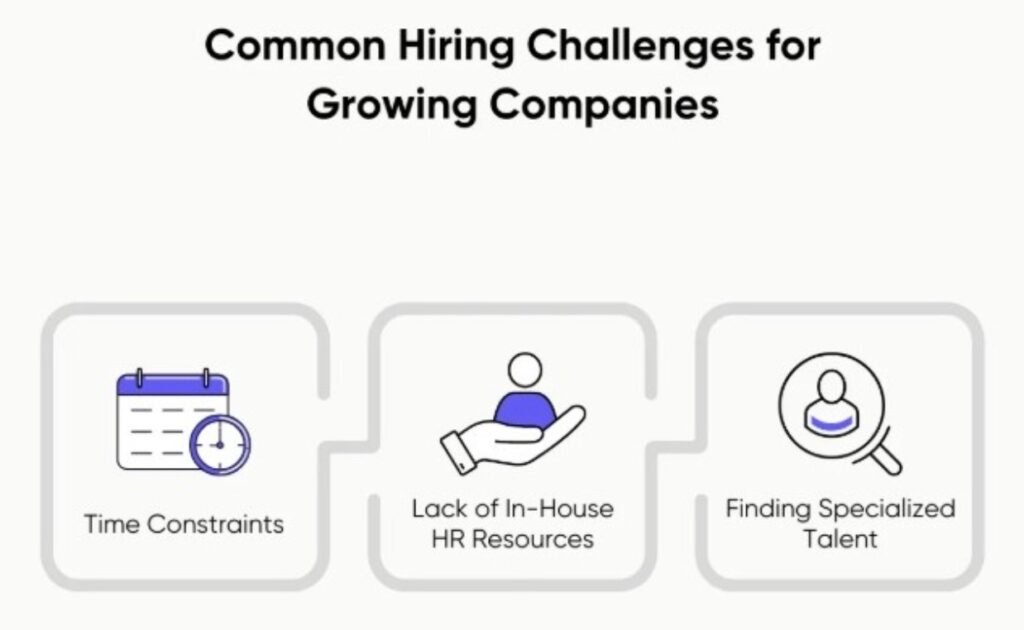
Hiring trends exist, and it’s mandatory that you’re aware of the current trends to tackle the issues you’re facing. Sourcing specialized talent in volatile sectors is hard. Here are the main challenges:
1. Narrow talent pools
Specialized roles (wind-turbine technicians; high-voltage grid engineers; global-mobility managers) are rare. By definition, few people own the skills, experience, and mindset.
Expanding the niche talent pool often means looking beyond the usual — but that adds complexity.
2. Long lead times
For global mobility roles, filling a vacancy can take many months. In trades and utilities, specialized certifications, safety requirements, or apprenticeship cycles can extend hiring lead times.
3. Poor perception of jobs
Trades often suffer from stereotypes. Young candidates may prefer “white-collar” paths. That limits interest.
Even for utilities or green-energy roles, candidates might believe the work is risky, hard, or dirty.
4. Rapid shifts in demand
Especially in utilities and energy, demand can spike when a new project begins. Then drop later.
Traditional hiring methods may seem okay. And yet, there’s an issue. Posting full-time roles and waiting for applications is fine. However, it can be too slow and costly.
5. Legal, immigration & compliance friction (for global mobility)
Moving people across borders for remote work presents many hurdles. The internal mobility issues include:
- Obtaining visas
- Paying taxes
- Complying with regulatory requirements
- Adapting to cultural differences
Many organizations don’t have these capabilities in-house for such a recruiting process.
Strategies to source specialized talent in volatile sectors
If you know the challenges, you can fight them. Here are effective strategies for sourcing specialized talent.
Use skill-based hiring (Not just degrees)
For many technical roles, skills matter more than formal education.
People can become apprentices to learn many green energy or trade jobs. Additionally, vocational training and boot camps can sometimes be more valuable than traditional degrees.
What you can do:
- Write job descriptions of your job ads focused on concrete skills (e.g., “solar-PV installation experience”, “grid protection relay programming”, “high-voltage safety certification”). Utilizing long tail keyword generators can help you identify the precise technical phrasing that specialized candidates use when searching for jobs, ensuring your ads appear in relevant searches.
- Accept non-traditional backgrounds: apprentices, tradespeople, career-switchers.
- Offer in-house training or partnerships with vocational schools.
In high-volatility sectors like utilities and skilled trades, electrical firms in particular are benefiting from specialized electrical contractor software to stabilize their workforce and improve retention.
These tools can streamline:
- Scheduling
- Track certifications
- Document safety compliance
- Centralize project communication
This addresses most operational bottlenecks that frustrate electricians in the field. Provide teams with clearer workflows and reduce the time lost to administrative tasks. This helps companies create a more supportive work environment. And this environment will help attract and retain qualified electricians in the long term.
Build flexible / Contract staffing models (Especially in utilities & energy)
Because demand fluctuates, rigid full-time staffing often fails.
Contract staffing gives you flexibility. You bring in experts when the project demands — you scale down when demand subsides. It’s a perfect talent sourcing option. Keep it in mind.
What you can do:
- Partner with specialist staffing agencies experienced in trades/energy recruiting process.
- Develop a candidate pipeline of vetted freelancers/contractors you can tap when needed.
- Use digital staffing platforms that track certifications, compliance, and history.
Tap under-represented groups & new talent pools
Because traditional pipelines are drying up, you must expand the pool of candidates you hire.
Consider:
- Career changers (e.g., office workers switching to trades).
- Immigrants or cross-border talent.
- Under-represented groups (women, minorities) — especially in fields historically dominated by men.
- Recent vocational school grads or apprentices.
Widening the pool helps sustain supply. Whether you try it through job fairs, veterans’ programs or apprenticeship models, anything works.
Use global mobility strategically
If your company operates globally, mobility becomes a tool — not a cost center.
Global mobility programs can help you move talent from regions with surplus to those with shortages. They can also attract candidates who value international experience.
What you can do:
- Develop a mobility function within HR, rather than treating mobility as an afterthought.
- Develop standard processes & support services (relocation, family support, compliance, visa, and orientation).
- Embrace diversity: use mobility to tap global talent pools.
Invest in employer branding & value proposition
Skilled tradespeople often report high job satisfaction — close to 91%, according to the Forbes report.
But many candidates never consider trades. That’s a branding failure.
For utilities and energy, especially, you can highlight:
- The green energy mission
- Stability
- Unique technical skills
- Career path
For global mobility, you can pitch:
- International exposure
- Cultural experience
- Career acceleration
What you can do:
- Share testimonial stories: “From apprentice to grid-engineer”, or “From accountant to wind-turbine technician.”
- Promote your company’s mission: sustainability, energy transition, global presence.
- Provide incentives: Offer clear career ladders and skills development paths.
Challenges in retaining specialized talent
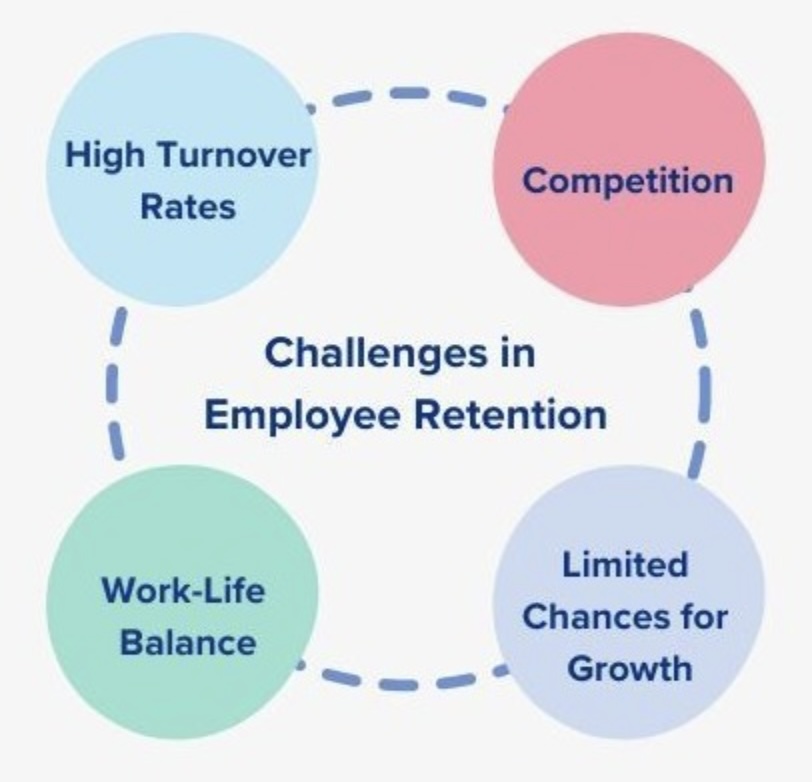
Once you find the right people, retention becomes the next big hurdle.
Here are common retention challenges in volatile sectors:
High turnover and short tenure
In the utilities and energy sector, turnover is increasing. Companies struggle to keep their talent across the board.
Many leave after a project ends or even move to competitors.
What could be the cause? Low incentives, inhumane working conditions, and low salaries. Any of these can be the reason. That’s why you need to be one step ahead of your competitors to keep your talent in-house.
Lack of career growth & development
Contract workers often receive well-compensated assignments. Yet, they may lack opportunities for long-term growth.
In global mobility, if there is no meaningful career path after an assignment, employees may leave.
Personal & family stress (Especially in mobility)
Cross-border moves are tough. People worry about family adaptation, schools, language, and culture. A lack of support can lead to move failures.
Ensure your employees have all the support they need.
Isolation, burnout, or fit issues
For trades and utilities, physical work, remote or harsh conditions, and shift work can all take a toll on people.
For mobility, cultural mismatches, loneliness, bureaucracy, and legal ambiguity all create stress.
Skill obsolescence
In rapidly evolving sectors such as green energy or global operations, skills can become outdated quickly. Without ongoing training, employees can feel stuck.
Strategies for retention — keeping the specialists on board
Here’s how to strengthen retention once you’ve hired.
Offer development & career pathing
- Provide continuous training. Safety. Compliance. New technologies (e.g., renewable energy, battery storage, smart grids).
- Offer clear career ladders — from entry or contract worker to lead technician, project manager, or expert specialist.
- Use certification programs, apprenticeships, and upskilling.
This approach makes people feel invested in the company. They see a future.
Support life & mobility — especially for global staff
For mobile or expatriate employees:
- Provide relocation support: visa, housing, family support, partner job placement, education, and cultural adaptation.
- Offer incentives: ongoing mentorship, community-building, mental-health or well-being support — especially when relocating across cultures.
- Plan repatriation or next-step transition: career mapping for what happens when the assignment ends.
Use hybrid work / Flexible models where possible
Even though trades or technical roles may seem inflexible for aspects like planning, reporting, design, and support, flexibility is still possible.
Flexibility helps: shift workers, tech-savvy staff, people balancing family or side projects.
If candidates see that they can have a balance, they often stay longer.
Build a strong employer culture & recognition
- Recognize and reward specialized skills.
- Celebrate project milestones, especially in utilities and energy (e.g., completion of grid upgrades, renewable energy rollouts).
- Create a sense of belonging. Allow more experienced workers to mentor newer ones.
This builds loyalty and reduces early turnover.
Build a dual pipeline: Mix of contract + full-time + apprentices
Don’t rely only on contract staffing. Mix it up: some full-time core staff, some contract staff, and some apprentices/vocational hires.
This hybridity stabilizes workforce flow.
Apprentices and trainees can become long-term employees. Contract workers can plug gaps. Full-time staff maintain continuity.
Common mistakes to avoid
Like everything in life, we learn, adapt, and do better every day. Thus, here are some things to avoid when looking to hire or retain an employee:
- Thinking that only degrees matter. That cuts off many valuable candidates.
- Relying solely on permanent hiring. You miss out on flexibility and may struggle with spikes.
- Not investing in retention or career development. Leads to burnout, churn, and loss of institutional knowledge.
- Underestimating non-work needs of mobile workers (family support, adaptation, psychological stress).
- Failing to measure impact. Not monitoring ROI, turnover, and fill times. Without data, you can’t improve.
Final thoughts
Volatility is here to stay. Global markets, energy transition, cross-border businesses — all demand agility.
For HR and Talent Acquisition leaders, embracing the sourcing and retention of specialized talent is not optional. It is essential.
The sectors of utilities, trades, and global mobility will continue to face skill shortages, fluctuating demand, and fierce competition for talent.
To avoid this, start small. Pilot contract staffing. Offer one apprenticeship. Build mobility support.
In volatile times, talent is your most stable asset, and you need to learn how to improve the hiring process.
Author bio:

Kelly Moser is the co-founder and editor at Home & Jet, a digital magazine for the modern era. She’s also the content manager at Login Lockdown, covering the latest trends in tech, business and security. Kelly is an expert in freelance writing and content marketing for SaaS, Fintech, and ecommerce startups.
