A strong job description does more than list duties. It sets expectations, introduces the company’s voice, and helps a candidate decide whether the work feels worth pursuing.
AI now produces polished drafts in minutes, which is useful when recruiters face tight deadlines and growing requisition loads. Yet speed creates a quieter problem: similar tools, prompts, and source material often produce similar language.
Candidates notice when every employer promises a “fast-paced environment” and seeks a “passionate self-starter.”
This article explains how AI is reshaping job descriptions, why sameness weakens employer branding, and 6 practical ways to combine automation with specific, human writing.
The Rise of AI in Recruitment
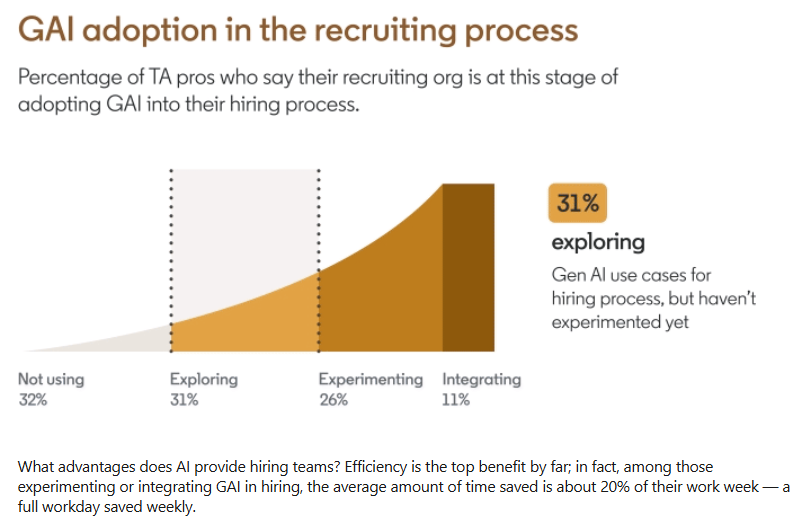
LinkedIn’s Future of Recruiting report found that 31% of talent acquisition professionals were exploring generative AI for hiring, while 26% were experimenting with it. People experimenting with or integrating AI reported saving 20% of their workweek, roughly one full day.
AI has moved into sourcing, screening, scheduling, assessments, and job description writing. Hiring teams now use features embedded in applicant tracking systems, large language models, language checkers, and dedicated job description platforms.
Alex Byder, founder of BD Homebuyer, a cash property buyer that recently scaled its acquisitions team using AI-driven hiring tools, sees AI as a practical shift in early-stage recruiting.
Byder says, “AI has quietly become the first draft for almost every requisition we post. It handles the structure, the formatting, and the baseline language, which lets our recruiters spend their energy on the parts of hiring that actually require a human, like understanding what a team truly needs in its next hire.”
The appeal is straightforward. Recruiters can create a workable first draft, check basic structure, and spend more time talking with hiring managers or candidates. A stronger job description process also makes reviews easier when several people must approve a posting.
How AI Is Changing Job Descriptions
AI is changing both the speed and shape of job description work. Here’s how AI influences the job description development:
Faster drafting and editing
Provide a title, seniority level, responsibilities, and tone, and AI can organize a draft within minutes. It can turn scattered manager notes into an overview, responsibilities, qualifications, and benefits.
Pew Research Center found that 40% of workers who had used AI chatbots found them highly helpful for completing work faster, compared with 29% who said the tools greatly improved quality. The gap is a useful warning: speed does not automatically make the finished copy better.
Greater consistency across roles
Standard sections can improve quality across dozens of openings. Teams can preserve required language, approval rules, and formatting while changing the details that matter for each position.
Consistency should support clarity, not erase personality. Think of it like ordering custom T-shirts for different teams: the shared identity remains visible, but the details still signal who each group is.
Set a common frame, then protect room for truth. A finance analyst, warehouse supervisor, and software engineer may share company values, but they should not receive identical summaries. Each posting needs its own decisions, working conditions, collaborators, and measures of progress.
Skills-first and tailored descriptions
AI can map responsibilities to occupational frameworks and help separate essential skills from inherited requirements. It can also adjust vocabulary for job families, career levels, and candidate audiences.
That makes a skills-first approach easier to scale. For practical examples, review these job description writing best practices before asking AI to tailor the wording.
Bias and compliance checks
Language tools can flag exclusionary terms, unnecessary degree requirements, and wording that may discourage qualified people. They can also identify possible pay transparency or equal employment opportunity concerns.
Still, no automated check understands every jurisdiction or context. A person should review recommendations, confirm legal requirements, and ask whether each qualification is truly necessary.
More polished but generic language
Polish is not the same as precision. Without detailed inputs, AI reaches for familiar phrases that sound professional but reveal little about the team, manager, or daily work.
That is where efficiency turns into sameness.
Distinctive writing earns attention before candidates ever apply.
The Problem of Homogeneity
Why do AI-written job descriptions converge? Models predict likely language from broad training data, and generic prompts push them toward safe averages. Common phrases rise because they are common, not because they describe your workplace well.
Compare postings for product managers in technology, finance, and healthcare. You may find the same promises of innovation, collaboration, competitive benefits, and rapid growth, even though the decisions, risks, and customers are entirely different.
The words are not automatically wrong. They are simply too vague to help a candidate compare opportunities.
HR.com’s Future of Recruitment Technologies 2025–26 research found that 51% of talent acquisition professionals were concerned about AI causing depersonalization in recruitment. The finding captures the risk of homogenized job descriptions: drafting becomes faster, but the language can feel less human, less specific, and less connected to the actual workplace.
For employers, repetition weakens differentiation. If your Head of Customer Success posting sounds like a competitor’s, your description has surrendered one of the first chances to show why the role is distinct.
Search visibility can suffer too. Google recommends useful, original, people-first content and warns against repetitive material created primarily for search engines in its spam policies. Write for candidates first.
The Impact on Employer Branding
A job description may be the first extended conversation someone has with your brand. When it feels canned, candidates can reasonably question whether the employee experience will feel equally impersonal. The same challenge extends beyond job descriptions, as AI in recruitment increasingly shapes how candidates interact with potential employers throughout the hiring journey.
Specific language builds credibility. Describe what the team is solving, how decisions are made, where the role has autonomy, and what success looks like after 90 or 180 days.
Language also shapes who feels invited to apply. Psycnet research found that gendered wording can affect how people perceive roles, showing why subtle choices deserve attention.
Clear day-to-day details also provide a more realistic preview. Candidates can self-select with better information, reducing mismatches that polished but empty copy may hide.
Balancing AI Efficiency with Human Creativity
Hiring teams do not need to choose between automation and originality. Use AI for structure, alternatives, and first-pass checks, then use human judgment to add context that a model cannot infer.
Treat every generated draft as raw material. Add how the team communicates, what creates pressure, which tradeoffs matter, and what a successful hire will accomplish within 6 months.
Human editing is the differentiator.
An editor should remove clichés, test whether claims are supportable, and replace broad adjectives with evidence. A “collaborative culture” becomes believable when the description explains who works together and how often.
Solutions to the AI Job Description Problem
Companies can keep AI’s efficiency without publishing interchangeable copies. Use these 6 actions to make every posting clearer and more recognizable:
1. Build a voice guide and cliché blacklist
Create a one-page guide that explains how your company speaks, which words it prefers, and which phrases it avoids. Include examples of acceptable tone across technical, frontline, and leadership roles.
Add a blacklist for “rockstar,” “ninja,” “wear many hats,” and “dynamic environment.” Then place the guide in prompts, workflows, and review checklists so every contributor uses it.
2. Provide authentic company and role details
Give AI real inputs: team practices, tools, customers, constraints, and examples of successful employees. Mention an on-call rotation, a legacy migration, a regulated workflow, or a weekly customer review when those details shape the work.
Specific inputs produce specific copies. Generic inputs cannot.
3. Define outcomes and realistic expectations
Replace duty lists with 90- to 180-day outcomes. For example: “Within 90 days, establish a weekly customer feedback loop that informs the roadmap and reduces churn risk by 10%.”
Add a short “What this role is not” statement when boundaries commonly cause confusion. Candidates appreciate honest scope, and managers receive fewer mismatched applications.
ZipRecruiter’s Q2 2026 New Hire Survey found that 26% said mismatched expectations would cause them to start looking for another job, reinforcing the need to define outcomes and role boundaries clearly.
4. Use inclusion and compliance checks carefully
Run language checks, then review the findings rather than accepting every suggestion automatically. These inclusive job description examples show how small wording changes can widen the invitation without diluting standards.
Organizations using algorithms in employment decisions should also review the EEOC’s adverse-impact guidance. Assign a named owner to confirm local requirements before publication.
5. Test what attracts qualified candidates
A/B test job titles, summaries, requirements, and benefits when volume allows. Track qualified application rate, completion rate, time to fill, interview conversion, and first-90-day performance, not raw application volume alone.
What changed after one revision? Record the answer and apply it to future postings.
6. Audit job descriptions for sameness
Compare new descriptions with your internal library and similar public postings. An n-gram overlap or semantic similarity check can expose repeated passages before they reach candidates.
Sample at least 10 postings each quarter. Highlight repeated openings, claims, adjectives, and benefit language, then ask whether repetition serves a policy or merely reflects habit. Keep necessary consistency, but rewrite anything that prevents a candidate from understanding the role’s particular value.
Then ask a human reviewer to replace generic sections with role evidence. Use a recurring job description optimization review to monitor readability, inclusivity, consistency, and time savings without flattening the voice.
Wrapping Up
AI can help teams produce job descriptions faster and more consistently, but speed alone does not make a posting useful. The best descriptions combine efficient drafting with brand guidance, concrete outcomes, inclusion checks, and honest details about the work.
A practical workflow can take 15 to 30 minutes: generate a structured draft, add team-specific context, remove clichés, verify requirements, and complete one final human read.
Do that consistently, and your openings stop blending into the feed. They begin to sound like invitations from a particular team to do meaningful, clearly defined work.
Want to improve job descriptions without losing your voice? Explore Ongig’s Text Analyzer for inclusive, on-brand language at scale.
