If you’re looking to fill roles for jobs in regulated industries, you need to make sure your job postings are compliant with applicable laws and regulations. Otherwise, compliance officers may flag you for not meeting regulatory requirements.
To avoid legal and financial fallout, we’ve put together 13 best practices that help ensure your job description language meets regulatory expectations across your career site, job board platforms, and even social media posts where some companies now promote openings.
Keep reading to learn more about compliance management so your job postings avoid compliance risks. (Whether you run a large company or small business) 👇
Table of Contents
Why is job post compliance important?
What laws govern job posting compliance?
13 Ways To Promote Job Post Compliance Across Regulated Industries
1. Set Up Centralized Control For Job Posts
2. Build Standard, Pre-Approved Job Description Templates
3. Use Real-Time Compliance Scanning Tools
4. Keep Job And Regulatory Requirements Current
5. Train Recruiters And Hiring Managers Often
6. Enforce Record-Retention Rules For All Job Posts
7. Add Structured Data Markup To Job Posts
8. Include Contract Clauses If Partnering With Third-Party Job Boards And Agencies
9. Track Every Channel Where Posts Appear
10. Run Regular Internal Audits On Job Posts
11. Set Up Incident Reporting And Quick-Response Workflows
12. Place Accommodation And Equal-Opportunity Statements Correctly
13. Continuously Update Language To Reduce Bias
Why Ongig Is A Must-Have Job Post Compliance Support Tool
FAQs About Job Post Compliance
What is job post compliance?
Job post compliance means creating job advertisements that meet all applicable legal, ethical, and industry-specific regulations. If you post financial, legal, or health roles, you’ll need to pay close attention to the language you use.
Why is job post compliance important?
Job post compliance is important because it helps your organization:
- Protect its brand reputation
- Avoid costly audit fines
- Prevent legal penalties
- Promote fair hiring
(The last thing you want is a fine or an audit that gets in the way of you running your business,)
What laws govern job posting compliance?
Common laws governing job posting compliance include the EEOC, OFCCP, ADA, HIPAA, and industry-specific regulations such as FINRA and ITAR.
Here’s a quick overview:
- OFCCP enforces equal employment for federal contractors, requiring non-discriminatory postings.
- ADA ensures job postings don’t discriminate against applicants with disabilities.
- ITAR regulates job postings for positions involving defense-related work.
- FINRA includes rules for financial industry roles.
- EEOC includes rules against discrimination.
- HIPAA helps protect health info.
Now that you’re clear on the basics, keep reading to learn which compliance efforts you need to prioritize. 👇
13 Ways To Promote Job Post Compliance Across Regulated Industries
Here’s how to promote regulatory compliance with your job postings and HR practices:
1. Set Up Centralized Control For Job Posts
Create a workflow that requires every job post to go through legal and HR before it goes live. Track versions and approvals as you go and implement edit requests. This’ll show you firsthand what gets flagged, so you can address it before publishing to your career site or job board like Indeed.
If you don’t have a legal or HR department, head to the next best practice. 👇
2. Build Standard, Pre-Approved Job Description Templates
Create role-and industry-specific templates that Legal and Compliance review to ensure neutral language, required disclosures, and consistent wording.
For instance, when creating job posts for a teen residential treatment center, clearly list which state licenses, background checks, and certifications (like trauma care) are required.
Don’t have a legal, HR, or compliance department?
Outsource template reviews to a law firm as a one-time job. Or hire them as-needed. That said, if you run a recruiting firm that mostly hires for jobs in regulated industries, you might want to think about hiring a compliance manager.
3. Use Real-Time Compliance Scanning Tools
Add a compliance tool to your recruiting and hiring tech stack to automate risk assessments.
For example, you can optimize your compliance workflows and scan job posts for compliance issues with Ongig. You can also edit existing job templates or create your own.
Our software stays up to date with regulatory changes, so your job descriptions remain compliant with new laws. It also detects missing salary information and flags your text for bias or problematic words and phrases.
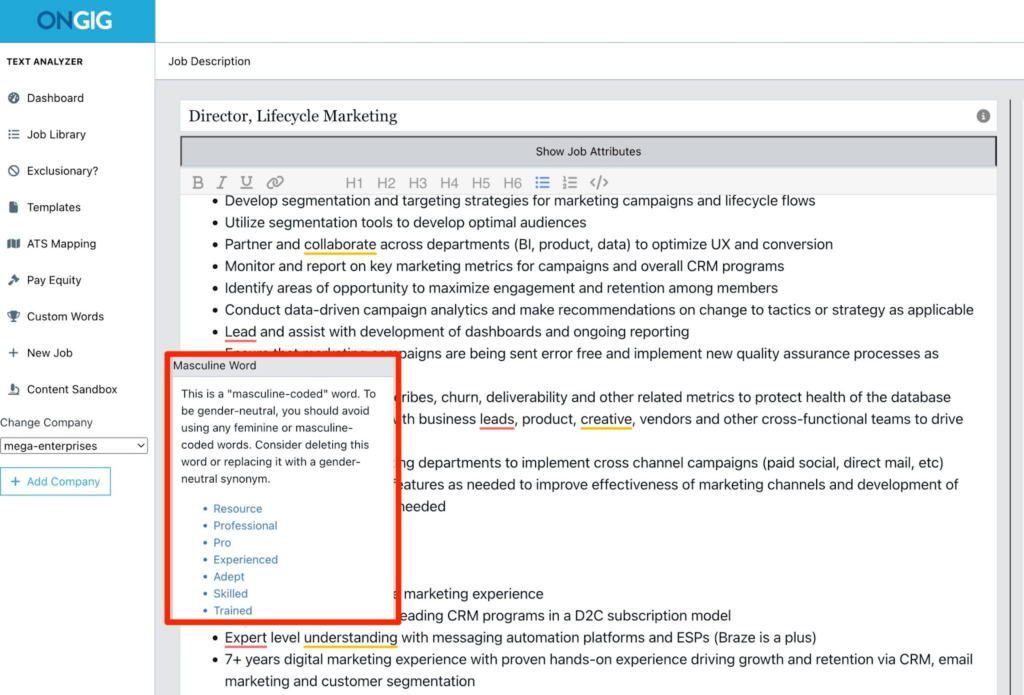
Tool Scans Bias in Text
If you post 100+ jobs a year, you’ll love Ongig. Request a free demo now to see how it works.
4. Keep Job And Regulatory Requirements Current
Subscribe to agency updates (like EEOC, OFCCP, HIPAA, FINRA) and update your templates, workflows, and job descriptions as soon as rules change. Update your website’s hiring pages, too.
For example, look at how Hello Rache, a HIPAA-compliant healthcare virtual assistant company, openly shares its strict vetting and privacy standards on its careers page:
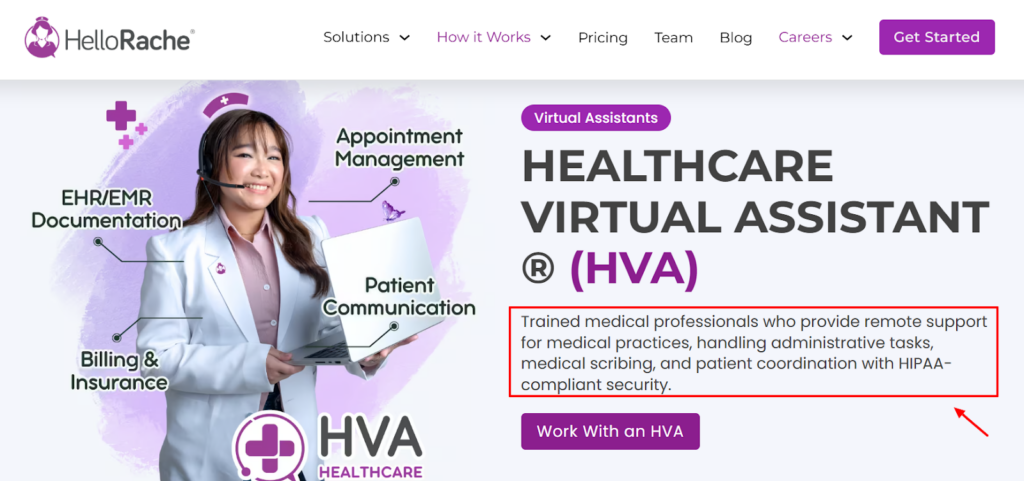
HIPAA-Compliant Notice
Compliance professionals can also automatically forward these updates to you. And remember, Ongig stays updated when regulatory requirements change, too. 😄
Make sure to also update listings as job requirements and expectations change. Be as clear as possible about what you expect so candidates can assess if they’re the right fit.
For example, Cruise America, a leading RV rental company operating in Las Vegas, openly states that service managers “must occasionally lift and/or move up to 50 pounds” — and even details specific vision requirements. (Under the ADA, an employer is allowed to list physical or sensory requirements if those requirements are essential job functions.)
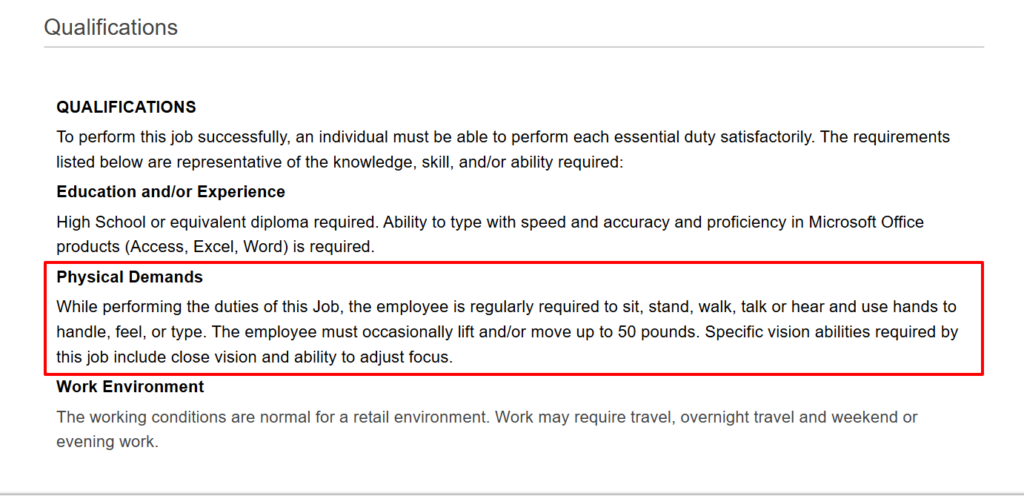
Cruise America Job Posting
5. Train Recruiters And Hiring Managers Often
Run mandatory, role-specific training so every recruiter, hiring manager, and internal auditor knows what compliant language looks like. Think of this like building your own internal compliance program for job postings.
If your team hires for financial services roles, make sure training includes updates on anti-money laundering regulations, new salary ranges disclosure rules, and state-level pay transparency laws.
If you hire for healthcare, add refreshers on HIPAA-safe phrasing.
If you operate in global markets, loop in your Global Ethics and Compliance lead so your job posts reflect the latest international guidelines.
This is also a great place to incorporate ethics training materials you already use during onboarding. Teach teams how job post language connects back to your Code of Conduct, internal policies, and expectations around fairness, privacy, and mental health protections.
The stronger your training, the fewer compliance issues you’ll need to fix later.
6. Enforce Record-Retention Rules For All Job Posts
Save every version of each job post (including drafts, approvals, and final copies) for at least three to seven years.
These records help you during audits and show clear proof that compliance reviews happened. Keep everything organized by role, department, and location. If regulators ever request evidence, you’ll be ready.
7. Add Structured Data Markup To Job Posts
Use schema markup and accessibility-friendly metadata so job descriptions are easy to crawl, interpret, and audit. Clear markup also helps job seekers find your roles faster.
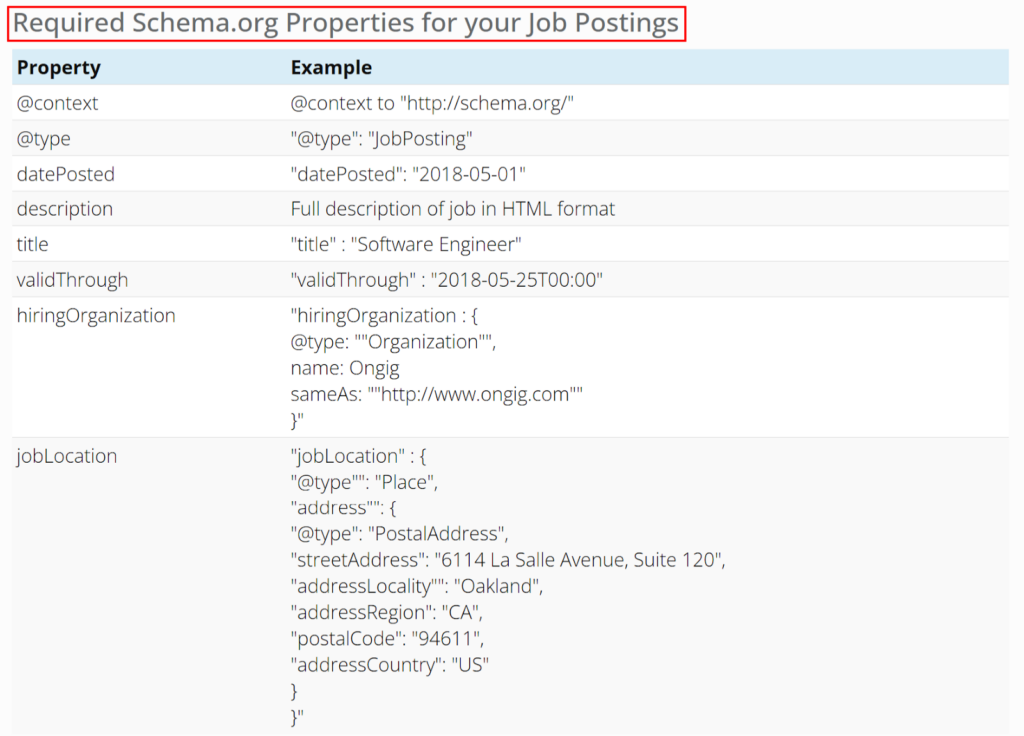
Schema Markup
It also ensures accessibility tools can read your postings without errors.
8. Include Contract Clauses If Partnering With Third-Party Job Boards And Agencies
If you partner with staffing agencies or external job boards, check that their processes align with yours. (They should follow the same compliance standards, especially if you hire in finance, healthcare, or other high-risk fields like anti-money laundering or financial crime prevention.)
Add contract clauses requiring compliance, documentation, and timely reporting in case an issue pops up. You shouldn’t be held responsible for someone else’s mistakes.
9. Track Every Channel Where Posts Appear
Create a centralized list of all locations where your jobs appear — including niche boards, aggregators, and local community-based organizations where you might promote roles during a recruitment event.
Channels might include:
- International job platforms
- Social media platforms like Facebook and Twitter
- Niche job platforms
- Internal platforms
- Agency portals
- Aggregators
- Career sites like Indeed or LinkedIn
- Job boards
- Ads
A single stray job listing with old salary ranges or missing disclosures can lead to preventable compliance reviews and complaints from job seekers.
10. Run Regular Internal Audits On Job Posts
Set a recurring schedule to compare active job posts against your approved templates and the latest regulations.
(This is where your internal auditor or Chief Compliance Officer can add real value.)
For example, if your team hires for financial services, confirm that roles tied to anti-money laundering or financial crime monitoring contain the right regulatory references. If you publish jobs across state lines, ensure each listing complies with local pay transparency laws.
Fix gaps fast and log updates for future audits.
11. Set Up Incident Reporting And Quick-Response Workflows
Give your team a simple way to report errors or potential compliance risks — and define steps for fixing them. Create a clear workflow that shows what to flag, who handles fixes, and how quickly posts must be updated.
This “quick fix” structure helps you avoid escalations, such as an emergency post board meeting or urgent corrective actions after regulators reach out.
12. Place Accommodation And Equal-Opportunity Statements Correctly
Include required legal statements word-for-word in every job post and on your careers page.
Here’s an example from the Michigan Economic Development Corporation:
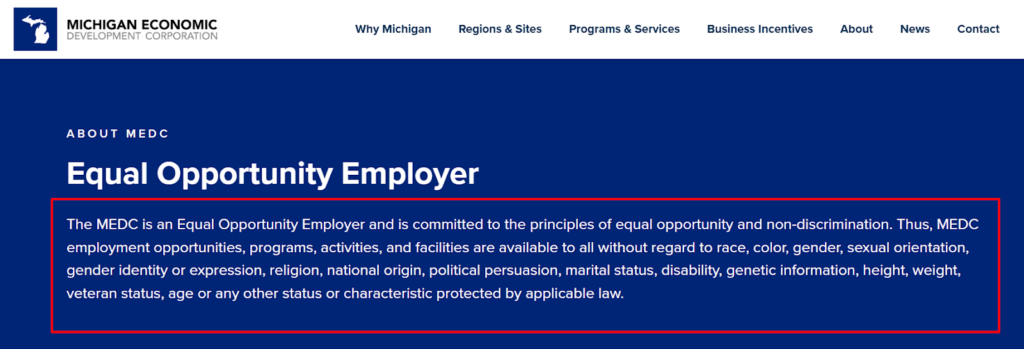
Equal-Opportunity Statement
If you hire in multiple countries, confirm that the statements align with each region’s labor regulations.
13. Continuously Update Language To Reduce Bias
Use inclusive language guidelines and refresh them regularly as cultural norms shift. Make sure they meet evolving compliance expectations and industry-specific ethics standards.
Ongig is a great support tool for this. Our software scans your content for biased language related to gender, age, race, disability, LGBTQ+ status, ethnicity, former felons, elitism, mental health, religion, and more.
Speaking of Ongig …
Why Ongig Is A Must-Have Job Post Compliance Support Tool
Ongig helps you manage your job post workflows and compliance in one place.
Our software scans job posts for bias, flags missing salary ranges, alerts you to risky language, and helps ensure your job listings align with rules enforced by groups like the federal government or state-level regulators.
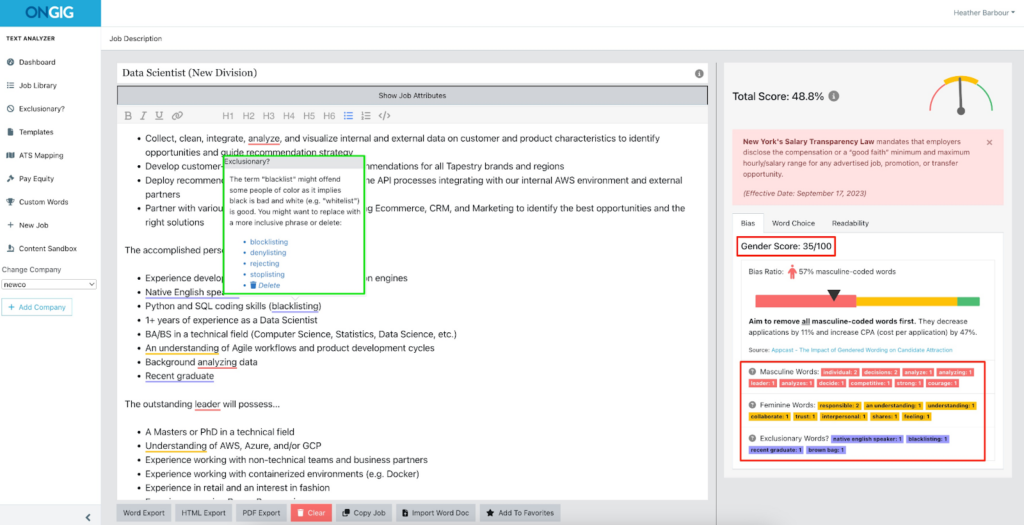
Ongig’s Bias Scanner
You can also build a job library, use our easy templates, and connect your HR systems.
If your team hires at scale across regulated industries, this can save you countless hours — and protect you from compliance risks. Want to see a live demo? Book your spot now.
Wrap Up
Job post compliance protects your brand, reduces legal exposure, and makes your hiring process smoother. Especially in highly regulated industries.
If you want a simpler way to manage it all, request an Ongig demo to see how automated compliance support can transform your hiring process.
FAQs About Job Post Compliance
How do I make job posts non-discriminatory?
To make job posts non-discriminatory, use neutral, straightforward language that focuses only on essential job functions. Remove phrasing that excludes people based on gender, age, disability, or background. Add clear equal-opportunity statements and accommodation language.
You also strengthen compliance by tying your language guidelines to your Code of Conduct, internal policies, and your broader Compliance Program.
Who is responsible for job post compliance?
Everyone involved in hiring shares responsibility. Recruiters, hiring managers, HR, legal teams, and external agencies are all responsible for job post compliance.
Can AI tools ensure job post compliance?
Artificial intelligence tools catch issues much faster than manual reviews, but they can’t replace human judgment. AI can scan for bias, missing salary ranges, risky phrasing, and outdated posting requirements. Humans still make the final call on context, tone, and regulatory interpretation
How long should we retain job posts?
Retention periods vary by jurisdiction but typically range from three to seven years for audit and legal purposes.
What are common job post compliance mistakes?
Teams usually run into problems when they rush.
The most common job post compliance mistakes include:
- Omitting required disclosures like salary ranges or equal-opportunity statements
- Failing to align posts with your ethics training materials or Code of Conduct
- Copying old job descriptions with outdated regulatory references
- Allowing multiple job post versions to circulate unchecked
- Using biased or unclear language
How often should job posts be reviewed for compliance?
Review job posts before they go live, and run quarterly audits to stay aligned with evolving regulations. If you hire in fast-changing fields like healthcare or finance, increase the cadence.
What happens if a company violates job post compliance?
Regulators can issue fines, open investigations, or place your organization under higher scrutiny if it violates job post compliance.
Repeated violations can slow down hiring or damage your employer brand. You may also face lawsuits from job seekers if posts misrepresent the role or fail to meet legal standards.
Author Bio:

Luca Ramassa is Outreach Specialist at LeadsBridge, passionate about Marketing and Technology. His goal is to help companies improve their online presence and communication strategy.
